Soffit damage sneaks up on homeowners. You might notice peeling paint under the eaves, a wasp nest tucked into a gap, or water staining along the underside of your roof overhang. Most people don't think about soffits until something goes wrong, but these horizontal panels tucked beneath your roof edges do critical work: they protect rafters, provide attic ventilation, and keep pests out. When soffits fail, you're left wondering whether a quick patch will hold or if the damage runs deeper than what you can see. This guide walks through how soffit damage happens, what repair actually involves, and when fixing what's there makes more sense than tearing everything out.
What Soffits Do and Why They Matter
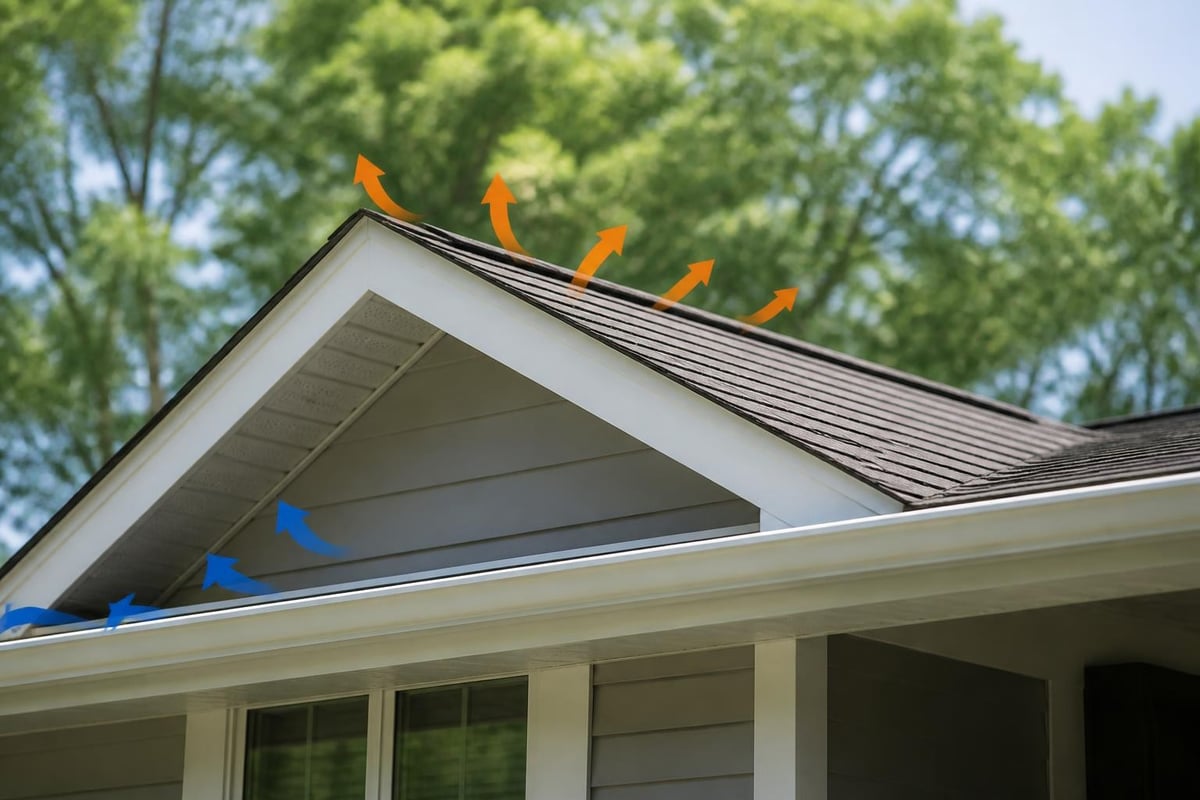
Soffits close the gap between your roof overhang and the exterior wall. Without them, you'd see exposed rafters and open space leading straight into your attic.
Their main jobs include:
- Ventilation: Vented soffits pull cool air into the attic, which flows upward and exits through ridge or gable vents
- Protection: They block rain, wind, and debris from reaching structural wood
- Pest barrier: Sealed soffits keep birds, squirrels, and insects out of your attic space
- Finished appearance: They give your roofline a clean, complete look
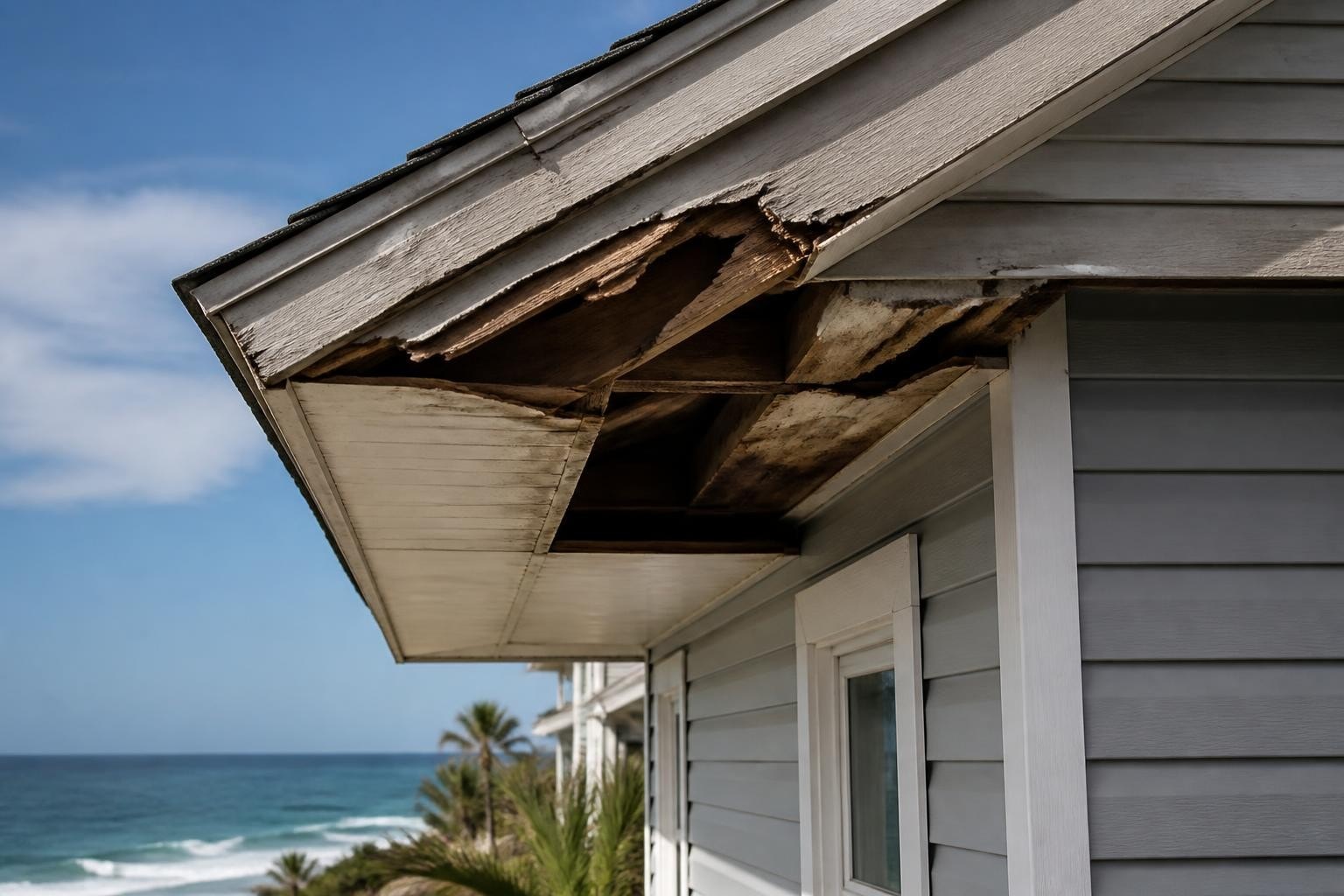
In coastal areas like Topsail, Surf City, and Wilmington, soffits take a beating from salt air, high humidity, and wind-driven rain. Wood soffits absorb moisture and rot faster here than in drier climates. Vinyl and aluminum soffits resist rot but crack, fade, or pull loose under wind pressure. When soffits fail, moisture finds its way into fascia boards and rafter tails, which means what starts as a cosmetic issue can turn into structural damage if ignored.
Common Types of Soffit Damage
Soffit repair needs vary based on what caused the damage and how far it spread. Here are the problems homeowners in Eastern North Carolina see most often.
Rot and Water Damage
Wood soffits rot when water saturates the material and doesn't dry out. This happens when:
- Gutters overflow and spill water onto soffit boards
- Flashing around the roof edge fails and lets rain run behind the soffit
- Attic moisture condenses on cold soffit surfaces during winter
- Ventilation holes become clogged, trapping humidity inside
Rotted sections feel soft when you press them. Paint peels off in sheets. You might see dark staining or actual holes eaten through the board.
Wind and Storm Damage
High winds pry soffits loose, especially at corners and seams. Vinyl panels crack when debris strikes them during storms. Aluminum dents and bends. Once a section pulls away, wind gets behind the material and tears off larger pieces.
Pest Entry and Nesting
Gaps in soffits invite wildlife. Wasps build nests inside vent holes. Squirrels chew through rotted wood to access attics. Birds nest in damaged corners. Even small gaps let insects in, and once inside, pests widen openings as they come and go.
Peeling Paint and Finish Failure
Paint failure on wood soffits signals moisture problems. When water seeps into the wood, paint loses adhesion and peels. Bare wood then absorbs more water, accelerating rot. This cycle moves fast in humid coastal climates.
| Damage Type | Typical Cause | Repair Urgency |
|---|---|---|
| Rot (small area) | Gutter overflow, flashing leak | Medium – fix before it spreads |
| Rot (widespread) | Chronic moisture, failed ventilation | High – structural risk |
| Wind damage | Storm, loose fasteners | Medium – prevents further tearing |
| Pest entry | Gaps, damaged vents | Medium – stops interior damage |
| Paint failure | Moisture intrusion | Low – cosmetic until rot starts |
When Soffit Repair Makes Sense
Not every damaged soffit needs replacement. Repair works when damage is localized and the surrounding structure remains solid.
Good candidates for repair include:
- Single damaged panel or board: One cracked vinyl panel or rotted wood section surrounded by intact material
- Corner damage from impact: A dented corner where a ladder hit, but the rest of the soffit is fine
- Loose fasteners: Soffits pulling away due to missing nails or screws, with no underlying rot
- Vent damage: Broken or missing vent screens that need replacement
- Surface issues: Peeling paint on otherwise sound wood
Repair makes financial sense when the problem is isolated and you can match existing materials. If you have a 10-foot section of soffit and only 2 feet show damage, replacing just that section costs a fraction of redoing the entire run.
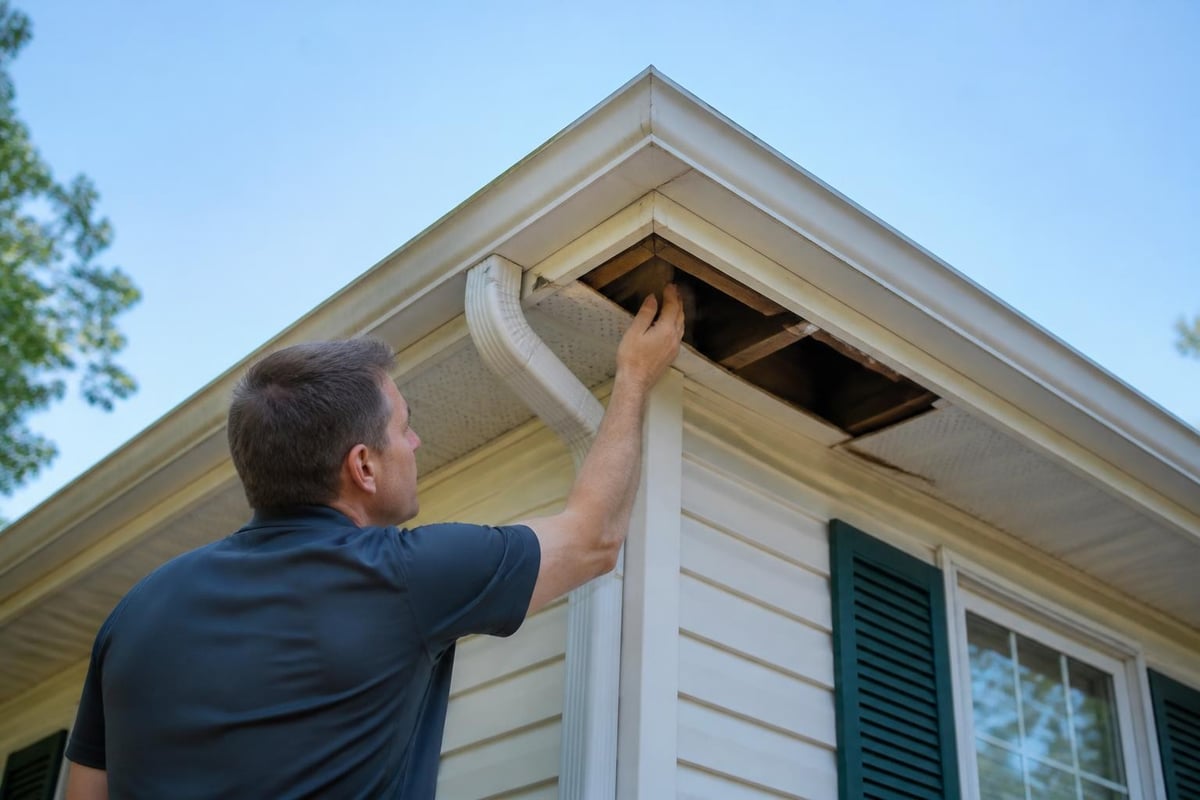
Before committing to repair, check what's behind the soffit. Pry off a damaged section and inspect the fascia and rafter tails. If those show rot or insect damage, repair becomes a temporary fix. You'll end up replacing everything once the hidden damage worsens.
Soffit Repair Process
Fixing damaged soffits depends on the material and extent of damage. Here's what the process looks like for the most common scenarios.
Repairing Wood Soffits
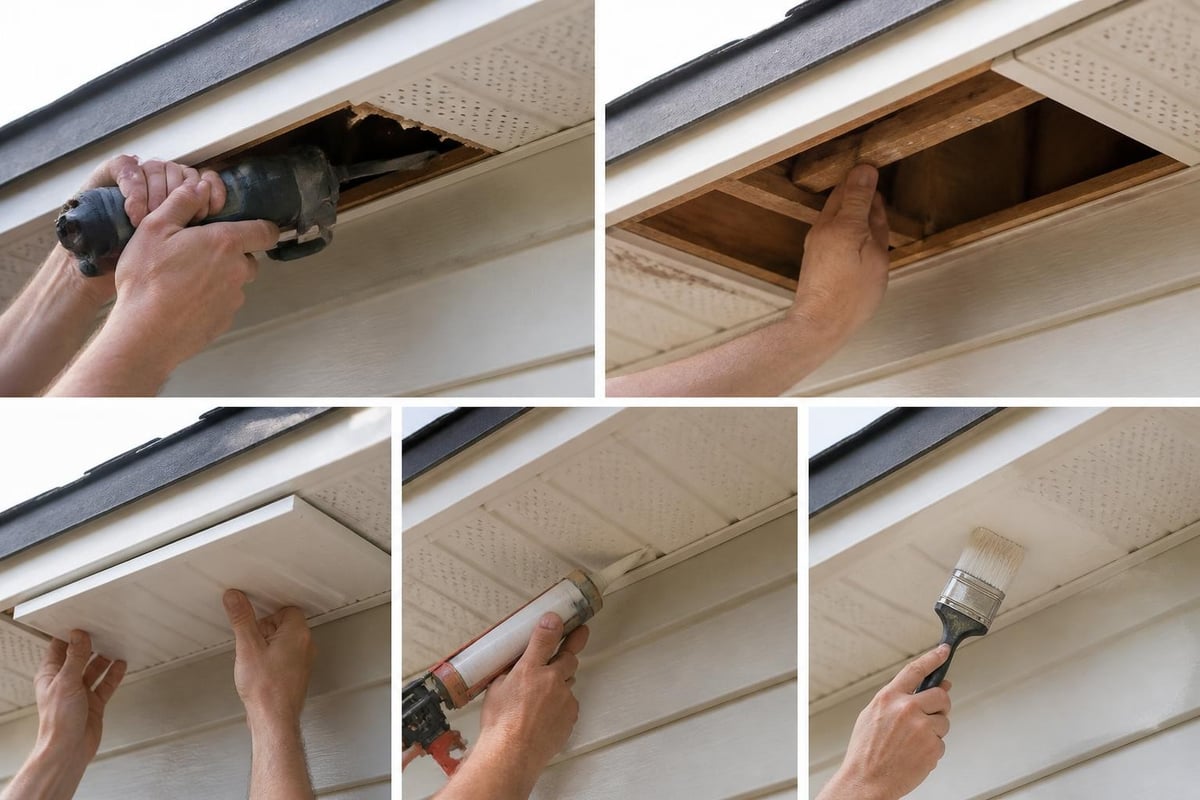
Wood soffit repair starts with cutting out the damaged section. You'll need to:
- Remove damaged material: Cut along studs or blocking to create clean edges
- Inspect structure: Check fascia boards and rafter tails for rot or water damage
- Treat and seal: Apply wood preservative to exposed framing
- Install new section: Cut replacement board to size, prime all sides, and fasten securely
- Caulk and paint: Seal seams and finish to match existing soffit
The NRCA recommends priming all cut edges and backside surfaces before installation to prevent moisture absorption. Coastal environments demand this step, even if it feels excessive.
Repairing Vinyl or Aluminum Soffits
Vinyl and aluminum repairs involve removing damaged panels and snapping in replacements. The challenge is finding matching material. Manufacturers change colors and profiles every few years, so exact matches get hard to find on older homes.
Steps for panel replacement:
- Remove trim pieces holding the damaged panel
- Slide out the damaged section
- Cut new panel to length
- Snap replacement panel into channels
- Reinstall trim pieces
If you can't match the color, you may need to replace a full side of the house to avoid a patchwork look.
Fixing Ventilation Issues
Soffit vents clog with insulation, dirt, and debris over time. Blocked vents trap attic moisture and accelerate rot. Repair involves clearing blockages and ensuring proper airflow. Sometimes you'll add new vents by cutting openings in solid soffits and installing vent panels.
Proper attic ventilation prevents a range of moisture-related issues. The Building Science Corporation has detailed research on how soffit vents interact with attic air pressure and moisture control, which matters when deciding whether to repair existing vents or change your ventilation strategy.
DIY vs. Professional Soffit Repair
Small soffit repairs fall within reach for handy homeowners. Replacing a single vinyl panel or patching a small rotted section on accessible soffits doesn't require special skills. You'll need basic carpentry tools, a ladder, and patience matching materials.
DIY works well for:
- Single panel replacement on one-story homes
- Painting accessible wood soffits
- Installing vent screens
- Reattaching loose sections with new fasteners
Hire a professional when:
- Damage is widespread or structural
- Work requires scaffolding or working at height
- You need to match discontinued materials
- Fascia or rafter damage accompanies soffit issues
- You're not confident working overhead on a ladder
Professional soffit repair includes proper safety equipment, faster material sourcing, and warranty coverage. Contractors also catch hidden damage during the repair process. What looked like a simple panel replacement might reveal rotted fascia that needs addressing before closing everything back up.
In coastal areas, exposed two-story homes present real fall risks. Wind makes ladder work dangerous. If your soffits sit 20 feet up or face the ocean, professional repair removes the safety gamble.
Material Choices for Soffit Repair
When replacing damaged sections, you'll choose between wood, vinyl, aluminum, and fiber cement. Each material behaves differently in coastal conditions.
Wood Soffits
Wood matches the original material on older homes. It takes paint well and looks traditional. But wood absorbs moisture, rots in humid climates, and requires regular maintenance. If you're repairing wood soffits, use pressure-treated or rot-resistant species like cedar. Prime and paint all surfaces before installation.
Vinyl Soffits
Vinyl resists rot and requires no painting. It comes in vented and solid panels. Vinyl expands and contracts with temperature changes, so proper installation leaves room for movement. In high winds, vinyl can crack or pull loose if not fastened correctly. Color fades over time, especially in direct sun.
Aluminum Soffits
Aluminum won't rot and holds paint better than vinyl. It dents on impact but resists wind better than vinyl when properly installed. Aluminum costs more than vinyl but less than fiber cement.
Fiber Cement Soffits
Fiber cement combines durability with a wood-like appearance. It resists rot, insects, and fire. It's heavier than other options and requires more labor to install. Fiber cement makes sense when you want a long-term solution and plan to stay in the home.
| Material | Rot Resistance | Wind Resistance | Maintenance | Cost |
|---|---|---|---|---|
| Wood | Low | Medium | High | Low |
| Vinyl | High | Medium | Low | Low |
| Aluminum | High | High | Low | Medium |
| Fiber Cement | High | High | Medium | High |
How Much Soffit Repair Costs
Soffit repair costs depend on material, accessibility, and extent of damage. Small repairs run a few hundred dollars. Full soffit replacement on a large home can reach several thousand.
Typical price ranges in 2026:
- Vinyl panel replacement: $6–$12 per linear foot installed
- Wood soffit repair: $10–$20 per linear foot depending on wood type
- Aluminum soffit: $8–$15 per linear foot installed
- Fascia and soffit combination repair: $15–$30 per linear foot when both need work
These numbers assume straightforward access and no structural damage. If rafter tails need sistering or fascia boards require replacement, costs climb. Two-story homes or difficult access add labor costs.
Small repairs sometimes cost more per foot than larger jobs because setup time and minimum service charges spread across less work. A contractor might charge $400 to replace one damaged panel, which feels expensive until you realize the alternative is ignoring damage that will spread.
Getting a detailed roof report helps homeowners understand exactly what needs attention before committing to soffit repair. NC Roofs offers roof reports that document soffit condition alongside other roof components, so you can see the full picture and make decisions based on actual condition rather than guesswork.
Preventing Future Soffit Damage
Once you've repaired damaged soffits, a few maintenance steps keep them in good shape longer.
Prevention strategies include:
- Keep gutters clean: Overflowing gutters are the leading cause of soffit rot
- Check caulking annually: Seal gaps where soffits meet walls and corners
- Inspect after storms: Look for loose panels or new gaps after high winds
- Clear vent openings: Make sure soffit vents stay open and unblocked
- Repaint wood soffits: Refresh paint every 5–7 years before bare wood is exposed
- Trim back vegetation: Keep tree branches and vines away from soffits
Coastal homeowners should inspect soffits twice a year. Salt air accelerates corrosion on metal components and paint failure on wood. Catching small problems early, like a loose corner or peeling paint, prevents the larger repairs that happen when water gets into the structure.
The DOE Building America guide offers practical advice on attic air sealing and how soffit vents fit into a complete moisture-management strategy, which is especially relevant in humid climates where condensation and airflow matter as much as direct water intrusion.
When to Replace Instead of Repair
Sometimes soffit damage signals bigger problems. Repair makes sense for isolated issues, but replacement becomes the better choice when:
- More than 30% of the soffit shows damage: Patchwork repairs cost almost as much as replacement and look inconsistent
- Underlying structure is compromised: Rotted fascia or rafter tails mean opening up the entire assembly
- Material is discontinued: If you can't match existing panels, a full replacement gives you consistent appearance
- You're changing ventilation: Switching from solid to vented soffits or upgrading to continuous ventilation requires new installation
- Age and condition: If soffits are original to a 30-year-old home and showing wear everywhere, replacement prevents ongoing repair cycles
Replacement also makes sense when you're already doing other roof work. If you're replacing your roof, adding new gutters, or re-siding the house, including soffit replacement in the same project saves setup costs and gives you a complete refresh.
Homeowners often struggle with the repair vs. replacement decision because visible damage doesn't always tell the full story. A professional inspection reveals what's happening behind the soffits and whether a patch will hold or just delay the inevitable. NC Roofs provides detailed roof repair services that include soffit evaluation, so you understand your options before committing to a solution.
Working with Contractors on Soffit Repair
Choosing a contractor for soffit repair follows the same principles as any home improvement project. You want someone who understands the local climate, uses quality materials, and explains what they're doing and why.
Questions to ask contractors:
- What caused this damage, and how do we prevent it from happening again?
- Will you inspect the structure behind the soffit before closing it back up?
- Do you use pressure-treated or rot-resistant materials in coastal installations?
- What's the warranty on materials and labor?
- Can I see photos of similar repairs you've completed?
Good contractors welcome these questions. They'll explain findings, show you damaged areas, and offer clear recommendations. Be cautious of anyone pushing full replacement when damage is limited, or suggesting repair when structural issues clearly need more extensive work.
Get written estimates that specify materials by brand and type, not just "vinyl soffit" or "wood repair." Detailed estimates prevent surprises when the contractor shows up with different materials than you expected.
Soffit Repair and Home Value
Damaged soffits hurt home value in two ways. First, they signal deferred maintenance to buyers. Peeling paint, rotted boards, or missing panels suggest the home hasn't been cared for. Second, soffit damage often leads to bigger problems that show up in inspections. Rotted fascia, moisture-damaged rafters, or attic mold trace back to failed soffits that weren't repaired in time.
Repairing soffits before selling makes financial sense. The cost of repair is typically far less than the price reduction buyers demand when they see visible neglect. Fresh, well-maintained soffits improve curb appeal and demonstrate that the home has been looked after.
Even if you're not selling soon, keeping soffits in good condition protects your investment. Water damage compounds. A $500 soffit repair today prevents a $3,000 fascia and rafter repair next year.
Soffit repair makes sense when damage is limited and the underlying structure is sound. Coastal homes need regular soffit inspections because salt air and humidity accelerate rot and finish failure. Small repairs done early prevent the larger, costlier problems that happen when water gets into your roof structure. If you're seeing soffit damage around your Hampstead, Wilmington, or Topsail Beach home, NC Roofs can assess what's happening, explain your options, and handle repairs that actually solve the problem without unnecessary replacement.