Most homeowners panic when they notice a shingle lying in the yard after a storm or spot a dark patch on the ceiling. The immediate assumption is often that a full roof replacement is necessary, which can cost thousands of dollars. In reality, roof shingle repair is a practical, cost-effective solution for many common roofing problems. Understanding what can be repaired, how repairs are done, and when replacement actually becomes necessary helps homeowners make confident decisions without overspending or delaying needed work.
When Roof Shingle Repair Makes Sense
Not every roof problem requires tearing off the entire system. Roof shingle repair works best when damage is localized to a specific area rather than spread across the entire roof.
Common repair scenarios include:
- Missing shingles from wind events or poor installation
- Lifted or curled shingles that haven't torn completely
- Cracked or broken tabs in otherwise sound areas
- Nail pops causing shingles to lift
- Granule loss in isolated spots
- Flashing issues around chimneys, vents, or skylights
A repair makes financial sense when the rest of the roof still has years of serviceable life remaining. If your roof is only five to ten years old and you're dealing with storm damage in one section, patching that area preserves your investment without starting over.
Age matters significantly. According to guidance from the Asphalt Roofing Manufacturers Association, asphalt shingle roofs are repairable when the underlying structure is sound and surrounding shingles remain intact. Repairs become less effective when a roof nears the end of its expected lifespan, usually around 20 to 25 years depending on material quality and climate exposure.
How Wind Damage Affects Shingles
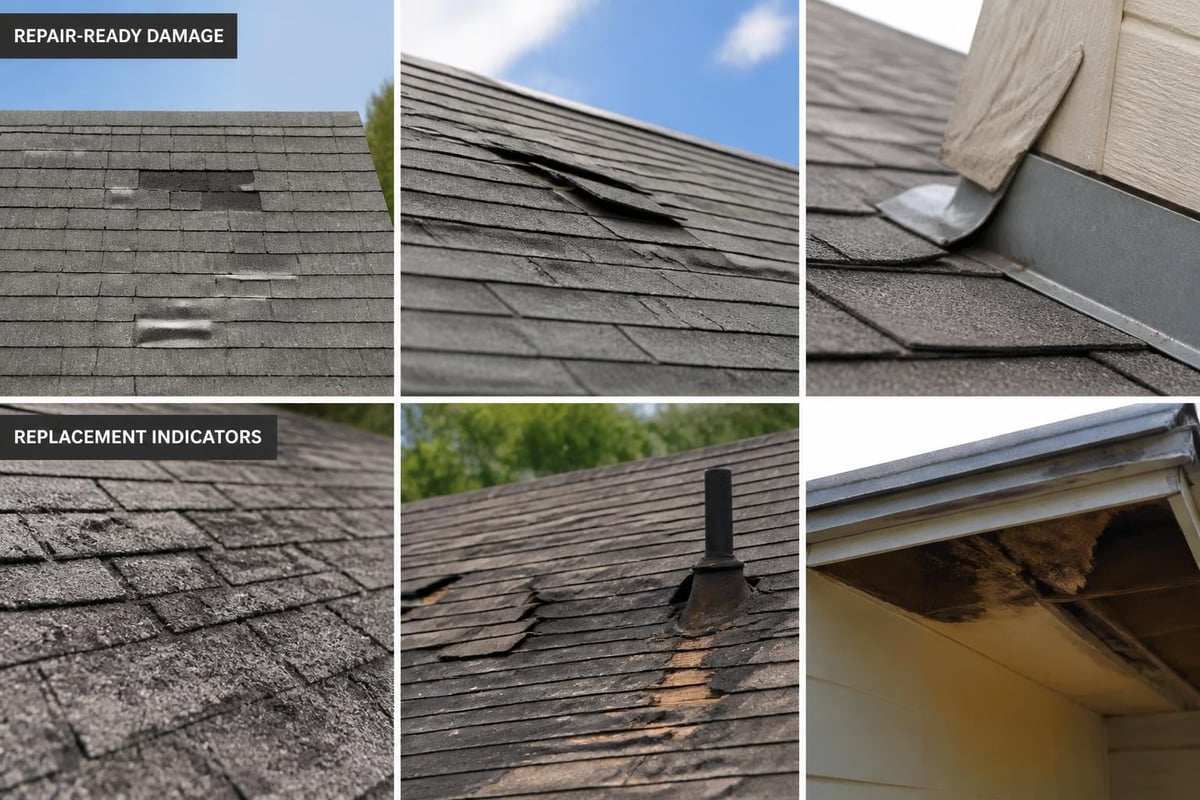
Coastal North Carolina sees its share of wind events, from tropical storms to strong nor'easters. Wind doesn't always rip shingles off completely. Sometimes it lifts tabs just enough to break the seal, allowing water underneath during the next rain.
Wind damage typically appears as:
- Shingles with lifted edges
- Missing corners or tabs
- Creased shingles from flexing
- Exposed nail heads where fasteners pulled through
The Institute for Business and Home Safety provides research showing how shingle durability varies based on installation quality and material specifications. Properly installed shingles with adequate nailing resist wind better than those with marginal attachment.
A roofer inspecting wind damage will check not just the visible missing pieces but also the surrounding shingles for hidden lifting or seal failures. Sometimes what looks like one missing shingle actually represents a larger area needing attention.
What a Typical Roof Shingle Repair Involves
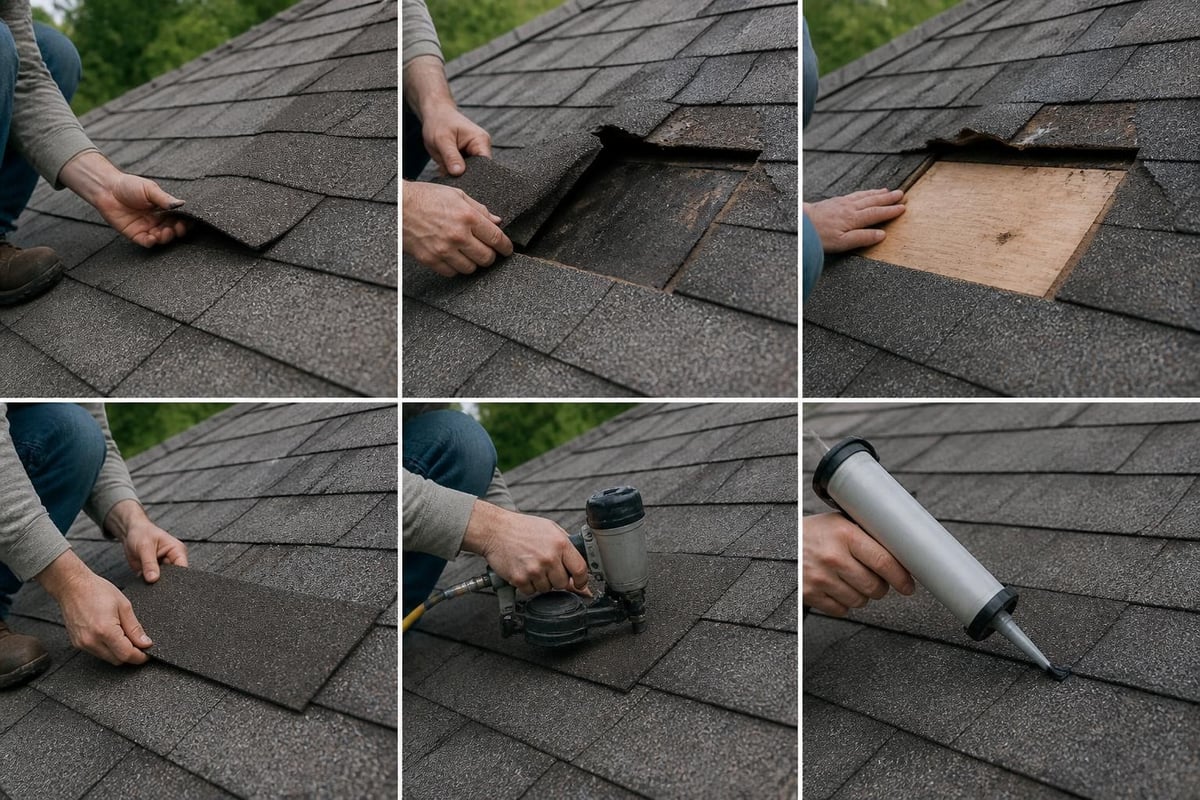
Professional roof shingle repair follows a systematic approach to match materials, secure new shingles properly, and restore weatherproofing without leaving weak spots.
Step-by-Step Repair Process
- Assessment and documentation of the damaged area
- Material matching to find shingles that blend with existing ones
- Removal of damaged shingles without disturbing surrounding areas
- Deck inspection to check for rot or structural issues
- Installation of replacement shingles with proper nailing patterns
- Sealing and blending to restore wind resistance
Material matching can be tricky. Shingle colors fade over time, and manufacturers discontinue product lines. An experienced roofer keeps common shingle types in stock and knows how to source discontinued materials or find close matches.
| Repair Component | What's Involved | Why It Matters |
|---|---|---|
| Deck inspection | Checking plywood or OSB for rot, warping, or damage | Prevents future leaks from hidden structural issues |
| Underlayment check | Verifying felt or synthetic underlayment integrity | Ensures secondary waterproofing layer remains intact |
| Fastener placement | Nailing in manufacturer-specified zones | Improper nailing causes future wind lift and leaks |
| Sealant application | Using roofing cement on edges and tabs | Creates immediate wind resistance before thermal seal activates |
Proper nailing matters more than most homeowners realize. The Building America Solution Center details how nail placement, depth, and quantity directly affect shingle performance and longevity.
Material Considerations for Repairs
Not all shingles are created equal, and mixing incompatible products creates problems. Three-tab shingles differ structurally from architectural shingles. Dimensional thickness, granule coating, and adhesive formulations vary by manufacturer and product line.
Key material factors:
- Weight class (standard vs. heavyweight)
- Wind rating (often 60, 90, or 110 mph)
- Granule type (affects color and UV resistance)
- Adhesive formulation (determines seal strength)
When repairs involve only a few shingles, contractors often hand-select pieces from inventory to get the best color match. For larger repair areas, ordering a full bundle ensures consistency. Some roofers intentionally scatter replacement shingles across the repair zone rather than clustering them, which helps blend color differences.
The ASTM standards for asphalt shingles establish minimum performance requirements for tear strength, wind resistance, and fire ratings. Quality repairs use materials meeting or exceeding these standards.
DIY vs. Professional Roof Shingle Repair
Homeowners often wonder if they can handle roof shingle repair themselves. The answer depends on roof pitch, height, damage extent, and personal comfort working on roofs.
What Homeowners Can Realistically Handle
Simple repairs on low-slope roofs with easy access sometimes fall within DIY capability. Replacing one or two shingles on a garage or shed with a 4/12 pitch doesn't require professional equipment.
DIY-friendly scenarios:
- Single shingle replacement on accessible areas
- Re-securing lifted shingles with roofing cement
- Replacing shingles on sheds or detached structures
- Temporary fixes while waiting for professional service
Even these simple tasks require proper safety equipment, including a secure ladder, roof jacks if needed, and fall protection. Working on a roof carries inherent risks that shouldn't be underestimated.
When to Call a Professional
Most roof shingle repair benefits from professional expertise. Licensed roofers carry insurance, understand local building codes, and spot underlying problems that homeowners miss.
Situations requiring professional help:
- Steep roof pitches (7/12 or greater)
- Two-story or higher structures
- Multiple damaged areas
- Suspected deck damage
- Flashing repairs around penetrations
- Insurance claim documentation needs
Professional roofers also bring efficiency. What might take a homeowner a full weekend gets completed in hours by an experienced crew. The cost difference often justifies the time savings and quality assurance.
For homeowners in coastal North Carolina dealing with storm damage, getting professional documentation through a Roof Report helps with insurance claims and ensures nothing gets overlooked during repairs.
Cost Factors in Roof Shingle Repair
Understanding what drives roof shingle repair costs helps homeowners budget appropriately and avoid surprise expenses.
Pricing Variables
Repair costs vary based on damage extent, roof accessibility, material requirements, and local labor rates. A simple three-shingle replacement might cost $150 to $300, while a larger area covering 100 square feet could run $800 to $1,500.
| Cost Factor | Impact on Price | Typical Range |
|---|---|---|
| Labor (minimum service call) | Base cost regardless of repair size | $150 – $400 |
| Materials (shingles, fasteners, sealant) | Varies with area and shingle type | $50 – $500 |
| Access difficulty (steep pitch, height) | Increases labor time and safety requirements | +20% – +50% |
| Deck repairs (if needed) | Adds materials and structural work | $200 – $1,000+ |
Accessibility significantly affects pricing. A ground-level garage repair costs less than the same work on a third-story dormer. Roofers factor in setup time, safety equipment needs, and physical difficulty when estimating jobs.
Hidden Costs to Consider
Sometimes roof shingle repair uncovers additional issues. What starts as a missing-shingle call reveals rotted decking, failed underlayment, or improper flashing installation from years past.
Reputable contractors communicate these findings before proceeding. You should receive documentation, photos, and clear options outlining repair versus deferral costs. Homeowners appreciate knowing what they're paying for and why each component matters.
Material availability can affect costs too. If your shingles are discontinued and close matches require special ordering, expect slightly higher material costs and potentially longer timelines.
Common Mistakes in Roof Shingle Repair
Even well-intentioned repairs sometimes create future problems when done incorrectly.
Installation Errors That Cause Problems
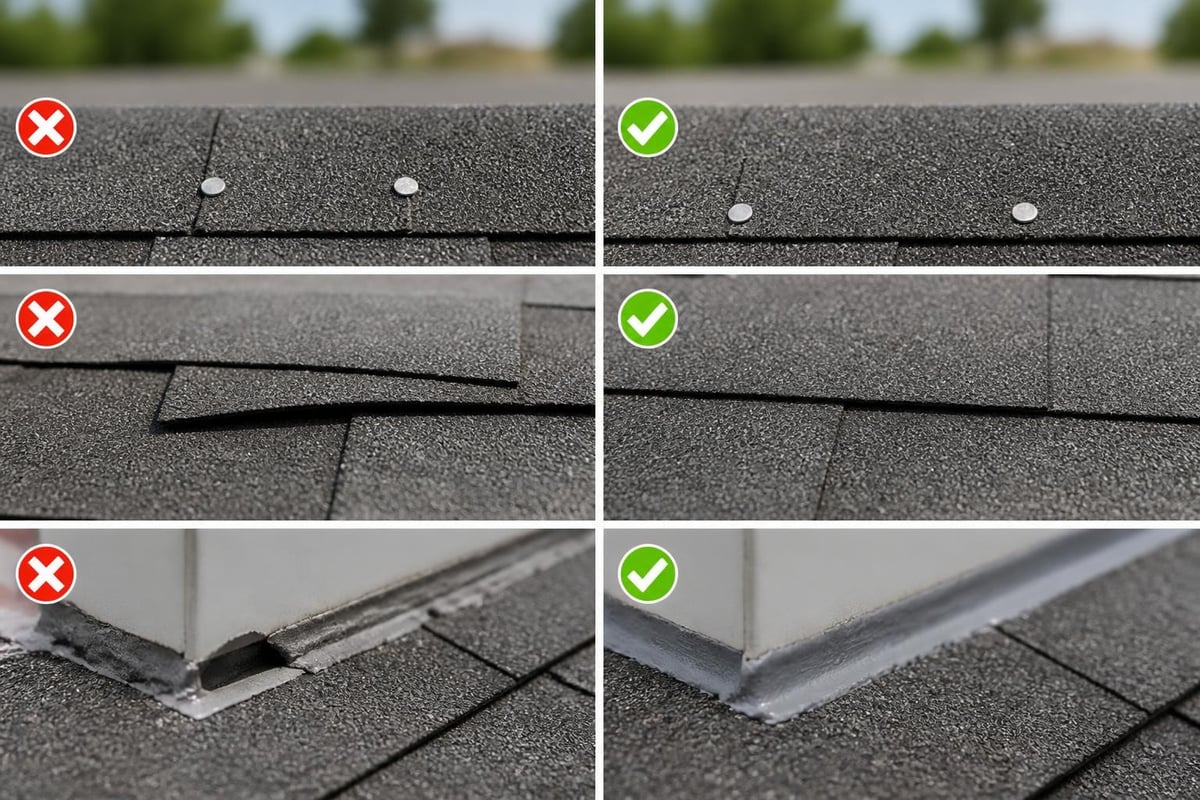
Frequent mistakes include:
- Over-nailing or under-nailing replacement shingles
- Misaligned shingle placement disrupting water channeling
- Inadequate sealant application leaving edges vulnerable
- Wrong nail type or length causing blow-offs
- Failure to check deck condition before installing new shingles
The Roofing Practices Manual provides detailed standards for asphalt shingle installation that apply equally to repairs. Following these practices ensures repairs perform as intended.
Material Matching Problems
Using incompatible shingles creates visible patches and potential performance issues. Mixing three-tab with architectural shingles looks obvious and may not seal properly due to thickness differences.
Color mismatches frustrate homeowners. What appears close in the bundle looks noticeably different on the roof, especially on sun-facing slopes where fading happens faster. Professional roofers account for this by slightly scattering replacement shingles or selecting from weathered inventory when available.
Temporary vs. Permanent Repair Solutions
Not every roof shingle repair needs to be permanent immediately. Sometimes temporary measures make sense while planning larger projects or navigating insurance claims.
Emergency Temporary Fixes
After storm damage, getting a tarp or temporary patch in place prevents interior damage while arranging permanent repairs. Roofing cement and a few strategically placed shingles can buy weeks or months if needed.
Effective temporary solutions:
- Roofing cement over small gaps or lifted shingles
- Tarp installation secured with battens
- Plywood patches over damaged areas
- Temporary flashing around leaking penetrations
These aren't permanent solutions, but they prevent ongoing water intrusion that damages ceilings, insulation, and framing. Think of them as bandages while arranging proper treatment.
Planning Permanent Repairs
Permanent roof shingle repair restores the roof to its original condition or better. This means matching materials, following manufacturer specifications, and addressing any underlying issues discovered during inspection.
Timing matters for permanent work. Shingles seal best in moderate temperatures when adhesive strips activate properly. Winter repairs in freezing weather may require hand-sealing with roofing cement since thermal activation won't occur until warmer months.
Insurance and Roof Shingle Repair
Many homeowners wonder if insurance covers roof shingle repair, especially after storms. The answer depends on your policy, the damage cause, and how well you document the situation.
What Insurance Typically Covers
Most homeowners policies cover sudden, unexpected damage from wind, hail, falling trees, or other named perils. Gradual wear and tear from age doesn't qualify.
Generally covered scenarios:
- Wind damage from storms
- Hail impact damage
- Fallen tree limbs
- Sudden structural failures
Not typically covered:
- Age-related deterioration
- Maintenance neglect
- Improper installation issues
- Cosmetic damage without functional impact
Documentation makes a significant difference in claims. Photos showing damage extent, repair estimates from licensed contractors, and detailed descriptions help claims adjusters understand what happened and what's needed.
Working with Adjusters
Insurance adjusters evaluate roof damage to determine coverage and claim amounts. Having professional documentation from a roofer familiar with insurance processes streamlines this significantly.
Your roofer should identify all storm-related damage, not just the obvious pieces. Adjusters sometimes miss subtle indicators like lifted seal strips, nail pops in wind-exposed areas, or granule loss patterns consistent with hail impact.
Be present during the adjuster's inspection if possible. Ask questions about coverage decisions and understand what's included or excluded before accepting a settlement. If you disagree with findings, you have the right to request re-inspection or hire a public adjuster.
Preventing Future Shingle Damage
While some roof damage comes from unavoidable weather events, proactive maintenance reduces repair frequency and extends roof life.
Regular Inspection Schedules
Walking your property twice yearly to visually inspect the roof from the ground catches problems early. Look for missing granules in gutters, visible shingle damage, or lifted edges.
Inspection timing:
- Spring after winter weather and ice
- Fall before winter storms arrive
- After major storms regardless of season
Professional inspections every three to five years provide more thorough assessments, checking details homeowners can't safely access or properly evaluate.
Maintenance That Reduces Repairs
Simple maintenance prevents many common issues that lead to roof shingle repair needs.
- Keep gutters clean so water drains properly and doesn't back up under shingles
- Trim overhanging branches to prevent rubbing and reduce debris accumulation
- Remove moss or algae growth that can lift shingles and retain moisture
- Ensure proper attic ventilation to prevent heat and moisture damage from below
Proper ventilation deserves special attention. Hot attic spaces cook shingles from underneath, accelerating aging and causing premature failures. Adequate soffit and ridge venting maintains temperatures closer to outdoor conditions, significantly extending shingle life.
Repair vs. Replacement Decision Making
The hardest decision homeowners face is determining when repairs no longer make sense and replacement becomes the better investment.
Evaluating Repair Viability
Several factors help clarify whether roof shingle repair is the right move or if replacement makes more sense financially and practically.
| Factor | Repair Makes Sense | Replacement Makes Sense |
|---|---|---|
| Roof age | Under 15 years | Over 20 years |
| Damage extent | Less than 30% of surface | More than 40% of surface |
| Leak history | First occurrence | Recurring multiple areas |
| Shingle condition | Mostly intact with good granules | Widespread curling, brittleness, granule loss |
These aren't absolute rules, but they provide a framework for evaluation. A ten-year-old roof with isolated storm damage almost always benefits from repair. A twenty-five-year-old roof with multiple problem areas typically needs replacement even if current damage seems minor.
Financial Considerations
Compare repair costs against remaining roof life expectancy. If repairs cost $2,000 but the roof only has three years of life left, you're spending $667 per year of extended use. If those same repairs buy ten more years, the annual cost drops to $200-a much better value.
Factor in potential resale timing too. If you plan to sell within two years, a full replacement might make more sense than multiple repairs, since buyers and appraisers view newer roofs more favorably.
Get honest input from contractors who won't push unnecessary replacement. Companies focused on helping homeowners understand what's happening with their roof rather than maximizing job size provide the most reliable guidance.
Understanding roof shingle repair options, costs, and decision factors helps homeowners respond appropriately when damage occurs without panic or overspending. Most repairs are straightforward when caught early and handled properly. If you're dealing with missing shingles, storm damage, or uncertain whether repair or replacement makes sense for your home in Eastern North Carolina, NC Roofs provides clear assessments and honest recommendations focused on what your roof actually needs.