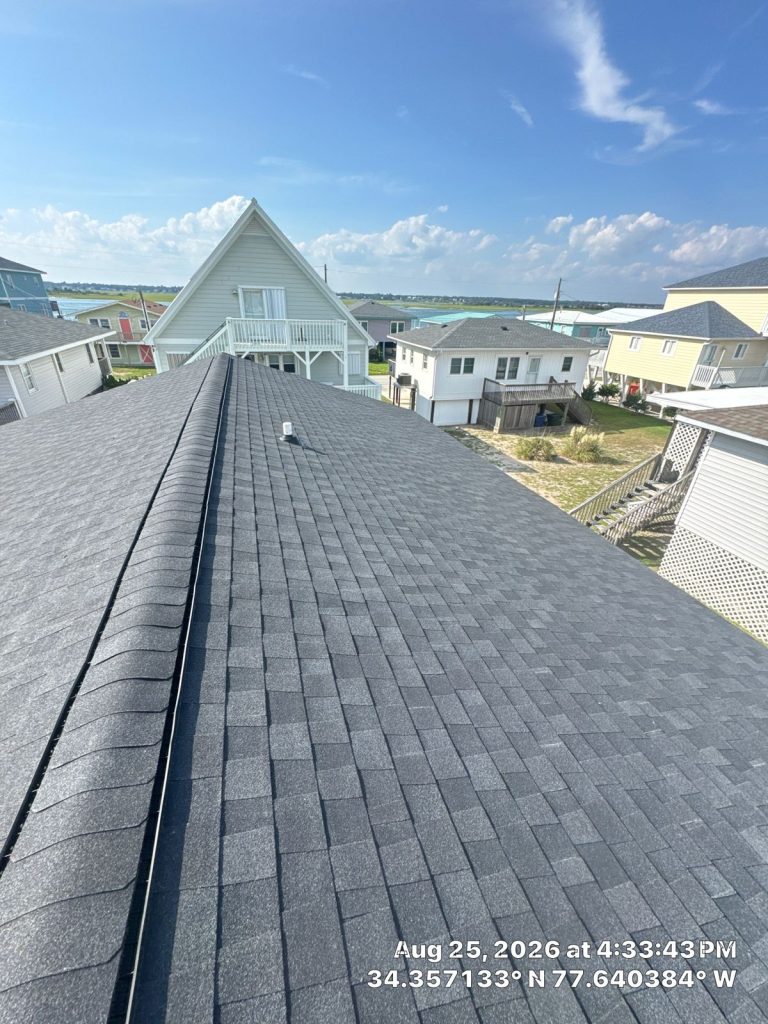
What’s different about a roof in Topsail Beach
Rocket history, real weather. Right after World War II, the U.S. Navy and Johns Hopkins University ran Operation Bumblebee here, a missile test program that fired more than 200 rockets off the island between 1946 and 1948. The 1946 Assembly Building on Channel Boulevard, where the missiles were put together, is now on the National Register of Historic Places and houses the Missiles and More Museum. The Navy left partly because weather got in the way of testing. That same weather is what island roofs deal with every year.
Big storms have a track record here. When Hurricane Fran came ashore in 1996, the National Weather Service reports Topsail Island was almost completely overwashed by a storm tide that reached 12 feet in places. After Hurricane Florence in 2018, one Topsail Beach owner told WRAL the shingles were gone from an entire side of his house, and another who saw only a few missing shingles in satellite photos came home to a caved-in ceiling. Small roof damage can hide bigger water damage underneath, which is why a close look after a storm is worth it.
Homes up on pilings. According to the town’s land use plan, practically all of Topsail Beach sits in the 100-year floodplain, and most oceanfront lots are at least partly in a VE zone, where waves add to flood risk. Federal flood rules allow only open foundations, such as pilings and posts, in those zones. That’s why so many island houses stand a full story off the sand, with the roof sitting high and open to wind off both the ocean and the sound.
Salt air works on metal. FEMA’s coastal building guide says metal corrosion is most pronounced on homes within 3,000 feet of the ocean and recommends hot-dipped galvanized or stainless steel hardware. On a roof, that means paying attention to flashing, vents and fasteners, not just the shingles.
A Beach Plan town. The North Carolina Insurance Underwriting Association offers wind and hail coverage in the 18 coastal counties through its Coastal Property Insurance Pool, formerly known as the Beach Plan. The plan’s beach area covers the part of North Carolina south and east of the Intracoastal Waterway, which is the strip of water between Topsail Island and the mainland, so Topsail Beach falls inside it. Knowing how these policies handle roof claims helps when it’s time to file one.