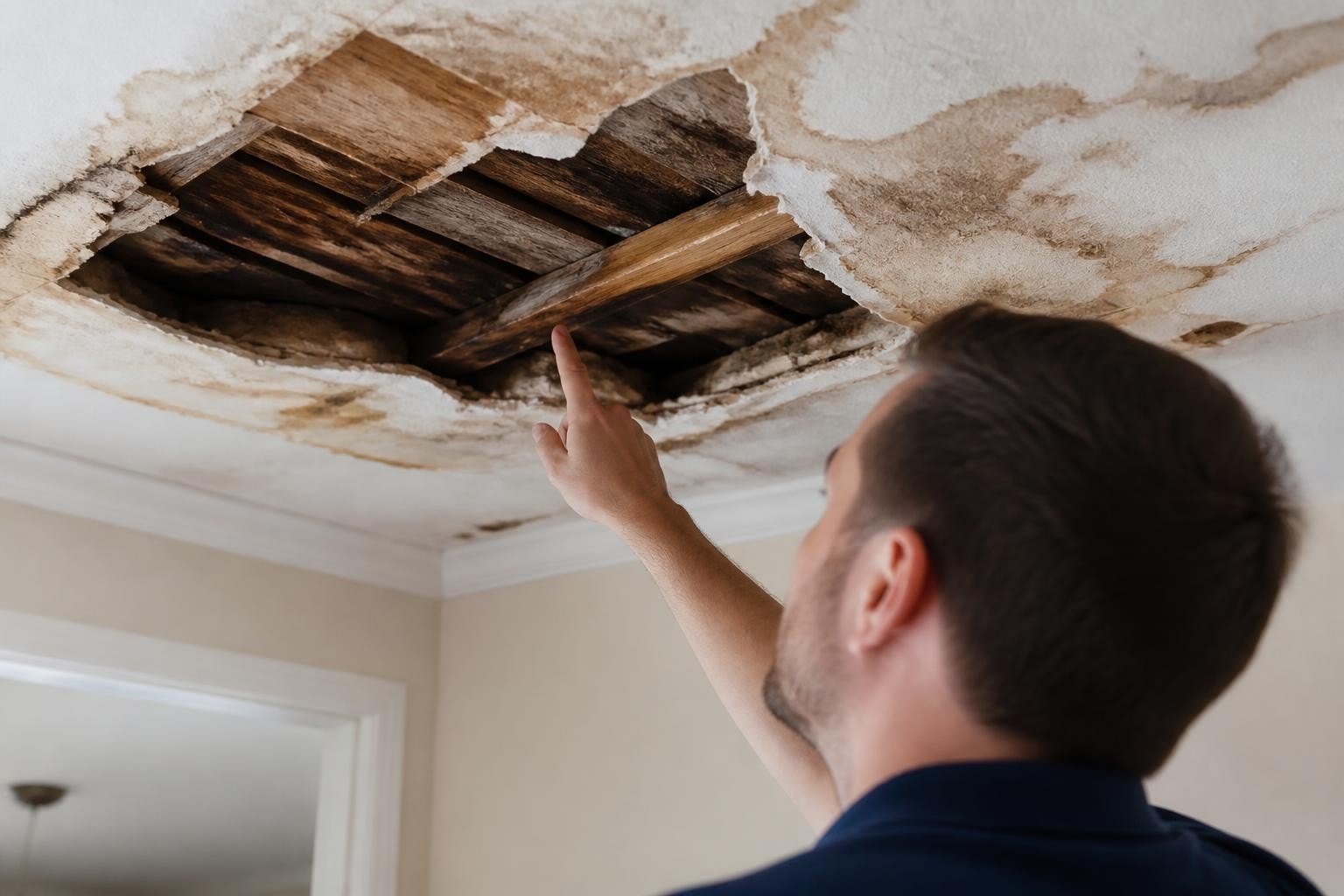
A roof leak might seem like a small problem when you first notice a water stain on your ceiling, but water damage rarely stays contained. What starts as a few drops during a rainstorm can turn into rotted decking, ruined insulation, and mold growth if left unaddressed. Understanding how to identify the source of a leak, what repair options make sense, and when to call a professional can save you thousands of dollars and protect your home from serious structural damage. This guide walks through everything Eastern North Carolina homeowners need to know about roof leak repair, from finding the problem to fixing it right.
Understanding How Roof Leaks Happen
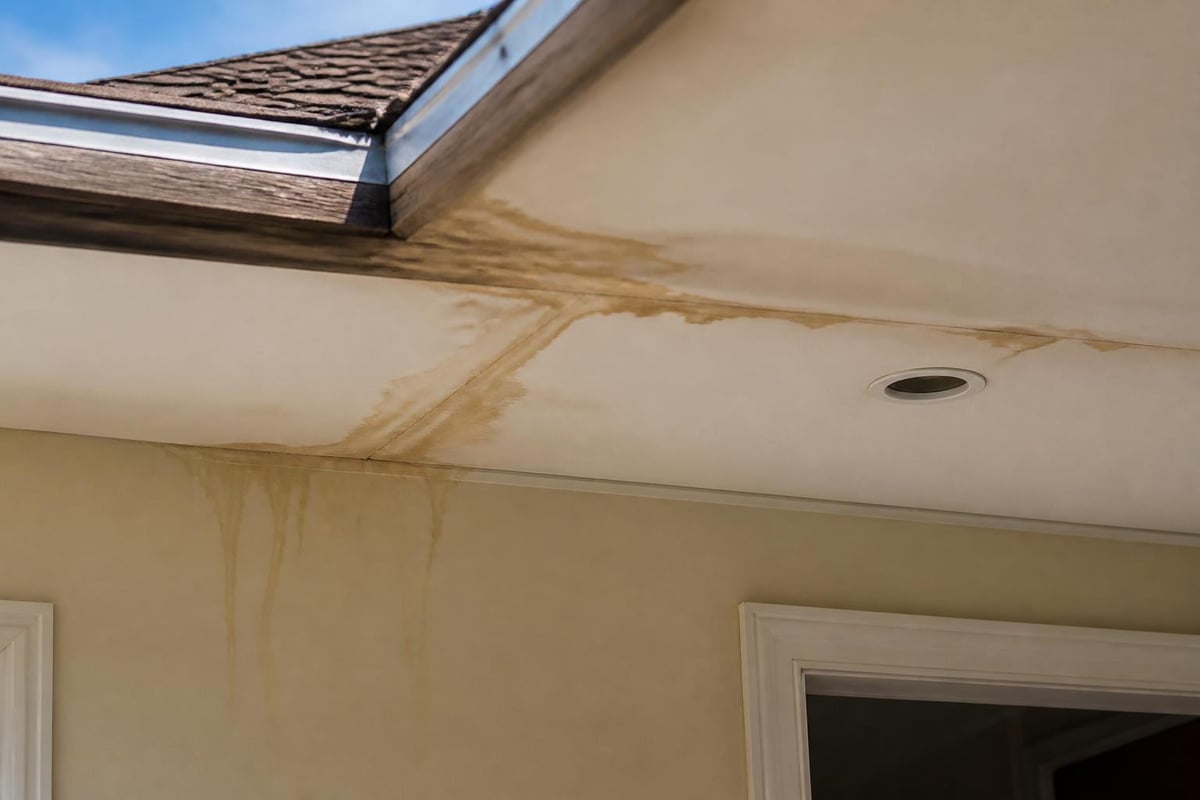
Water doesn't always show up where it enters your roof. It can travel along rafters, through insulation, and across horizontal surfaces before dripping onto your ceiling. That's why the wet spot inside your home might be several feet away from the actual point of entry.
Most leaks start where different roofing materials meet or where something penetrates the roof surface. These vulnerable points include:
- Flashing around chimneys, vents, and skylights where metal meets shingles
- Valley areas where two roof planes intersect
- Missing or damaged shingles that expose underlayment
- Worn pipe boots around plumbing vents
- Ice dams and debris buildup that force water under shingles
Common Causes in Coastal North Carolina
Homes near Topsail, Surf City, and Wilmington face specific challenges that accelerate roof wear. Salt air corrodes metal flashing faster than inland areas experience. Wind-driven rain during tropical storms pushes water horizontally under shingle edges that would normally shed water. UV exposure from intense summer sun breaks down asphalt shingles more quickly.
Age plays a role too. A 15-year-old roof might develop small problems that become leaks during the next heavy rain. Identifying the source accurately requires understanding both where water appears and where it actually enters.
Finding the Source of Your Leak
Locating a leak takes detective work. Start inside during or right after rain. Look for water stains, discoloration, or actual dripping. Note the location and check if you can access the attic above that spot.
In the attic, use a flashlight to trace the water trail upward. Look for:
- Wet insulation that shows the path water traveled
- Dark stains on rafters indicating repeated moisture
- Daylight showing through roof boards where materials have failed
- Water trails running along wood toward the leak location
Inspecting from the Outside
Once you have a general area identified from inside, examine the roof surface above that location. Look for obvious damage like missing shingles, cracked flashing, or separated seams. Common leak sources include deteriorated sealant around roof penetrations and lifted shingle tabs.
Check valleys especially carefully. Debris accumulation in valleys creates dams that back water up under shingles. Remove leaves and buildup, then inspect the valley metal or woven shingles for separation or rust.
| Inspection Area | What to Look For | Common Issue |
|---|---|---|
| Flashing | Gaps, rust, separation from roof | Sealant failure, corrosion |
| Shingles | Missing tabs, cracks, curling | Wind damage, age |
| Valleys | Debris, metal corrosion, separation | Water backup, material failure |
| Penetrations | Cracked boots, lifted edges | UV degradation, improper install |
Safety matters when getting on a roof. If your roof is steep, wet, or high, or if you're not comfortable with heights, hire someone to inspect it properly. A fall causes far more damage than any leak.
Temporary Fixes vs Permanent Repairs
When you discover a leak, your first instinct might be to stop the water immediately. Temporary measures can prevent further damage while you arrange proper repairs, but understanding the difference between a bandaid and a real fix matters.
Emergency Leak Stops
Tarps work for large damaged areas or when a storm has torn off multiple shingles. Extend the tarp past the damaged section and weight it down carefully. Tarps are temporary solutions only, typically lasting a few weeks to months depending on weather.
Roofing cement can seal small areas around flashing or fill minor gaps. It's not a substitute for replacing damaged materials, but it stops water intrusion while you plan repairs.
Bucket and towel placement inside your home prevents immediate water damage to floors and possessions. This doesn't fix anything, but it protects your interior.
Proper Roof Leak Repair Solutions
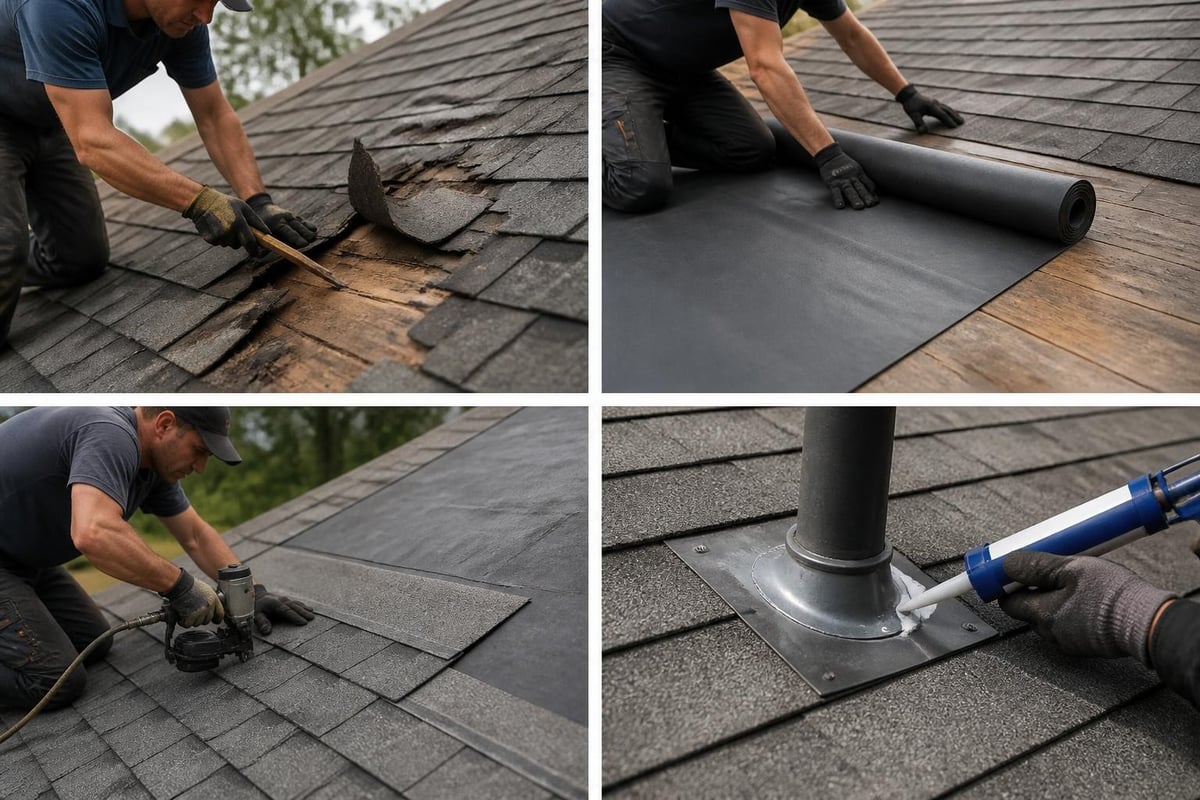
Real repairs address the underlying cause. That might mean:
- Replacing damaged shingles and underlayment in the affected area
- Removing and reinstalling flashing with proper sealant and overlap
- Replacing cracked pipe boots or worn vent covers
- Resealing valley metal or installing new valley material
- Addressing decking rot if water has penetrated that far
Step-by-step repair methods vary based on your roof type and the specific problem, but the principle stays the same. Remove compromised materials, replace structural components if needed, and install new weatherproofing that integrates properly with surrounding areas.
DIY Repair Considerations
Some roof leak repairs fall within homeowner capabilities, while others require professional expertise and equipment. Knowing which is which prevents inadequate fixes that fail in the next rain.
You can probably handle:
- Replacing a few missing shingles on a low-slope, easily accessible roof
- Applying sealant around a loose pipe boot
- Clearing debris from valleys and gutters
- Installing a tarp for emergency protection
You should hire a professional for:
- Repairs requiring removal of multiple courses of shingles
- Flashing replacement around chimneys or where roof meets walls
- Any work on steep or high roofs
- Situations where underlying decking might be damaged
- Skylights or complex penetrations
The NC Roofs roof repair service starts with a roof report that identifies exactly what needs attention, giving homeowners a clear picture before any work begins. This approach helps you understand whether a targeted repair makes sense or if broader work is needed.
Cost Factors in Leak Repairs
Roof leak repair costs vary significantly based on the problem's extent and location. A simple shingle replacement might cost a few hundred dollars, while extensive flashing work or multiple repair areas can run into thousands.
What Affects Price
Accessibility plays a major role. A leak on a single-story ranch costs less to repair than the same problem on a three-story colonial with steep pitches. Materials needed impact cost too. Replacing standard three-tab shingles differs from matching architectural shingles or working with tile or metal roofing.
Extent of damage matters most. If water has rotted decking or rafters, structural repairs add significantly to the bill. Catching leaks early almost always costs less than waiting until damage spreads.
| Repair Type | Typical Range | Complexity |
|---|---|---|
| Shingle replacement (small area) | $200-$500 | Low |
| Pipe boot replacement | $150-$400 | Low-Medium |
| Valley repair | $400-$1,200 | Medium |
| Chimney flashing | $800-$2,000 | Medium-High |
| Decking replacement | $1,500-$5,000+ | High |
Get specific pricing for your situation rather than relying on averages. A thorough inspection reveals the actual scope of work needed.
When Repair Makes Sense vs Replacement
Not every leak means you need a new roof. In fact, many homeowners replace roofs unnecessarily when targeted repairs would solve the problem for years to come. The key is understanding your roof's overall condition.
Repair makes sense when:
- Your roof is less than 15 years old with localized damage
- The leak stems from one specific area like damaged flashing
- Most shingles remain in good condition
- No widespread granule loss or curling exists
- Decking underneath stays solid and dry
Replacement becomes appropriate when:
- Multiple leaks appear in different areas
- The roof is near the end of its expected lifespan
- Widespread shingle deterioration exists beyond the leak area
- You've made multiple repairs over recent years
- Significant decking damage has occurred
An honest assessment helps you make the right call. Understanding roof leak causes helps determine whether the problem indicates a broader issue or represents an isolated failure.
Preventing Future Leaks
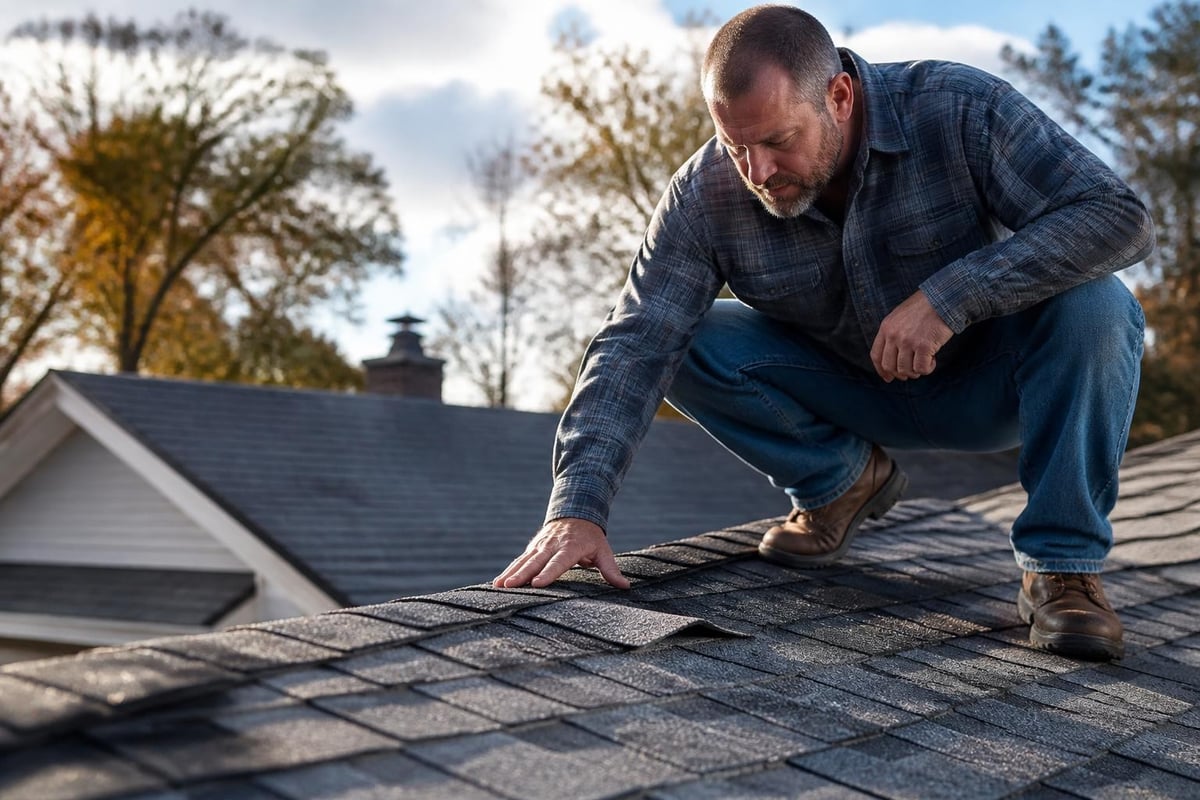
Roof leak repair fixes the immediate problem, but prevention keeps water out long-term. Regular maintenance catches small issues before they become expensive repairs.
Annual Maintenance Steps
Spring inspections after winter weather check for lifted shingles, damaged flashing, and granule loss. Fall cleanings remove debris before heavy rain seasons and verify all penetrations remain sealed.
Look for these warning signs:
- Granules accumulating in gutters indicating shingle wear
- Lifted or curled shingle edges vulnerable to wind
- Cracked or separated flashing around roof features
- Moss or algae growth that traps moisture
- Missing or damaged ridge cap shingles
Gutter Maintenance
Clogged gutters overflow and dump water against fascia and roof edges. This constant moisture deteriorates roof edges faster than normal weather exposure. Clean gutters twice yearly, more if you have overhanging trees.
Tree Management
Branches scraping shingles during wind remove protective granules. Falling limbs puncture roofing materials. Keep trees trimmed back at least six feet from your roof edge.
Attic Ventilation
Proper airflow prevents heat and moisture buildup that ages roofing materials from below. Verify soffit vents stay clear and ridge vents function properly. Poor ventilation shortens roof life and creates conditions where small leaks spread quickly.
Working with Roofing Professionals
Choosing who repairs your leak matters as much as identifying the problem. The cheapest bid often leads to inadequate repairs that fail within months. The most expensive might include unnecessary work.
What to Look For
Ask about specific repair methods for your situation. A professional should explain what they'll remove, replace, and how they'll integrate new materials with existing roofing. Vague promises to "fix the leak" without details suggest inexperience.
Warranty coverage shows confidence in workmanship. Quality repairs come with guarantees on both materials and labor. Understand what's covered and for how long.
Insurance and licensing protect you if something goes wrong. Verify contractors carry liability coverage and workers' compensation. Unlicensed workers might cost less upfront but leave you liable for injuries or poor work.
Getting Detailed Estimates
Request written estimates that itemize materials and labor. Proper leak detection requires inspection first, then detailed pricing based on what's actually needed. Beware of prices quoted over the phone without seeing the damage.
Compare estimates on scope of work, not just bottom-line price. One contractor might include decking inspection and minor structural repairs while another only quotes shingle replacement. Understanding what you're getting helps you make informed decisions.
Special Leak Situations
Some leak sources require specialized approaches beyond standard shingle repairs. Recognizing these situations helps you communicate effectively with contractors and understand why certain repairs cost more.
Skylight Leaks
Skylights create natural weak points in your roof. Skylight leak repairs address flashing around the unit, seals where glass meets frame, and integration with surrounding shingles. Sometimes the skylight itself needs replacement rather than just the flashing.
Ice Dam Damage
While less common in coastal North Carolina than northern climates, ice dams can form during rare freezing conditions. They force water backward under shingles. Prevention involves proper insulation and ventilation. Repairs might require examining underlayment integrity.
Storm Damage
High winds lift shingle tabs and drive rain horizontally into areas that normally stay dry. After significant storms, inspect your roof even if you don't see obvious damage. Small issues caught early prevent leaks during the next weather event. Your roof’s current condition determines whether storm damage requires immediate attention or just monitoring.
Flat or Low-Slope Roofs
Homes with flat sections require different leak repair approaches than sloped roofs. Pooling water, seam separation, and membrane deterioration create leak paths. These repairs often involve specialized materials and techniques beyond standard shingle work.
Understanding Roof Leak Warranties
When you pay for roof leak repair, understanding warranty coverage protects your investment. Different warranties cover different aspects of the work.
Workmanship warranties guarantee the installation quality. If a repair fails due to improper installation, the contractor returns to fix it at no charge. These typically run 1-5 years.
Material warranties come from manufacturers and cover defects in shingles, flashing, or other products. They don't cover installation errors or damage from external sources.
Transferable warranties add value if you sell your home. Some comprehensive warranties transfer to new owners, while others apply only to the original customer.
Read warranty terms carefully. Many exclude damage from:
- Severe weather events beyond normal conditions
- Lack of maintenance
- Modifications by other contractors
- Normal wear and tear beyond the coverage period
Document your repairs with photos and keep all paperwork. If you need warranty service later, you'll have proof of the original work and terms.
Regional Considerations for Coastal NC
Roofs near the coast face different challenges than homes inland. Salt air accelerates metal corrosion. Hurricane-force winds test every fastener and seal. High humidity promotes moss and algae growth that traps moisture.
Wind Resistance
Proper shingle installation includes adequate nailing and sealant to resist wind uplift. Repairs in coastal areas should meet higher wind resistance standards even if local code doesn't require it. The next tropical storm will test every repair you make.
Material Selection
Choosing materials resistant to salt air and UV exposure extends repair longevity. Galvanized flashing corrodes faster than copper or high-grade stainless. Architectural shingles with higher wind ratings outlast basic three-tab varieties in coastal conditions.
Inspection Timing
Schedule inspections before and after hurricane season. Pre-season checks in early summer identify vulnerable areas before storms arrive. Post-season inspections in late fall catch damage while it's fresh and easier to document for insurance purposes.
Roof leak repair protects your home from expensive water damage and structural problems when done correctly and promptly. Understanding how leaks develop, finding the source accurately, and choosing appropriate repair methods helps you make informed decisions rather than rushed choices during an emergency. If you're dealing with a roof leak in Hampstead, Topsail, Surf City, or surrounding coastal communities, NC Roofs provides thorough inspections and clear repair recommendations focused on fixing what actually needs attention at fair prices.