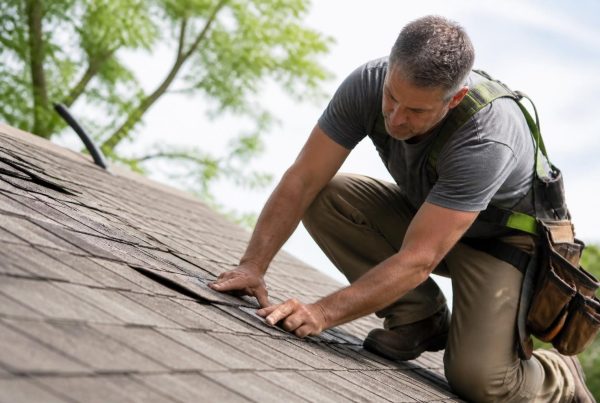
Finding a water stain on your ceiling or a damp spot in your attic brings up a quick question: can this be fixed, or does the whole roof need replacing? The small roof leak fix or replace decision isn't always straightforward, and making the wrong call can cost you thousands. Some leaks signal the end of your roof's life, while others just need a targeted repair that lasts another decade. Understanding the difference helps you spend money where it actually matters and avoid unnecessary work that doesn't fit your home's needs.
When a Small Roof Leak Means Simple Repair
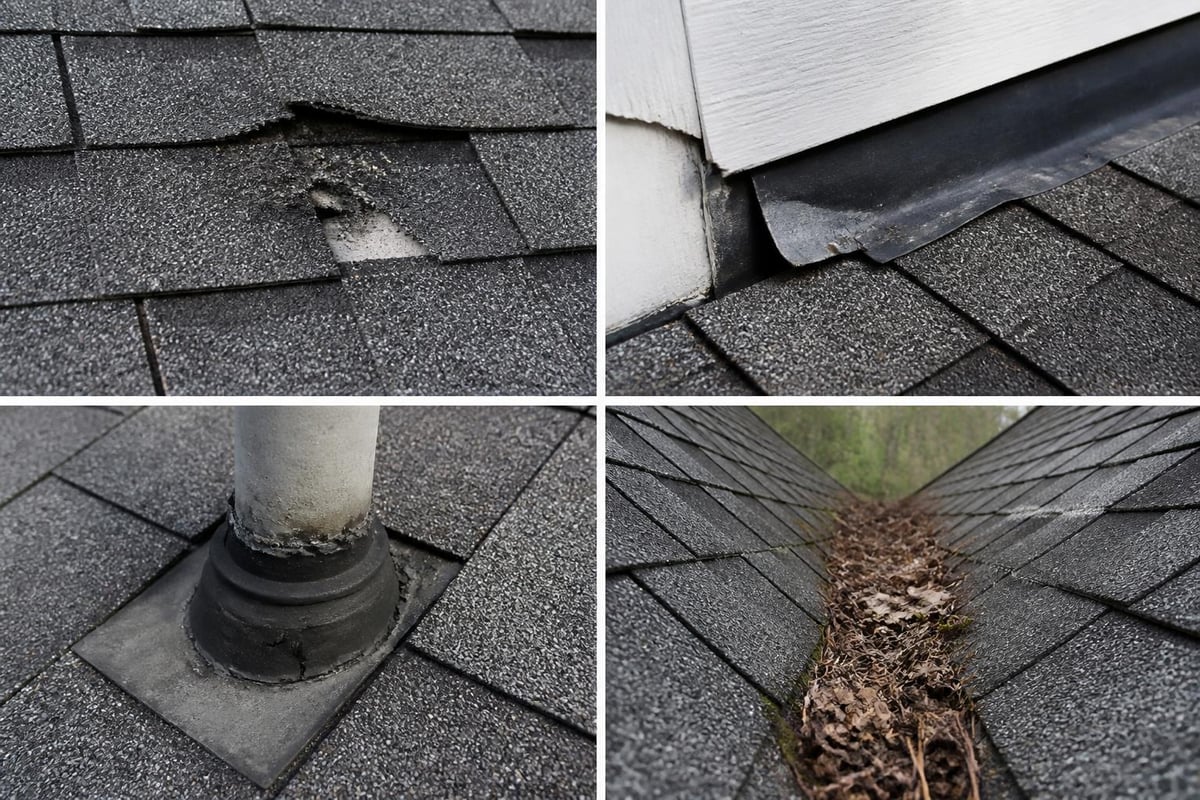
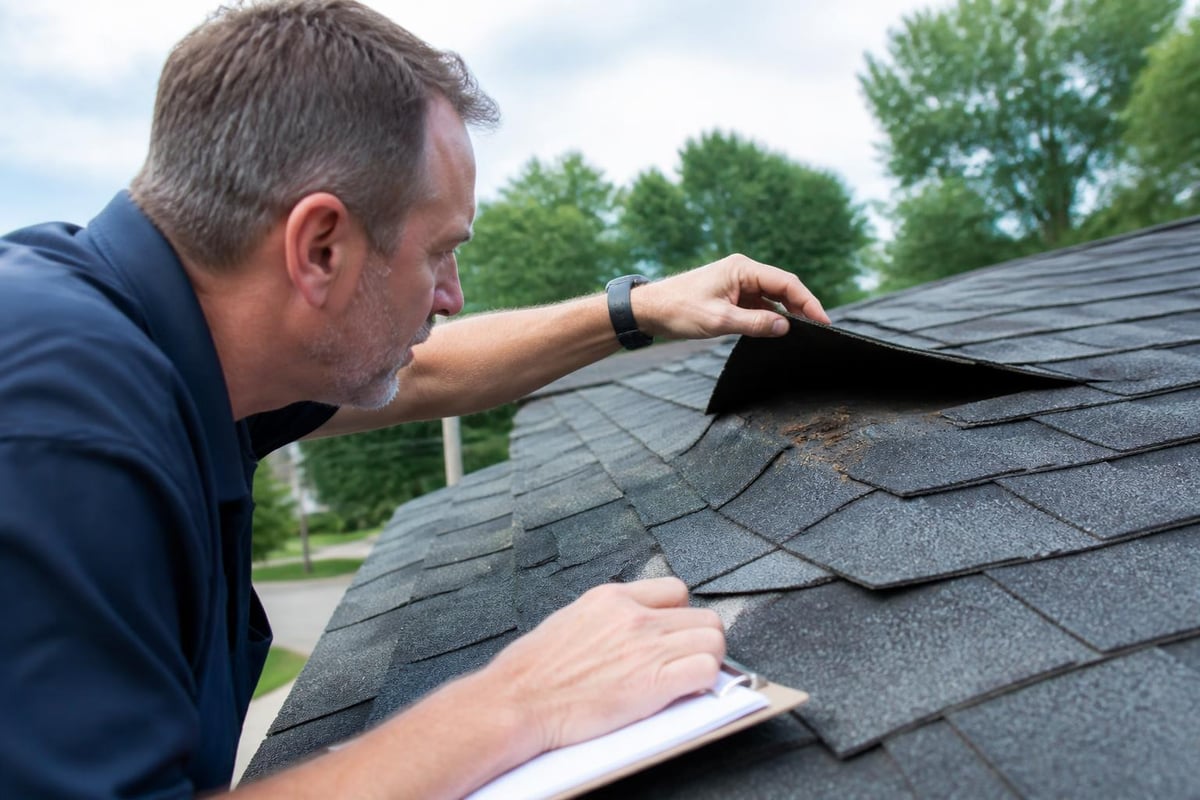
Most small leaks come from localized issues that don't require tearing off your entire roof. A missing shingle, cracked flashing around a chimney, or a worn pipe boot can all cause water intrusion without indicating widespread failure.
Common Repairable Leak Sources
Coastal North Carolina homes face specific leak triggers that often qualify for straightforward fixes:
- Missing or damaged shingles from wind events
- Deteriorated flashing around chimneys, skylights, or wall intersections
- Cracked pipe boots or vent seals
- Nail pops that create small entry points
- Debris buildup in valleys that redirects water
If your roof is under 15 years old and the damage stays confined to one area, repair usually makes the most sense. Roof repair focuses on addressing what's actually broken rather than replacing functional materials that still have years of service left.
Age and Material Condition Matter
A 10-year-old architectural shingle roof with one damaged section has plenty of life remaining. The surrounding shingles still seal properly, the underlayment stays intact, and the deck shows no signs of rot. Replacing good materials wastes money and doesn't improve performance.
Look at the unaffected areas. Do the shingles lie flat? Are granules still present across most of the roof? Can you walk on it without feeling soft spots? These indicators help separate a repairable issue from systemic failure.
Signs You Need Replacement Instead
Some leaks reveal problems that run deeper than surface damage. When water has compromised structural components or the roof has reached the end of its expected lifespan, the small roof leak fix or replace calculation shifts toward replacement.
Structural Damage Red Flags
Water doesn't stay on the surface. Once it penetrates shingles and underlayment, it reaches the roof deck and framing. Check for these warning signs:
| Issue | What It Means | Repair or Replace? |
|---|---|---|
| Sagging roofline | Structural compromise from prolonged moisture | Replace |
| Multiple leak locations | Widespread system failure | Replace |
| Soft or spongy deck | Wood rot from water intrusion | Replace affected section or full roof |
| Daylight through attic | Deck deterioration | Replace |
| Interior mold growth | Long-term moisture issues | Replace (after addressing cause) |
If you see daylight filtering through your attic boards or feel soft spots when walking on the roof, water has already damaged the deck. Patching shingles won't solve the underlying problem, and deciding between roof repair and replacement requires looking at the full scope of deterioration.
Lifespan Considerations
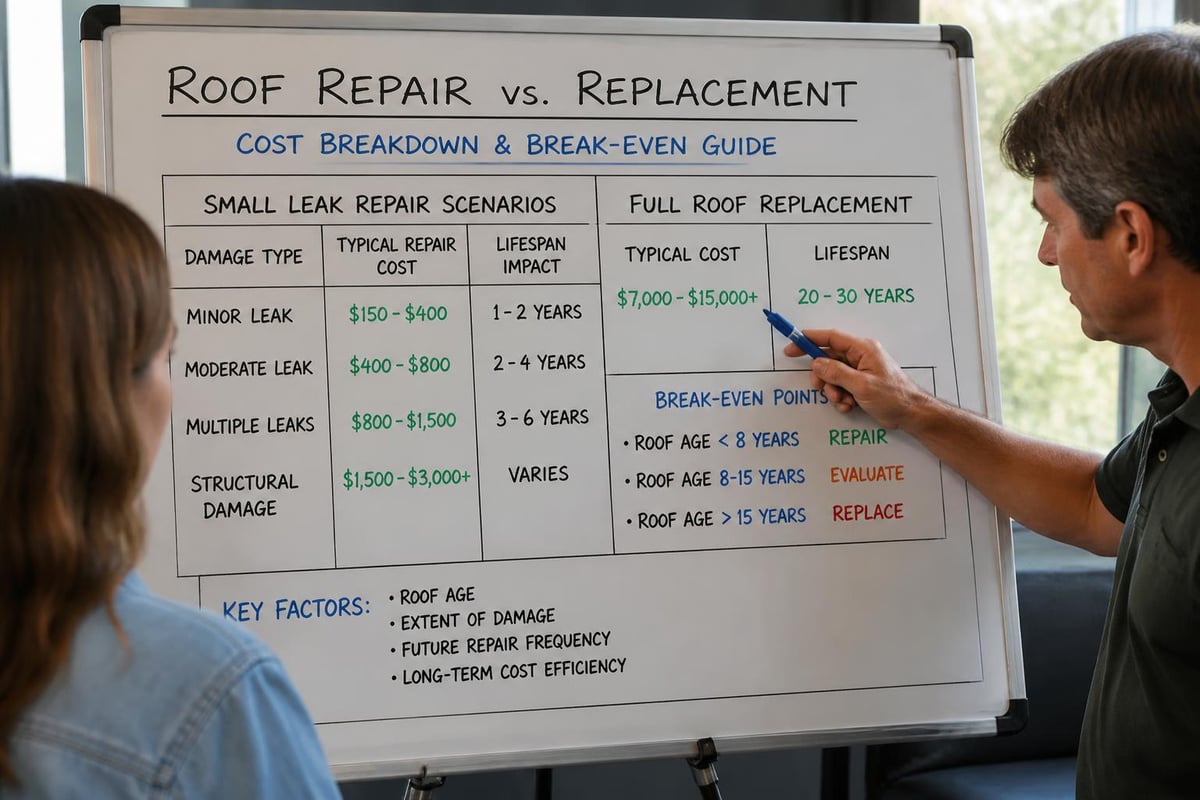
Even quality roofing materials have finite lifespans. Three-tab asphalt shingles typically last 15-20 years in Eastern North Carolina's climate, while architectural shingles reach 20-30 years depending on installation quality and weather exposure.
A 25-year-old roof showing its first leak probably has other weak points about to fail. Repairing one spot now might buy you six months before another leak appears somewhere else. At that age, replacement prevents the cycle of ongoing repairs that cost more over time than addressing the whole roof at once.
Cost Analysis for Homeowners
Money drives most roofing decisions, and understanding real numbers helps you make informed choices about the small roof leak fix or replace question.
Typical Repair Costs
Roof leak repair costs vary based on accessibility, materials, and damage extent:
- Simple shingle replacement: $150-$400
- Flashing repair: $200-$600
- Valley repair: $300-$1,000
- Pipe boot replacement: $150-$300
- Multiple areas or difficult access: $500-$2,000
These numbers assume basic fixes without underlying deck damage. If you need deck board replacement, costs increase by $50-$100 per square foot of affected area.
Replacement Investment
Full roof replacement in coastal North Carolina typically runs $5,500-$12,000 for an average-sized home with architectural shingles. Premium materials, complex roof designs, or additional deck work push costs higher.
Compare that to repair costs. If you're spending $1,500 on repairs for a 20-year-old roof, you're putting 15-25% of replacement cost into a system that might fail again within a year or two. That same $1,500 on a 10-year-old roof represents a smart investment that extends a basically sound structure.
The 30% Rule
Many roofing professionals use a simple guideline: if repair costs exceed 30% of replacement cost, replacement usually makes better financial sense. This rule accounts for the likelihood of additional failures and the value you get from a complete warranty on new materials.
A $2,000 repair on a roof where replacement costs $7,000 hits that threshold. You're spending significant money without gaining the full lifespan and protection that comes with new roofing.
Making the Decision
The small roof leak fix or replace choice ultimately comes down to a few key factors working together. No single element tells the whole story.
Decision Framework
Use this approach to evaluate your situation:
- Assess roof age against expected lifespan for your materials
- Count leak locations and determine if damage is isolated or widespread
- Inspect structural components for rot, sagging, or deterioration
- Calculate repair costs relative to replacement investment
- Consider future plans for the home
A thorough inspection reveals what you're actually dealing with. Today’s Homeowner offers guidance on evaluating roof condition and making repair versus replacement decisions based on specific circumstances.
Questions to Ask Your Roofer
Getting straight answers helps you understand your options:
- How old is my roof and what's the expected lifespan for these materials?
- Is the damage confined to one area or are there multiple problem spots?
- What condition is the roof deck in around the leak?
- Will this repair last 5+ years given the roof's overall condition?
- What warranty comes with the repair work?
If a contractor immediately recommends replacement without explaining what they found or why repair won't work, ask for details. A good roofer walks you through the decision rather than pushing one option.
Regional Factors for Coastal North Carolina
Eastern North Carolina's climate creates specific challenges that influence the small roof leak fix or replace equation for local homeowners.
Wind and Storm Exposure
Coastal areas deal with regular wind events that test roofing systems. Even tropical storms that don't reach hurricane strength can lift shingles, drive rain under edges, and accelerate wear on older roofs.
If your leak appeared after a recent storm, check the entire roof for additional wind damage. What looks like one problem might indicate several compromised areas that will leak during the next weather event.
Salt Air and Humidity
Salt exposure accelerates deterioration of metal components like flashing and fasteners. A pipe boot that lasts 15 years inland might fail at 10 years near the coast. This shortened lifespan means repairs on older coastal roofs may not hold as long as the same fixes elsewhere.
Humidity also promotes faster degradation of organic materials. Asphalt shingles break down more quickly, and any moisture that penetrates creates ideal conditions for mold and rot in the deck and framing.
Insurance Considerations
Many coastal homeowners carry wind and hail policies with specific deductibles. Understanding your coverage helps inform repair versus replacement decisions, especially after storm damage.
The Home Depot’s comparison guide covers factors including insurance implications when weighing repair against replacement options.
Temporary Fixes and Emergency Measures
Sometimes you need to stop a leak immediately while you evaluate long-term solutions. Temporary repairs buy time without committing to major work.
What Works Short-Term
Roof tarps provide immediate protection during active leaks. Properly secured tarping can protect your home for weeks or months while you arrange inspection and work.
Roof sealant works for small cracks in flashing or around penetrations. This isn't a permanent solution, but it can prevent further water damage until you schedule proper repairs.
Emergency patching with roofing cement and spare shingles stops active water intrusion. Just understand these fixes are temporary and you'll need to address the underlying issue properly.
When to Call for Emergency Service
Active water intrusion during storms requires immediate attention. Standing water in your attic or ceiling can damage insulation, drywall, and electrical systems beyond just the roof structure.
Don't wait on obvious leaks. The longer water flows into your home, the more extensive the damage becomes and the higher your total repair costs climb.
DIY Versus Professional Work
Some homeowners consider tackling small leaks themselves. Understanding what you can safely handle versus when to call a professional prevents creating bigger problems.
Reasonable DIY Repairs
If you're comfortable working on a roof and have proper safety equipment:
- Replacing a few missing shingles on accessible areas
- Applying roofing cement around pipe boots or small flashing gaps
- Clearing debris from valleys and gutters
- Inspecting from the ground with binoculars
Eastern North Carolina's roofing professionals can evaluate these simple fixes to confirm they're appropriate for your situation.
When Professionals Are Necessary
Leave these situations to experienced roofers:
- Steep or high roofs where falls present serious injury risk
- Widespread damage requiring multiple repairs
- Structural issues involving deck or framing
- Flashing replacement around chimneys or complex roof intersections
- Any repair on a tile or metal roof where improper technique causes more damage
Professional guidance ensures repairs are done correctly and helps you understand whether fixing the current issue or planning for replacement makes more sense.
Long-Term Value Perspective
The small roof leak fix or replace decision isn't just about immediate costs. Consider what each option means for your home's value and your peace of mind over the next several years.
Return on Investment
Roof replacement typically returns 60-70% of cost when you sell your home. A new roof appeals to buyers and removes a major concern from home inspections.
Repairs don't add resale value, but they prevent damage that decreases value. A $500 repair that stops a leak protects thousands in potential ceiling, insulation, and structural damage.
Warranty Protection
New roofs come with manufacturer warranties on materials (often 25-50 years) and workmanship warranties from your contractor (typically 5-10 years). Quality repairs should include at least a one-year workmanship warranty.
If you're choosing between a repair with no warranty and replacement with full coverage, factor that protection into your decision. Warranty coverage matters when the next storm rolls through.
Planning Horizon
How long do you plan to stay in your home? If you're selling within two years, a repair that lasts that long makes perfect sense. If you're staying 10+ years, replacement might provide better value than a series of repairs on an aging roof.
Match your roofing investment to your timeline. Spending $8,000 on a new roof when you're moving in six months doesn't align with your needs, but neither does repeatedly repairing a failing roof you'll live under for the next decade.
Getting Multiple Opinions
Don't base the small roof leak fix or replace decision on one contractor's recommendation. Different perspectives help you understand your actual situation.
What to Look For
Quality roofing contractors will:
- Inspect thoroughly before recommending anything
- Explain what they found in terms you understand
- Provide options with honest pros and cons for each
- Give written estimates that detail scope and costs
- Stand behind their work with clear warranties
Be wary of anyone who quotes replacement without getting on your roof or pushes for immediate decisions without letting you evaluate alternatives.
Red Flags
Watch for these warning signs:
- Pressure tactics or "today only" pricing
- Recommendations without detailed inspection
- Unwillingness to explain findings or show you damage
- No local references or online reviews
- Requests for full payment upfront
Reputable roofing companies understand homeowners need time to make informed decisions and don't rush the process.
Documentation and Records
Keeping good records helps whether you repair or replace. Documentation proves work quality, tracks warranty coverage, and helps with insurance claims if needed.
What to Keep
Before and after photos show the problem and the completed work. These become important if you file insurance claims or need warranty service later.
Written estimates and contracts detail agreed scope, materials, and pricing. Clear documentation prevents misunderstandings and provides recourse if work doesn't match what you contracted for.
Receipts and warranties prove when work was completed and what coverage you carry. File these somewhere you can find them years later when you need warranty service.
Inspection reports from professionals document roof condition at specific points in time. These help track deterioration and support repair versus replacement decisions down the road.
Choosing between small roof leak fix or replace comes down to honest assessment of your roof's condition, realistic cost comparison, and clear understanding of what each option delivers. A small leak on a relatively new roof usually means targeted repair that extends the system's life, while the same symptom on an older roof might signal it's time for replacement that prevents ongoing problems. Local coastal conditions, your home's specific situation, and quality professional guidance all factor into making the right call. Whether you need a focused repair or complete replacement, NC Roofs provides straightforward assessments and honest recommendations that help Hampstead, Topsail, and Wilmington area homeowners understand their options and make decisions based on what actually makes sense for their situation.