Conservatories add valuable living space to your home, but their roofs face unique challenges that standard roofing systems don't encounter. Over time, conservatory roofs can become uncomfortable, inefficient, or structurally compromised, leading many homeowners to consider replacement rather than repair. Understanding when replacement makes sense, what options are available, and how the process works can help you make a confident decision that improves your home without overspending on unnecessary work.
Why Conservatory Roofs Need Replacement
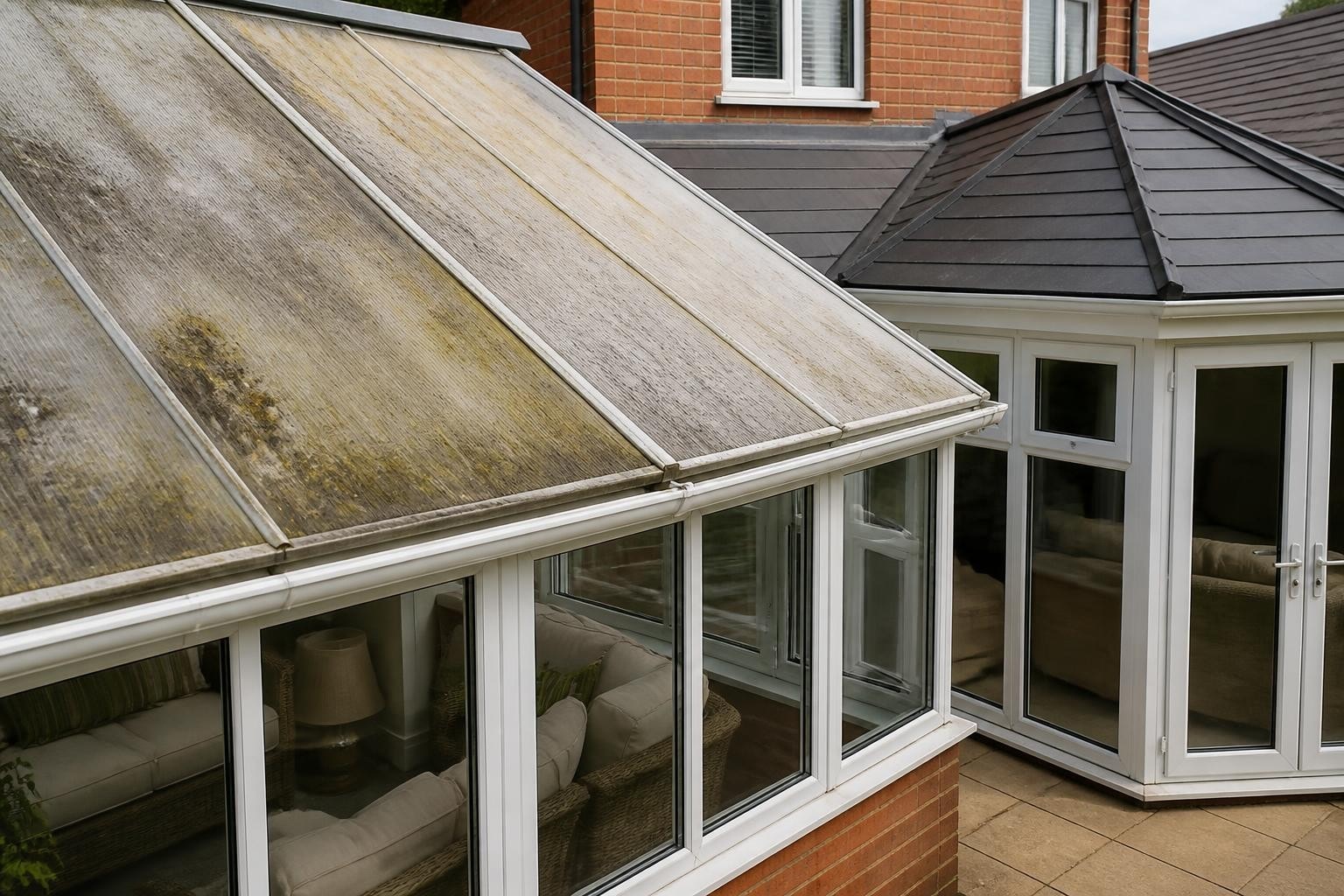
Conservatory roofs typically fail for different reasons than traditional roofs. The materials used in older conservatories, particularly polycarbonate and basic glass panels, weren't designed with long-term durability and insulation in mind.
Temperature extremes represent the most common complaint. Conservatories become uncomfortably hot during summer months and freezing cold in winter, making the space unusable for much of the year. This happens because single-glazed glass and polycarbonate sheets offer minimal thermal protection.
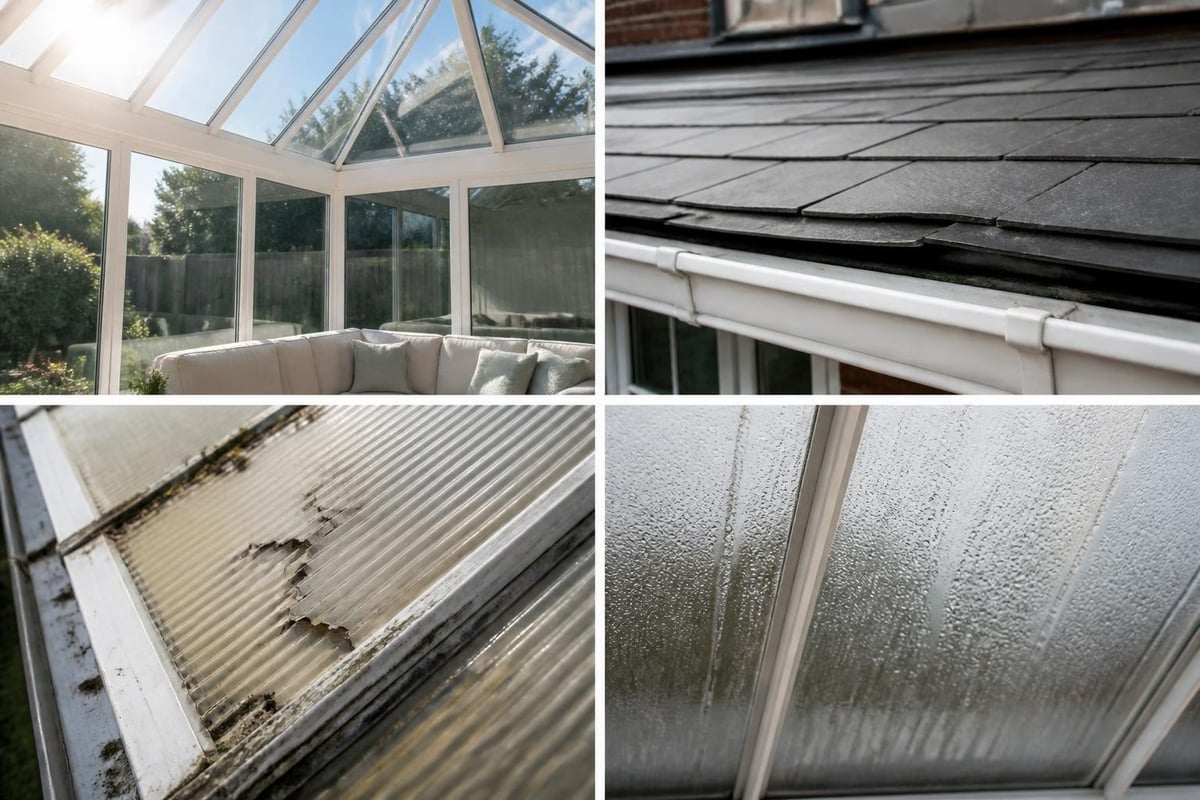
Structural deterioration also drives replacement decisions. The framework supporting conservatory roofs can weaken over time, especially in coastal environments where salt air accelerates corrosion. You might notice:
- Sagging or bowing roof panels
- Water pooling on supposedly pitched surfaces
- Cracks developing along panel edges
- Condensation forming between double-glazed units
- Visible rust or decay on support beams
Noise pollution becomes problematic with certain roof materials. Heavy rain drumming on polycarbonate creates a racket that makes conversation difficult and disrupts any attempt to relax in the space.
Assessing Your Current Roof Condition
Before committing to conservatory roof replacement, get a clear understanding of what's actually happening with your structure. Some issues can be addressed through targeted repairs, while others genuinely require complete replacement.
Start with a professional assessment. A qualified contractor should examine the framework, check for proper slope and drainage, inspect seals and flashings, and identify any structural concerns. This evaluation determines whether you're dealing with fixable problems or systemic failure.
According to guidance on conservatory roof replacement from Ideal Home, certain warning signs clearly indicate replacement is the better path forward. If your conservatory has multiple failing components, upgrading the entire roof often costs less than piecemeal repairs that don't solve underlying issues.
Consider the age of your conservatory. Structures built before 2010 often used materials and methods that don't meet current thermal efficiency standards. Even if the roof technically functions, replacement with modern materials can transform an uncomfortable space into year-round living area.
Material Options for Replacement Roofs
Conservatory roof replacement opens up material choices that weren't available when your structure was first built. Each option offers distinct benefits depending on your priorities for insulation, aesthetics, cost, and maintenance.
| Material Type | Insulation | Lifespan | Light Quality | Typical Cost Range |
|---|---|---|---|---|
| Tiled Roof | Excellent | 50+ years | Limited natural light | $$$$ |
| Glass Roof | Good (triple-glazed) | 25-30 years | Maximum light | $$$ |
| Polycarbonate | Poor to Moderate | 10-15 years | Good light, can discolor | $ |
| Solid Insulated Panel | Excellent | 30-40 years | Requires additional windows | $$$ |
Solid Tiled Roofs
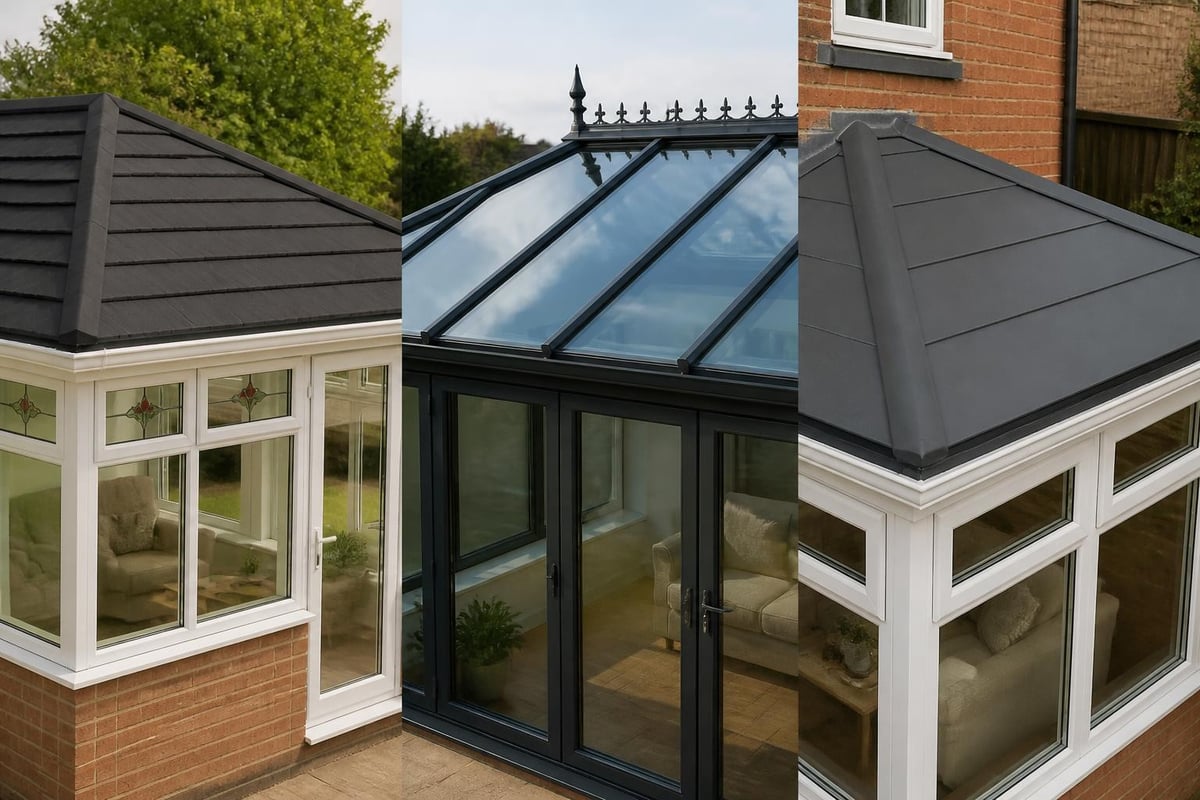
Tiled conservatory roofs turn the space into a proper room extension. These systems use lightweight roof tiles over an insulated framework, creating a structure that looks and performs like a traditional home addition.
Benefits include superior insulation, drastically reduced noise from rain and hail, and the ability to integrate recessed lighting and ceiling fans. The solid construction also increases property value more than transparent alternatives.
The tradeoff comes with natural light. Tiled roofs require strategically placed windows or skylights to prevent the space from feeling dark and enclosed. Many homeowners add roof windows or maintain glass sections around the perimeter to preserve brightness while gaining thermal comfort.
Modern Glass Systems
Today's glass conservatory roofs bear little resemblance to the single-pane systems installed decades ago. Triple-glazed units with low-emissivity coatings and argon gas fills provide impressive insulation while maintaining the bright, open feeling that makes conservatories appealing.
High-performance glass roofs work particularly well in climates with moderate temperatures. They allow passive solar heating during winter while specialized coatings reflect summer heat. Self-cleaning glass options reduce maintenance by breaking down dirt when exposed to sunlight.
Planning permission considerations often favor glass replacements because they maintain the conservatory's original appearance. Local regulations typically allow like-for-like replacements without requiring formal approval.
Insulated Panel Systems
Solid insulated panels offer a middle ground between full tile systems and glass. These composite panels sandwich insulation between exterior and interior facing materials, delivering thermal performance comparable to tiled roofs while weighing significantly less.
Panel systems install faster than tiled roofs and cost less while still transforming temperature control. They work well when you want a room that feels like interior space rather than a sunroom. Many manufacturers offer panel colors and finishes that coordinate with your home's existing exterior.
Understanding Replacement Costs
Conservatory roof replacement costs vary widely based on size, materials, structural work needed, and regional labor rates. Understanding what drives these costs helps you budget appropriately and identify fair pricing.
Size represents the primary cost factor. A small 10×10 conservatory requires less material and labor than a 15×20 structure. Most contractors price by square footage, with complex roof shapes costing more than simple rectangles due to additional cutting and fitting.
For detailed cost breakdowns, Homebuilding & Renovating’s analysis provides current market pricing across different material categories. Expect material choice to significantly impact your total investment.
Budget Considerations
- Structural reinforcement costs – Older conservatory frames may need strengthening to support heavier replacement roofs
- Building regulation compliance – Modern replacements must meet current thermal and structural standards
- Removal and disposal – Existing roof materials require safe removal and proper disposal
- Finishing details – Internal ceiling treatments, lighting integration, and trim work add to base costs
- Access challenges – Difficult site access or height requirements increase labor expenses
Many homeowners in coastal North Carolina face additional considerations. Salt air exposure may have corroded framework beyond simple roof panel replacement. A thorough inspection identifies whether underlying structure needs attention before new roofing goes on. If you're uncertain about the condition of your conservatory framework or other roofing structures on your property, a detailed Roof Report can document current conditions and help you understand what work is actually necessary.
Getting Accurate Quotes
Request itemized estimates that break down material costs, labor, structural work, and finishing separately. This transparency helps you compare quotes fairly and understand where your money goes.
Ask specific questions:
- What warranty covers materials and workmanship?
- How long will the project take from start to finish?
- What building permits or approvals are required?
- How will existing roof materials be disposed of?
- Does the quote include all necessary structural reinforcement?
Be cautious of unusually low bids that may cut corners on structural assessment or use substandard materials. The cheapest quote rarely delivers the best long-term value, especially for a major home improvement like conservatory roof replacement.
Structural and Regulatory Requirements
Replacing a conservatory roof involves more than swapping old panels for new ones. Structural integrity and building code compliance determine whether your project proceeds smoothly or encounters costly delays.
Load-Bearing Capacity
Modern replacement roofs, particularly tiled and solid panel systems, weigh considerably more than original polycarbonate or single-glazed installations. The existing framework must support this additional load without sagging or failing.
A structural engineer should evaluate whether your conservatory base and walls can handle the new roof weight. Older structures often need reinforcement through:
- Additional support columns
- Strengthened wall plates
- Upgraded foundation footings
- Enhanced lateral bracing
According to KJM Group’s technical guide, attempting to install heavy roofing over inadequate structure creates dangerous conditions and violates building codes. Avoid contractors who skip this evaluation or suggest simply "cladding over" existing roofs without proper structural analysis.
Building Regulations
Current building codes require conservatory roof replacements to meet thermal efficiency standards. This means achieving specific U-values (heat loss rates) through proper insulation and glazing specifications.
You'll typically need building control approval when:
- Changing from transparent to solid roofing
- Modifying the roof pitch significantly
- Adding load-bearing structural elements
- Converting the conservatory into habitable living space
Some replacements qualify as like-for-like repairs that don't trigger full building control, but confirm this with local authorities before starting work. Non-compliance creates problems when selling your home or filing insurance claims.
Installation Process and Timeline
Understanding how conservatory roof replacement unfolds helps you prepare for the disruption and plan accordingly. The process differs significantly from standard roofing work due to the structure's integration with your home.
Pre-Installation Steps
Contractors begin by protecting your home's interior and surrounding landscape. Conservatory furniture and plants need removal, and adjacent areas require covering to prevent damage from debris.
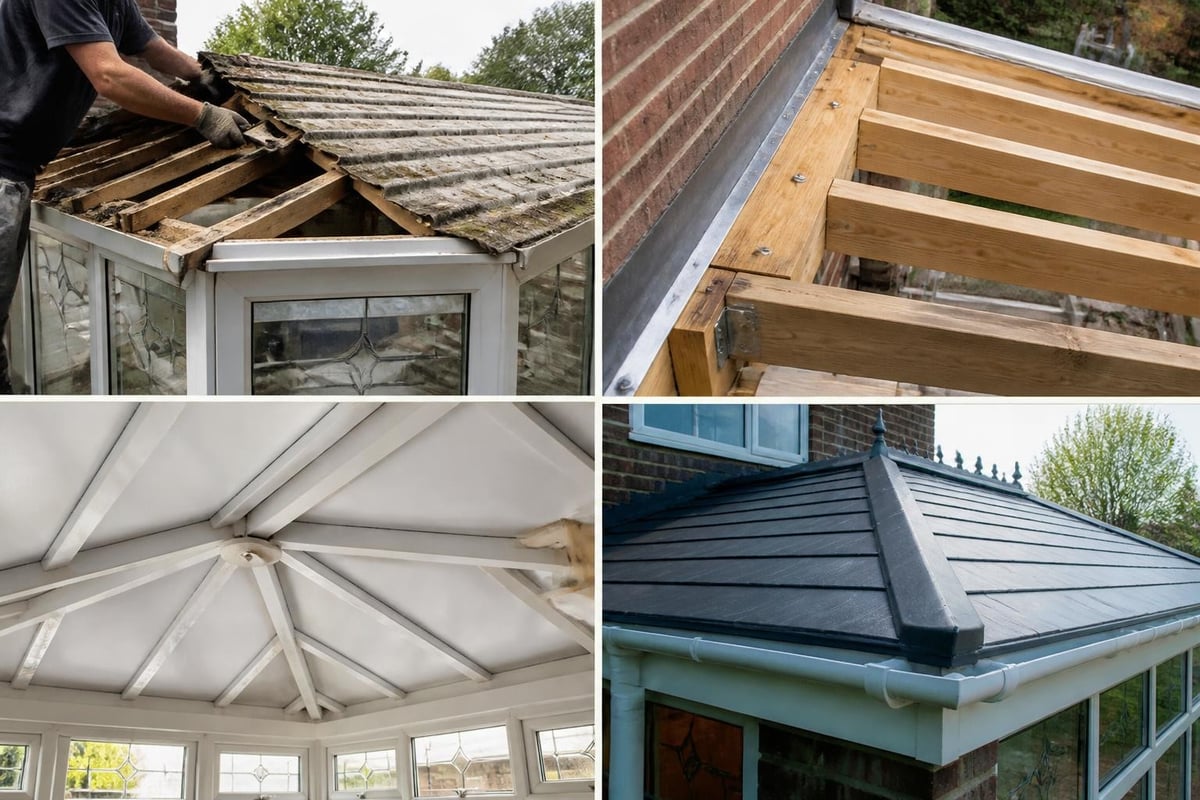
The existing roof comes off carefully to avoid damaging the framework you're keeping. Skilled installers remove glazing panels, polycarbonate sheets, or old roofing systematically, checking the exposed structure for hidden problems.
Timeline typically follows this pattern:
- Site preparation and protection (1 day)
- Existing roof removal and structural assessment (1-2 days)
- Framework reinforcement if needed (1-3 days)
- New roof installation (2-5 days depending on complexity)
- Interior finishing and cleanup (1-2 days)
Weather significantly impacts scheduling. Rain prevents work on exposed structures, while high winds make handling large panels dangerous. Budget extra time during unpredictable seasons.
Professional Installation Requirements
Conservatory roof replacement requires specialized skills beyond general roofing experience. The work involves precise measurements, structural calculations, waterproofing details, and integration with existing walls.
Look for contractors with specific conservatory experience. They should understand:
- How different materials expand and contract with temperature changes
- Proper flashing techniques where new roof meets existing walls
- Ventilation requirements to prevent condensation
- Thermal bridge elimination to maintain insulation continuity
Installing a new roof on an old conservatory presents unique challenges that inexperienced contractors often underestimate. Professional installation ensures your investment performs as expected and lasts for decades.
Improving Thermal Performance
The primary reason most homeowners pursue conservatory roof replacement centers on temperature control. Modern materials and proper installation transform unusable space into comfortable year-round living area.
Insulation Strategies
Effective conservatory roof insulation requires a comprehensive approach rather than just selecting insulated materials. Air sealing matters as much as insulation thickness.
Key thermal performance factors include:
- Eliminating gaps where warm air escapes or cold air infiltrates
- Creating continuous insulation without thermal bridges
- Installing proper vapor barriers to prevent condensation
- Ensuring adequate ventilation to maintain air quality
Solid roofs achieve the best thermal performance because they allow thick insulation layers similar to your home's main roof. Glass and panel systems rely on advanced glazing technology and minimized frame areas to reduce heat transfer.
Ventilation Balance
Improved insulation requires corresponding attention to ventilation. Sealed conservatories without air exchange develop condensation problems that damage materials and create unhealthy conditions.
Modern replacement roofs incorporate ventilation through:
- Ridge vents that allow hot air to escape naturally
- Eave vents providing makeup air from below
- Powered ventilation fans for active air exchange
- Opening windows or skylights for manual control
Proper ventilation design prevents the stuffiness and moisture buildup that plagued older conservatory designs while maintaining the thermal efficiency that makes the space comfortable.
Aesthetic Integration with Your Home
A replacement conservatory roof should enhance your home's appearance rather than look like an obvious add-on. Material selection and design details determine how well the finished project integrates visually.
Matching Architectural Style
Traditional homes benefit from tiled roofs that echo the main house roofing. Using similar or complementary tile colors and profiles creates visual continuity that makes the conservatory feel like an original part of the structure.
Contemporary homes might favor clean-lined glass or panel systems that emphasize modern aesthetics. The key lies in respecting your home's overall design language rather than creating jarring contrasts.
For guidance on conservatory roof replacement options that suit different architectural styles, consult resources that showcase completed projects across various home types.
Interior Ceiling Treatments
The underside of your replacement roof becomes the conservatory's ceiling, impacting the space's character significantly. Solid roofs allow traditional ceiling treatments including:
- Painted plasterboard for a room-like appearance
- Exposed beams creating character and visual interest
- Recessed lighting integrated during construction
- Ceiling fans improving air circulation
Glass roofs naturally showcase their structure, which should be clean and well-proportioned. Some systems offer decorative glazing bars or colored frames that add architectural interest while maintaining transparency.
Maintenance Requirements After Replacement
Modern conservatory roofs require minimal maintenance compared to older systems, but some attention keeps them performing optimally for decades.
Routine Care Tasks
Glass roofs need periodic cleaning to maintain appearance and self-cleaning coating effectiveness. Most homeowners clean accessible panels twice yearly, hiring professionals for high or difficult areas.
Solid roofs require even less maintenance. Annual inspections should check:
- Flashing seals where roof meets walls
- Gutters and downspouts for proper drainage
- Roof surface for debris accumulation
- Interior ceiling for any moisture stains
Panel systems typically just need occasional washing to remove dirt and maintain appearance. Their sealed construction prevents most maintenance issues.
Long-Term Performance
Quality conservatory roof replacement should deliver trouble-free performance for 25-50 years depending on materials chosen. The investment protects your home and creates usable space worth far more than the installation cost.
Watch for early warning signs that might indicate installation issues:
- Water stains appearing on interior surfaces
- Condensation forming where it shouldn't
- Temperature performance not meeting expectations
- Unusual noises during wind or rain
Addressing problems early prevents minor issues from becoming major repairs. Reputable installers stand behind their work and respond quickly to legitimate concerns.
Conservatory roof replacement transforms underutilized space into comfortable, year-round living area when done properly with appropriate materials and professional installation. Whether you're dealing with an aging conservatory or simply want better thermal performance, understanding your options helps you make confident decisions based on your home's actual needs rather than sales pressure. If you're in the Hampstead, Topsail, Surf City, or Wilmington areas and need honest guidance on any roofing project, NC Roofs provides clear explanations and fair recommendations focused on what actually makes sense for your home.