Every homeowner with roof damage eventually faces the same question: should I repair what's broken or replace the entire roof? The answer isn't always obvious, and the stakes are high. Getting it wrong means either overspending on an unnecessary replacement or throwing good money after bad on repairs that won't last. Understanding when each option makes sense requires looking at specific factors like damage extent, roof age, and long-term costs. This guide walks through the roof problem repair or replace decision using clear criteria, real costs, and practical examples from Eastern North Carolina homes.
Signs Your Roof Needs Attention
Before deciding between repair and replacement, you need to identify what's actually wrong. Some problems are visible from the ground, while others require a closer look.
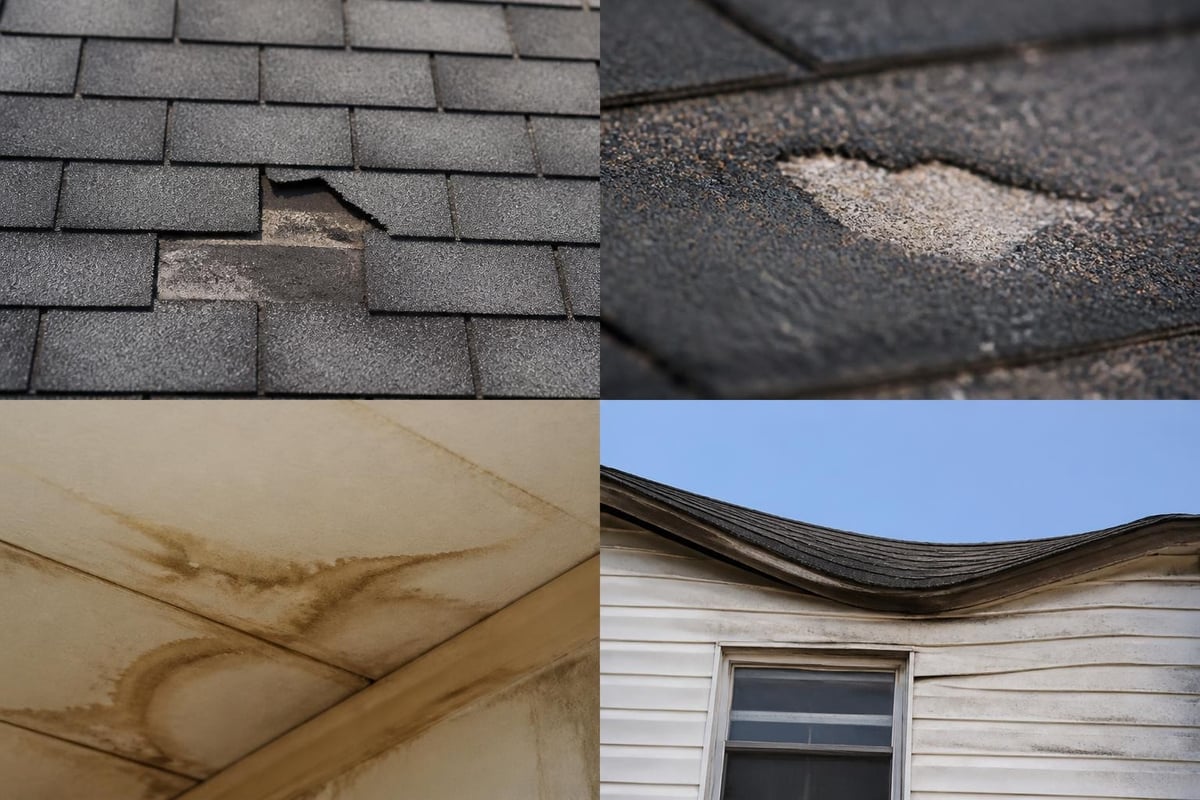
Common warning signs include:
- Water stains on interior ceilings or walls
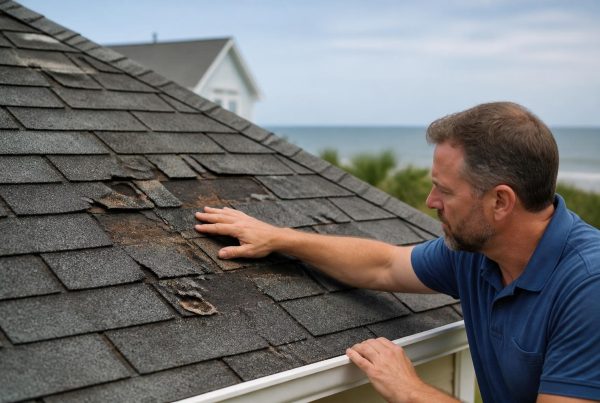
- Missing, cracked, or curled shingles
- Granules collecting in gutters
- Daylight visible through roof boards from the attic
- Sagging sections or visible dips in the roofline
Coastal homes deal with additional challenges. Salt air accelerates deterioration, and high winds from summer storms regularly lift or tear shingles. A small leak after a storm might seem minor, but water intrusion compounds quickly in our humid climate.
Not every issue requires immediate action. A few missing shingles after a windstorm is straightforward. Widespread granule loss across the entire roof tells a different story.
When Repair Makes Sense
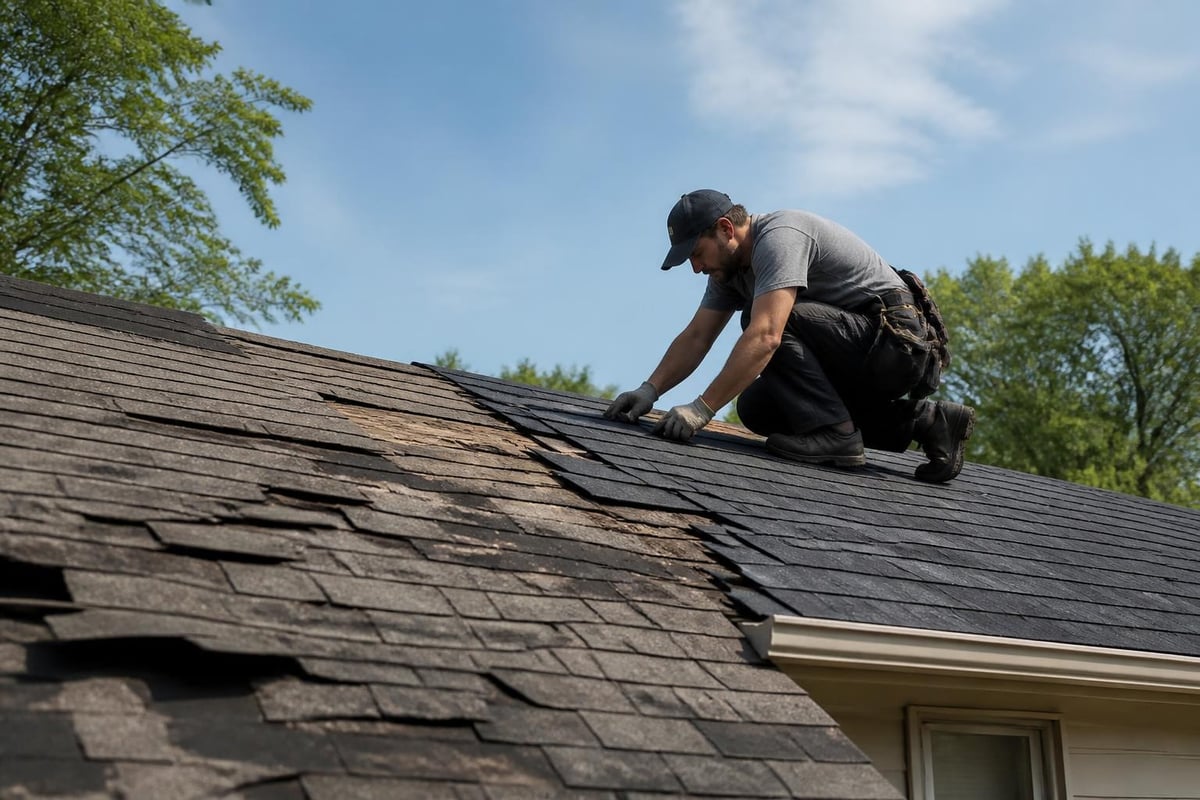
Roof repair works best for isolated damage affecting less than 25% of the total roof area. This percentage matters because once damage exceeds that threshold, replacement often becomes more cost-effective.
Localized Storm Damage
A branch punches through during a storm and damages a 4×6 foot section. The surrounding shingles are intact, the decking underneath is solid, and the roof is only eight years old. This is a clear repair situation.
The repair costs $800 to $1,200. A full replacement runs $12,000 to $18,000 for the same home. The math is obvious.
Recent Roofs with Minor Issues
If your roof is less than 10 years old and the damage is limited, repair almost always makes more sense. Modern roofing materials are designed to last 20 to 30 years under normal conditions.
A five-year-old roof with a small leak around a chimney flashing doesn't need full replacement. The flashing needs resealing or replacement. Total cost: $400 to $700. Problem solved.
Clear Damage Boundaries
When you can point to exactly where the problem starts and ends, repair is typically the right call. A valley where ice damming caused shingle damage. A section where wind lifted a few courses. A penetration where sealant failed.
| Repair Scenario | Typical Cost | Expected Lifespan |
|---|---|---|
| Missing shingles (10-15) | $400-$800 | Matches existing roof |
| Flashing replacement | $300-$600 | 10-15 years |
| Small leak repair | $500-$1,000 | 5-10 years |
| Valley repair | $600-$1,200 | 10-15 years |
These repairs restore function without touching the majority of your roof.
When Replacement Is the Better Investment
Some situations point clearly toward replacement, even when repair seems cheaper initially. The 25% rule is a good starting point: if more than a quarter of your roof needs work, replacement deserves serious consideration.
Age and Widespread Deterioration
A 22-year-old roof showing granule loss across 60% of the surface, with curling shingles in multiple areas, isn't a repair candidate. You might fix today's leak, but another will appear in six months, then another.
Repair costs stack up. Three separate repairs at $800 each total $2,400, and you still have an old roof. Replacement costs more upfront but delivers 20+ years of protection.
Multiple Problem Areas
When your roof has issues in different locations, the underlying cause is often age-related material failure. Repairs become a cycle: fix the north slope, then the south slope develops problems, then the valleys need attention.
Coastal exposure accelerates this pattern. Salt air and UV exposure don't affect just one section. Once widespread breakdown begins, isolated repairs only delay the inevitable.
Insurance Considerations
Insurance companies often require replacement rather than repair for older roofs or extensive damage. A roof over 15 years old with storm damage covering 30% of the surface typically triggers a replacement recommendation from adjusters.
This actually works in your favor. Insurance covers replacement cost (minus your deductible), meaning you get a new roof for a fraction of retail cost. Trying to repair instead means paying out of pocket with no insurance assistance.
The Math Behind the Decision
Numbers clarify roof problem repair or replace choices better than general advice. Here's how to evaluate your specific situation.
Cost-Per-Year Analysis
Compare what each option costs annually over its expected lifespan. A $1,200 repair that lasts three years costs $400 per year. A $15,000 replacement lasting 25 years costs $600 per year.
If your roof is already 18 years old, that repair might only buy 18 months before larger issues emerge. Now it's $800 per year for temporary fixes versus $600 per year for a complete solution.
Calculation steps:
- Estimate total repair cost including likely follow-up repairs
- Estimate realistic lifespan of repaired roof
- Divide cost by years to get annual expense
- Compare to replacement cost divided by new roof lifespan
- Factor in your roof's current age and condition
The 50% Threshold
Financial guidelines suggest that if repair costs approach 50% of replacement cost, replacement makes more financial sense. This threshold accounts for the diminishing returns on partial fixes.
A roof replacement costs $14,000. Repairs estimated at $7,500 cross that threshold. You're spending half the replacement cost for a partial solution that doesn't extend the roof's life proportionally.
Hidden Costs of Repeated Repairs
Every roof access costs money. Contractors charge minimum trip fees, typically $250 to $400 in Eastern North Carolina. Four separate repair calls over two years add $1,000 to $1,600 in baseline costs before any work begins.
Interior damage compounds the expense. A small leak ignored or temporarily patched can cause ceiling staining, insulation damage, and mold growth. These repairs easily exceed the cost difference between timely replacement and deferred maintenance.
Factors That Shift the Decision
Beyond age and damage extent, several factors influence whether repair or replacement makes sense for your specific situation.
Home Sale Timeline
Planning to sell within two years? Roof condition significantly impacts buyer confidence and home value. A worn roof raises red flags during inspections, potentially killing deals or forcing price reductions.
Replacement before listing demonstrates maintenance and removes a buyer objection. Repair might get you through closing, but buyers often negotiate harder or request seller-funded roof replacement.
Energy Efficiency Upgrades
Modern roofing systems include improved ventilation, better underlayment, and reflective shingles that reduce cooling costs. If your current roof lacks proper ventilation or uses outdated materials, replacement offers efficiency gains that repair can't match.
In coastal Carolina's climate, better ventilation means lower attic temperatures and reduced AC load. Those savings accumulate over decades.
Storm Season Timing
Making the roof problem repair or replace decision in April or May, before hurricane season, carries different weight than the same decision in November. A borderline roof limping toward replacement becomes a liability when storm season arrives.
We've seen homeowners choose emergency replacement after a June storm rather than planned replacement the following spring. Emergency work costs 15% to 25% more, and scheduling becomes difficult when every roofer is backlogged.
| Decision Factor | Favors Repair | Favors Replacement |
|---|---|---|
| Roof age | Under 12 years | Over 15 years |
| Damage extent | Under 20% | Over 30% |
| Home sale timeline | Not selling soon | Within 1-2 years |
| Repair history | First issue | Multiple past repairs |
| Budget availability | Limited short-term | Can finance or pay |
What a Proper Assessment Includes
Making an informed decision requires accurate information about your roof's condition. A thorough assessment goes beyond visual inspection from the ground.
Professional Inspection Components
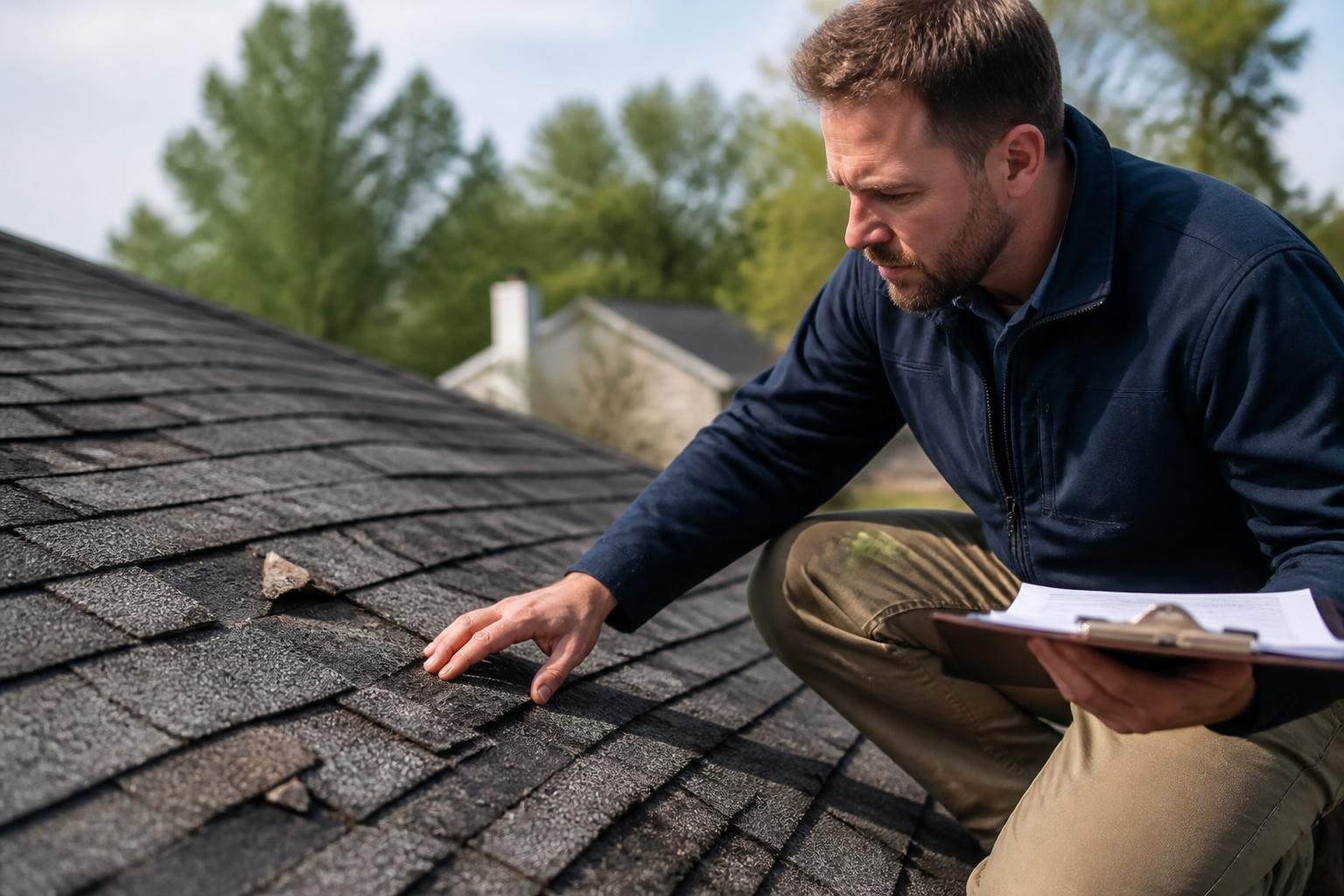
A legitimate roof inspection examines:
- Shingle condition: granule loss, curling, missing tabs, seal integrity
- Flashing status: around chimneys, vents, skylights, valleys
- Decking integrity: soft spots, visible damage, water stains from attic
- Ventilation adequacy: ridge vents, soffit vents, attic temperature
- Structural soundness: sagging, proper slope, truss condition
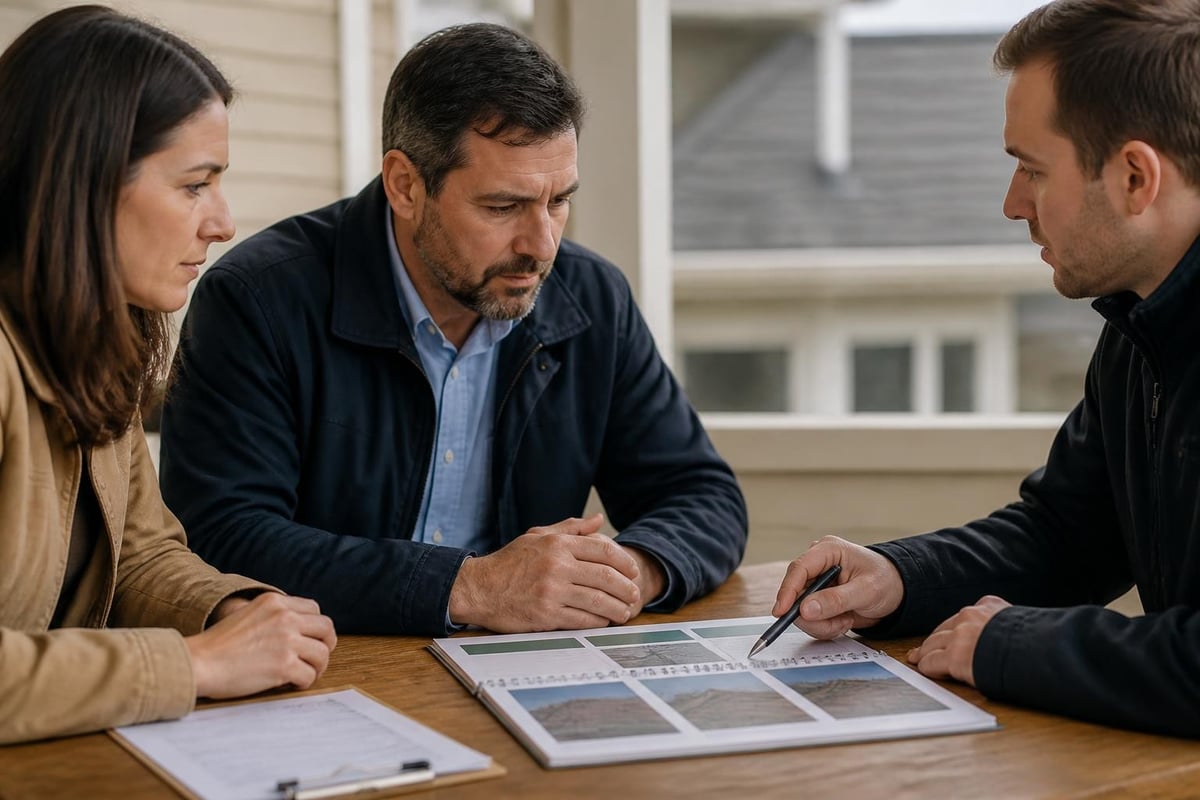
The inspector should provide documentation, including photos of problem areas and clear explanations of what each issue means. Vague statements like "your roof is old" don't help. Specific findings like "the north slope shows 40% granule loss with exposed mat in three areas" give you actionable information.
Getting Multiple Opinions
One opinion isn't enough when facing a major roof problem repair or replace decision. Get at least two, preferably three assessments from different contractors.
Watch for consistency. If two contractors identify the same issues and recommend similar solutions, you're getting reliable information. If recommendations vary wildly, someone is either missing problems or overselling solutions.
Roof repair services should start with a detailed roof report that documents current condition before discussing options. This transparency lets you understand what's actually needed rather than accepting a recommendation at face value.
Understanding Your Roof Report
A good roof report includes:
- Current roof age and material type
- Specific problem areas with photo documentation
- Severity assessment for each issue
- Remaining expected lifespan
- Repair options with individual costs
- Replacement cost for comparison
- Honest recommendation with reasoning
This documentation helps you make decisions based on facts rather than pressure. It also provides records for insurance claims or future buyers if you sell.
Common Mistakes Homeowners Make
Certain errors repeatedly cost homeowners money and extend problems unnecessarily.
Delaying Obvious Replacement
The biggest mistake is repairing a roof that clearly needs replacement. A 25-year-old roof with widespread issues won't suddenly improve. Each repair buys a few months, not years.
Homeowners sometimes spend $3,000 to $5,000 in staged repairs over 18 months when replacement was the right call from the start. That money disappears without delivering long-term value.
Replacing When Repair Suffices
The opposite error happens too: replacing a relatively new roof because one contractor recommends it. A 10-year-old roof with isolated damage rarely needs full replacement, regardless of what a sales-focused company suggests.
This mistake costs $10,000+ unnecessarily and removes a roof with years of useful life remaining.
Ignoring Underlying Causes
Fixing symptoms without addressing causes guarantees repeat problems. A leak from poor flashing won't stop just because you seal it with caulk. Valley problems caused by inadequate ice and water shield will recur after temporary patches.
Proper repair identifies why the problem developed and fixes the root cause, not just the visible symptom.
Choosing Based on Price Alone
The lowest bid often comes from contractors cutting corners. Substandard materials, inadequate warranties, or rushed work create problems that cost more to fix than you saved initially.
The highest bid isn't automatically better either. Understanding what you’re paying for matters more than the number itself.
Financing Considerations
Cost is a major factor in the roof problem repair or replace decision, but payment options can shift what's affordable.
When to Finance Replacement
If repair costs exceed $2,000 and your roof needs replacement within three years anyway, financing replacement often makes more sense. Monthly payments spread cost over time while delivering immediate protection.
A $15,000 replacement financed over five years at 7% APR costs roughly $297 monthly. Many homeowners find that more manageable than facing another $2,500 repair bill in 18 months, followed by inevitable replacement.
Insurance Coverage and Deductibles
Storm damage repairs or replacement often qualify for insurance coverage. Your deductible typically ranges from $1,000 to $2,500. If replacement costs $14,000 and insurance covers it, your out-of-pocket expense is just the deductible.
Paying $1,500 for a new roof versus $2,200 for partial repairs makes replacement the obvious choice. Understanding your coverage before deciding is essential.
Return on Investment
Roof replacement returns roughly 60% to 70% of cost in home value increase. That's among the better returns for exterior improvements. Repair doesn't add value, it maintains existing value.
If you're selling soon, replacement might deliver financial benefit beyond just fixing the problem.
Regional Factors for Coastal North Carolina
Our specific climate and weather patterns influence how the roof problem repair or replace decision plays out locally.
Hurricane and Wind Exposure
Coastal winds test every roof regularly. A repair using standard techniques might hold in inland areas but fail here during the next tropical system. Replacement allows upgrading to better wind-rated materials and improved installation methods.
Architectural shingles with higher wind ratings (110+ mph) cost slightly more but perform better in our environment. Repair typically matches existing materials, missing the upgrade opportunity.
Salt Air Deterioration
Metal components corrode faster near the coast. Flashing, nails, and valley metals deteriorate on accelerated timelines. A 15-year-old roof in Hampstead shows aging equivalent to a 20-year-old roof inland.
This faster deterioration shortens the window where repair remains viable. What might be a reasonable repair choice elsewhere becomes questionable here.
Humidity and Mold Risks
Our humidity means any water intrusion creates mold risk quickly. Small leaks that might dry out in drier climates become mold problems within weeks here. This raises the stakes on effective repairs.
Half-measure fixes that don't completely stop water entry create ongoing damage that compounds. Complete solutions matter more in high-humidity environments.
Planning Your Timeline
When you choose to act affects cost, convenience, and outcomes.
Best Times for Roofing Work
Optimal months in Eastern North Carolina:
- March through May: Mild weather, contractors less busy, good scheduling availability
- October through November: Similar benefits, work completed before winter
- Avoid June through September: Hurricane season increases risk, high demand after storms
Emergency repairs happen whenever needed, but planned work benefits from strategic timing.
Lead Time Requirements
Quality contractors book weeks or months ahead during peak season. Planning replacement in April for June installation works better than calling in May expecting immediate service.
Repairs typically happen faster, often within one to two weeks. But for the roof problem repair or replace decision, don't let scheduling pressure force a repair choice if replacement is actually needed.
Deciding between roof repair and replacement comes down to understanding your roof's actual condition, realistic costs, and how long each solution will serve you. The right choice depends on age, damage extent, and your timeline, not on pressure or guesswork. If you're facing roof issues in Hampstead, Topsail, Wilmington, or surrounding coastal areas, NC Roofs provides detailed roof reports and honest recommendations that help you understand what makes sense for your home. We focus on giving you the information you need to make the right decision, whether that's a targeted repair or a complete replacement.