Wind damage to shingles happens more often than most homeowners realize, and it doesn't always announce itself with dramatic visible signs. Even moderate storms can compromise your roof's integrity without leaving obvious clues from the ground. Understanding how wind affects shingles, what to look for after a storm, and when to take action helps you protect your home before small issues become expensive problems. This guide walks through the real-world aspects of wind damage, from how it actually occurs to making informed decisions about repair or replacement.
How Wind Actually Damages Shingles
Wind doesn't just blow shingles off your roof in one dramatic sweep. The process is more subtle and follows predictable patterns based on your roof's design and the shingles' condition.
The Mechanics of Wind Uplift
Wind creates uplift by flowing over and around your roof. As air moves across the surface, it creates negative pressure on the top while positive pressure builds underneath through small gaps at edges and penetrations. This pressure differential literally tries to pull shingles upward and away from the deck.
The strongest uplift occurs at roof edges, corners, and ridges where wind speeds increase due to turbulence. A 60 mph wind at ground level can create forces equivalent to 90-100 mph at these vulnerable points. Understanding how wind interacts with asphalt shingle roofs helps explain why damage often concentrates in specific areas rather than affecting the entire roof uniformly.
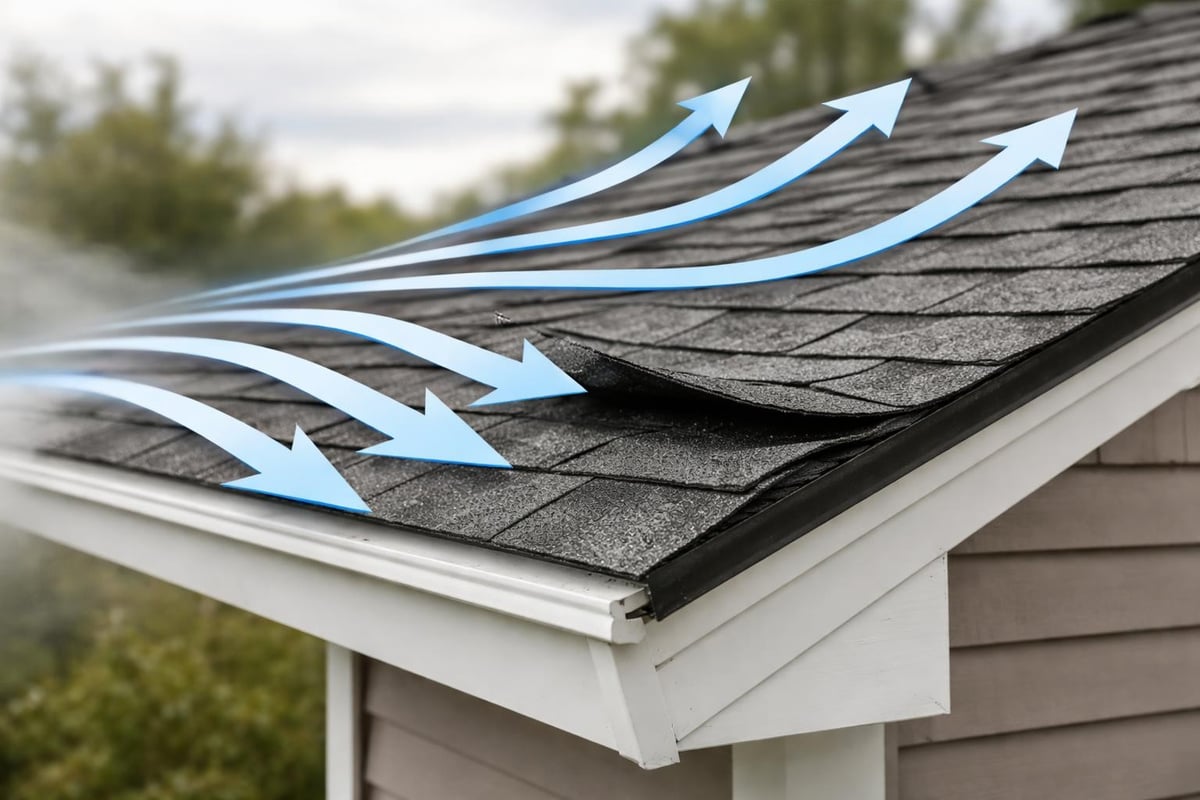
Key factors that influence wind damage severity:
- Shingle age and adhesive condition
- Roof pitch and geometry
- Installation quality and nail placement
- Exposure level (nearby trees, structures, or open terrain)
- Direction of prevailing winds relative to roof orientation
Common Wind Damage Patterns
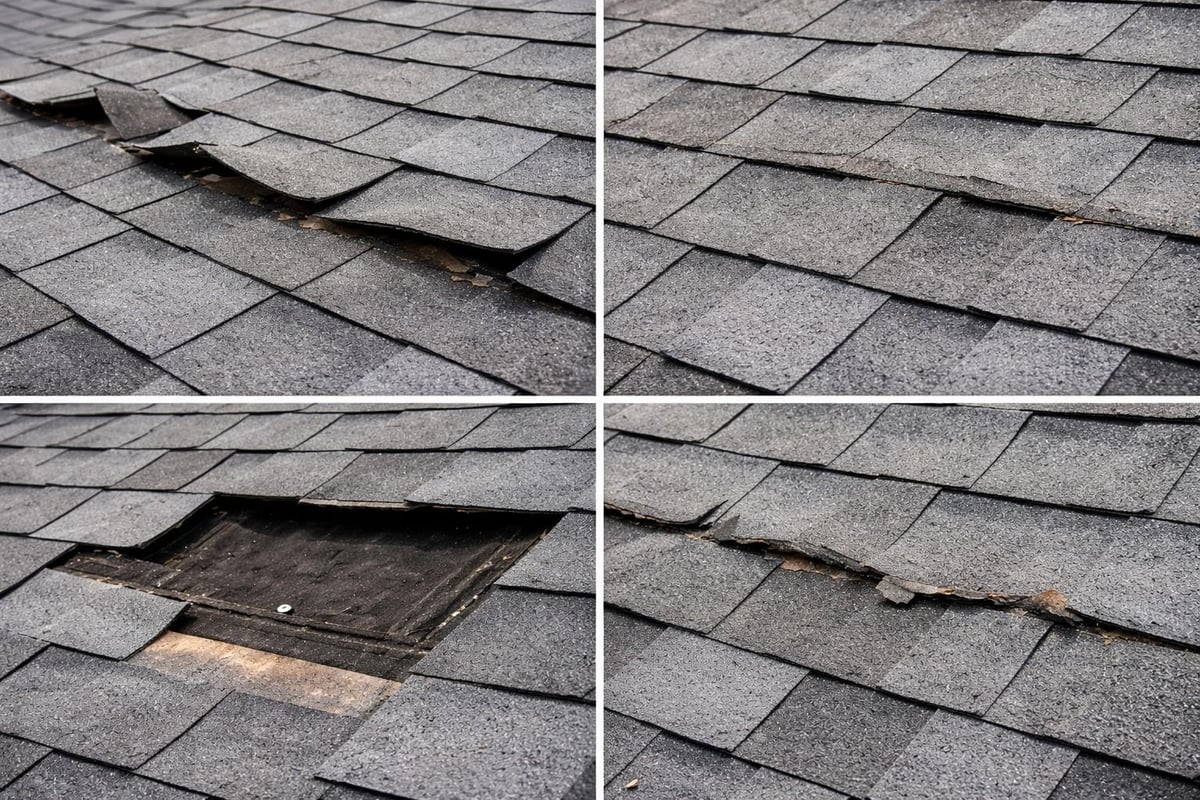
Wind damage to shingles follows recognizable patterns. Edges and corners typically show damage first because that's where uplift forces concentrate. You might see shingles that are creased, lifted, or missing entirely from these areas while the field (central portion) remains intact.
Older roofs face additional challenges. As shingles age, the adhesive seal between layers weakens. What might resist wind when new can fail at lower speeds after years of thermal cycling and UV exposure. This matters because common misconceptions about wind damage often lead homeowners to underestimate their roof's vulnerability.
| Damage Type | Appearance | Severity Level |
|---|---|---|
| Tab Lifting | Edges curl upward, seal broken | Moderate |
| Creasing | Horizontal fold across shingle | Moderate to High |
| Tearing | Partial shingle loss, exposed nail area | High |
| Complete Loss | Missing shingles, exposed deck | Critical |
Identifying Wind Damage from the Ground and Up Close
Not all wind damage is immediately visible, especially from ground level. Knowing what to look for helps you catch problems early.
Ground-Level Warning Signs
Start your inspection from the ground. Look for shingles in your yard, gutters, or flowerbeds after a storm. Even one or two missing shingles indicate potential damage worth investigating further.
Check the roof line from multiple angles. Shingles that appear uneven, misaligned, or darker in patches may indicate lifting or missing granules. Dark spots often mean the underlayment is showing through where shingles have torn or lifted.
What to observe from the ground:
- Missing or displaced shingles
- Curled or lifted shingle edges
- Inconsistent roof line or texture
- Granules in gutters or downspouts
- Debris around the property
Close Inspection Details
A proper roof inspection requires getting on the roof or using binoculars for a closer view. Look for shingles with broken seals, where tabs have separated from the course below. These might lie flat but lack the adhesive bond that keeps them secure in wind.
Creased shingles show a distinct horizontal line where wind folded them backward before they snapped back. These are often harder to spot but represent clear evidence of wind effects on shingles. The crease weakens the shingle permanently, even if it looks relatively normal afterward.
Exposed nails or nail heads with no shingle covering them indicate that material has torn away. This creates immediate leak potential and should be addressed quickly. When you're evaluating damage across Eastern NC, understanding these details helps determine whether roof repair makes sense or if broader intervention is needed.
Wind Ratings and What They Actually Mean
Shingles come with wind ratings, but understanding what those numbers represent matters when evaluating your roof's performance or choosing replacement materials.
Standard Wind Ratings Explained
Most asphalt shingles carry ratings between 60 and 130 mph. These ratings come from laboratory testing that measures how well sealed shingles resist uplift under controlled conditions. The tests assume proper installation, new materials, and ideal conditions.
Real-world performance differs. A shingle rated for 110 mph might fail at 70 mph if it's fifteen years old, improperly nailed, or installed during cold weather when the adhesive didn't seal properly. The rating represents maximum performance under optimal conditions, not a guarantee for aged materials.
| Rating Class | Wind Speed | Typical Application | Real-World Notes |
|---|---|---|---|
| Class D | 90 mph | Standard residential | Minimum for most areas |
| Class F | 110 mph | Enhanced residential | Common upgrade choice |
| Class G | 120 mph | High-wind zones | Often required by code |
| Class H | 150 mph | Severe wind areas | Premium tier, coastal use |
Installation Quality Matters More Than Ratings
The best-rated shingle performs poorly if installed incorrectly. Nail placement, starter strip application, and proper sealing make the difference between a roof that performs as designed and one that fails prematurely.
Many myths about wind damage to shingles stem from misunderstanding this relationship. Homeowners sometimes blame shingle quality when installation defects are the actual culprit. High nails, insufficient adhesive activation, or missing starter strips create vulnerabilities that wind exploits.
When Wind Damage Requires Action
Determining whether damage needs immediate attention or can wait depends on several factors beyond just how the roof looks.
Immediate Repair Situations
Some damage demands quick response to prevent secondary problems:
- Missing shingles exposing underlayment – Water infiltration risk increases dramatically
- Torn shingles with exposed nail heads – Direct leak paths during rain
- Lifted shingles around penetrations – Vulnerable areas for water entry
- Multiple damaged zones – Indicates widespread adhesive failure
Even minor-looking damage can worsen quickly. A lifted shingle catches more wind in the next storm, often resulting in complete loss where a simple reseal might have worked initially.
Damage You Can Monitor
Not every instance of wind damage to shingles requires emergency intervention. Small areas of granule loss, minor edge curling without seal failure, or isolated cosmetic issues might be documented and monitored through seasonal inspections.
The key is having a professional assessment that distinguishes between active problems and conditions to watch. This matters particularly for understanding insurance coverage, where documentation timing affects claim viability.
Monitoring checklist for minor damage:
- Photograph affected areas with date stamps
- Measure extent (number of shingles, square footage)
- Note location relative to roof features
- Schedule follow-up inspection after next significant storm
- Document any progression
Insurance Considerations and Documentation
Wind damage to shingles often falls under homeowners insurance, but successful claims require proper documentation and understanding of coverage terms.
What Insurance Typically Covers
Most policies cover sudden wind damage from identifiable storm events. This includes torn, lifted, or missing shingles resulting from wind speeds that exceed the roof's resistance capacity. Coverage usually extends to necessary repairs or replacement if damage is widespread.
What insurance doesn't cover is gradual deterioration, poor maintenance, or damage resulting from installation defects. The distinction matters because adjusters look for evidence of acute wind events rather than long-term wear. Having professional documentation helps establish the cause and timing of damage.
Effective Documentation Steps
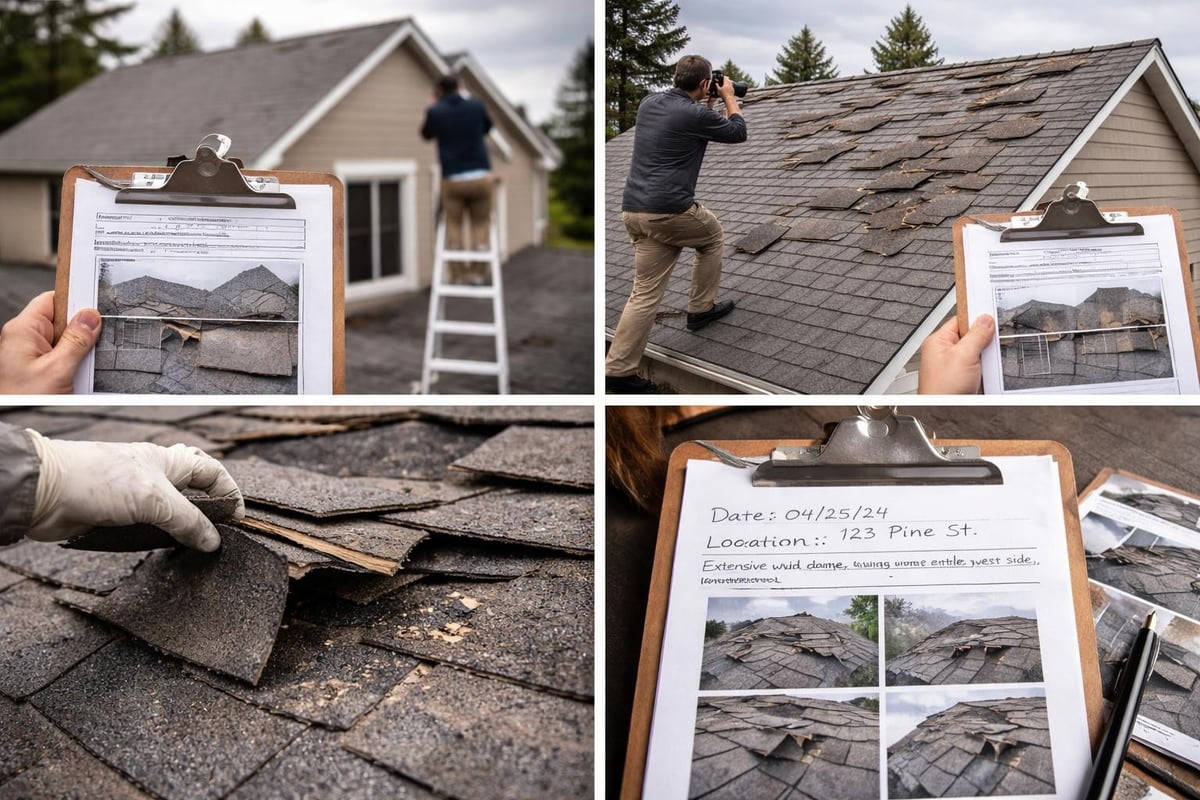
Start documenting before damage occurs. Photographs of your roof in good condition provide baseline evidence. After a storm, document everything:
- Date and time of weather event
- Photos from multiple angles showing damage
- Close-ups of specific affected shingles
- Ground debris (displaced shingles, granules)
- Any interior signs (leaks, stains)
Many homeowners benefit from professional roof reports that detail damage extent, likely cause, and recommended action. These reports carry more weight with insurance adjusters than homeowner photos alone. For residents throughout Eastern North Carolina, this documentation often makes the difference between approved and denied claims.
Repair Versus Replacement Decisions
Choosing between repairing wind damage or replacing the entire roof depends on factors beyond just the damaged area's size.
When Repair Makes Sense
Isolated damage confined to small sections often makes repair the practical choice. If wind affected only edges, a few damaged shingles can be replaced without disturbing the broader roof system. This works best on newer roofs where matching materials are available and the surrounding shingles remain in good condition.
Repair is typically appropriate when:
- Damage covers less than 20-25% of total roof area
- Surrounding shingles show good adhesion and minimal wear
- Matching shingles are available
- The roof is less than halfway through its expected lifespan
- No underlying structural damage exists
When Replacement Is the Better Path
Widespread damage or damage to an already aging roof often tips the decision toward replacement. If wind affected 30% or more of the roof, repairs might cost 60-70% of replacement while leaving the rest of the aging system intact. This creates ongoing vulnerability and likely additional expenses within a few years.
Consider the roof's age carefully. A twelve-year-old roof with significant wind damage has already used most of its design life. Repairing it means investing in a system that will need replacement soon anyway. Compare five-year total cost (repairs plus likely future replacement) against replacement now.
| Factor | Favor Repair | Favor Replacement |
|---|---|---|
| Damage Extent | Under 25% | Over 30% |
| Roof Age | Under 10 years | Over 15 years |
| Material Condition | Good overall | Widespread wear |
| Insurance Coverage | Partial claim | Full coverage approved |
| Budget Horizon | Limited immediate funds | Can access larger investment |
Prevention and Long-Term Protection
While you can't prevent wind, you can reduce your roof's vulnerability to damage through maintenance and strategic upgrades.
Regular Maintenance Impact
Simple maintenance makes roofs more wind-resistant. Keep shingles clean of debris that can trap moisture and degrade adhesive. Trim overhanging branches that might fall or scrape against the surface during storms. Ensure adequate attic ventilation to prevent heat buildup that accelerates shingle aging.
Annual inspections catch small problems before wind exploits them. A lifted corner detected and resealed during routine maintenance won't become a missing shingle during the next storm. This proactive approach costs far less than reactive repairs after damage occurs.
Upgrade Opportunities
When replacement becomes necessary, consider enhanced wind resistance as part of the specification. Higher-rated shingles, improved fastening patterns, and quality installation details increase resistance without dramatic cost increases. The marginal cost of upgrading from Class D to Class F shingles is often only 10-15% but provides meaningfully better performance.
Comprehensive resources on identifying and preventing wind damage emphasize that installation quality matters as much as material selection. Work with contractors who understand proper techniques and don't cut corners on critical details like starter strips, nail placement, and edge treatments.
Regional Considerations for Eastern North Carolina
Wind damage to shingles plays out differently across regions based on typical weather patterns and exposure characteristics. Eastern North Carolina faces specific considerations that affect both damage risk and response strategies.
Storm Patterns and Frequency
The region experiences everything from summer thunderstorms with straight-line winds to tropical systems and occasional winter weather. This variety means roofs must resist different wind patterns rather than a single predominant threat. Coastal areas face higher sustained winds during hurricanes, while inland locations deal more with sudden gusts from severe thunderstorms.
Understanding these patterns helps homeowners make informed decisions about material selection and maintenance priorities. A roof in an exposed rural area might benefit from higher wind ratings than one in a sheltered neighborhood, even within the same county. Local contractors familiar with regional roofing challenges can provide specific guidance based on your location's exposure.
Humidity and Material Performance
High humidity affects how shingles age and how well they maintain adhesive bonds. In humid climates, organic growth on shingles can degrade the surface and affect water shedding. This doesn't directly cause wind damage but contributes to overall shingle deterioration that reduces wind resistance over time.
Regular cleaning and maintenance become more important in humid environments. Keeping shingles free from algae, moss, and debris preserves their integrity and helps them perform closer to their rated specifications throughout their service life.
Working with Professionals for Assessment and Repair
Professional evaluation provides clarity that's hard to achieve from homeowner inspection alone, especially when determining damage extent and appropriate response.
What Quality Assessment Includes
A thorough professional assessment goes beyond identifying visible damage. It includes checking fastener patterns, examining adhesive seal quality, evaluating underlayment condition where accessible, and identifying any structural concerns. The assessment should result in clear documentation of current condition, specific problems found, and recommended solutions with cost estimates.
Quality professionals differentiate between damage requiring immediate attention and conditions that can be monitored. They explain why specific recommendations make sense for your situation rather than pushing one-size-fits-all solutions. This guidance helps you make informed decisions based on actual needs rather than unnecessary urgency.
Getting Multiple Perspectives
For significant damage or when facing replacement decisions, getting multiple professional opinions makes sense. Different contractors may approach the same situation with varying recommendations based on their experience and methods. These differences often reveal important considerations you might not have thought to ask about.
Compare not just pricing but the reasoning behind recommendations. A contractor who takes time to explain why they suggest specific approaches demonstrates the kind of thinking that leads to better long-term outcomes. The cheapest bid isn't always the best value, especially for work that needs to last decades.
Understanding wind damage to shingles helps you respond appropriately when storms affect your home and take steps to minimize future vulnerability. Whether you're dealing with current damage or planning ahead, the key is having accurate information about your roof's condition and clear guidance on your options. NC Roofs provides honest assessments and straightforward recommendations throughout Eastern North Carolina, helping homeowners get the repairs they need without pressure or unnecessary upsells. If you're concerned about your roof after recent storms or want a professional evaluation before problems develop, reach out to discuss your specific situation and get a clear picture of where you stand.