Flat roofs present unique challenges that sloped roofs simply don't face. Water doesn't run off as easily, materials experience different stress patterns, and small problems can escalate quickly if left unaddressed. Understanding how to approach flat roof repair helps you make informed decisions about maintenance, timing, and whether a patch will solve the problem or if you're looking at something more extensive. This guide walks through the most common issues, repair methods, and what you should know before work begins on your Eastern North Carolina home.
Why Flat Roofs Develop Problems
The fundamental challenge with any flat roof is that water doesn't naturally shed like it does on a pitched surface. Even roofs labeled as "flat" typically have a slight slope, but it's minimal compared to traditional roofing.
Several factors contribute to flat roof deterioration:
- Ponding water that remains 48 hours after rainfall
- UV exposure breaking down membrane materials over time
- Temperature fluctuations causing expansion and contraction
- Foot traffic from HVAC maintenance or other rooftop access
- Debris accumulation blocking drains and creating moisture pockets
Eastern North Carolina's climate adds specific challenges. High humidity, intense summer heat, and occasional hurricane-force winds put extra stress on flat roofing systems. These conditions accelerate normal wear patterns and create opportunities for water infiltration.
Material-Specific Vulnerabilities
Different flat roof materials age differently and require distinct repair approaches:
| Material Type | Common Issues | Typical Lifespan | Repair Difficulty |
|---|---|---|---|
| EPDM (rubber) | Seam failures, punctures | 20-25 years | Moderate |
| TPO | Shrinkage, seam separation | 15-20 years | Moderate to High |
| Modified bitumen | Blistering, cracking | 15-20 years | Low to Moderate |
| Built-up roof (BUR) | Gravel displacement, alligatoring | 15-30 years | Moderate |
| PVC | Heat-weld failures, plasticizer loss | 20-30 years | High |
The National Roofing Contractors Association provides detailed guidance on how design and maintenance practices affect flat roof performance across different material types.
Identifying When You Need Flat Roof Repair
Catching problems early makes the difference between a simple patch and a full replacement. Some signs are obvious, but others require knowing what to look for.
Interior warning signs:
- Water stains on ceilings, especially after rain
- Musty odors in upper rooms or attic spaces
- Bubbling or peeling paint near the roofline
- Visible drips or active leaks during storms
Exterior indicators:
- Standing water that doesn't drain within two days
- Visible cracks, splits, or tears in the membrane
- Loose or damaged flashing around edges and penetrations
- Blisters or bubbles in the roofing surface
- Exposed underlayment or substrate
Regular inspections matter more for flat roofs than sloped ones. Plan to check your roof at least twice yearly and after any significant weather event. Many homeowners discover issues during routine HVAC maintenance when technicians access the roof.
The Real Cost of Delayed Repairs
A small membrane puncture might cost $200 to repair today. Left alone for six months, water penetrates the insulation layer, creating a soft spot that spreads. Now you're looking at substrate replacement, new insulation, and a larger membrane patch, potentially running $2,000 or more.
Moisture trapped beneath the membrane doesn't just damage roofing materials. It can compromise structural decking, reduce insulation effectiveness, and create conditions for mold growth that affects indoor air quality.
Common Flat Roof Repair Methods
The right repair approach depends on the problem's location, size, and underlying cause. A good contractor explains why they recommend a particular method for your situation.
Membrane Patching and Sealing
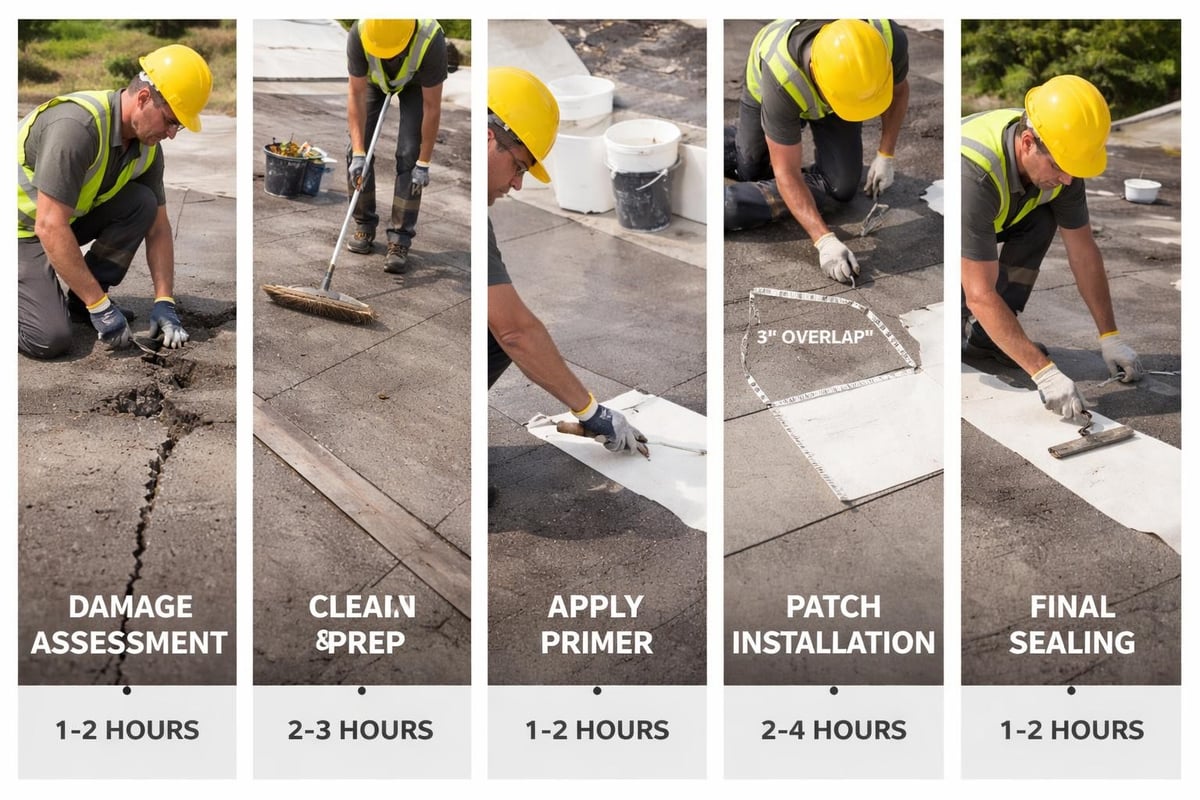
Small punctures, tears, or localized damage often respond well to targeted patching. The process involves cleaning the damaged area, applying primer, and installing a patch that extends well beyond the damaged section.
Key considerations for membrane patches:
- Patches must be properly sized (minimum 6 inches beyond damage on all sides)
- Surface preparation directly affects patch longevity
- Seam tape or adhesive quality matters as much as the membrane itself
- Multiple small patches in one area may indicate broader problems
For EPDM roofs, patches use the same rubber material with specialized adhesive. TPO and PVC require heat welding for proper bonding. Modified bitumen repairs typically involve torch-applied or cold-process patching compounds.
Addressing Ponding Water
Water that stands for extended periods accelerates deterioration and often signals drainage problems. Fixing pooling water issues requires understanding the root cause.
Solutions for ponding water:
- Adding tapered insulation to create proper slope toward drains
- Installing additional drains in problem areas
- Clearing existing drains blocked by debris or sediment
- Structural reinforcement if the deck has sagged
Sometimes ponding results from settling or structural movement. These situations require more than surface repairs. A structural assessment determines whether reinforcement is necessary before addressing the roofing system itself.
Flashing Repairs and Replacement
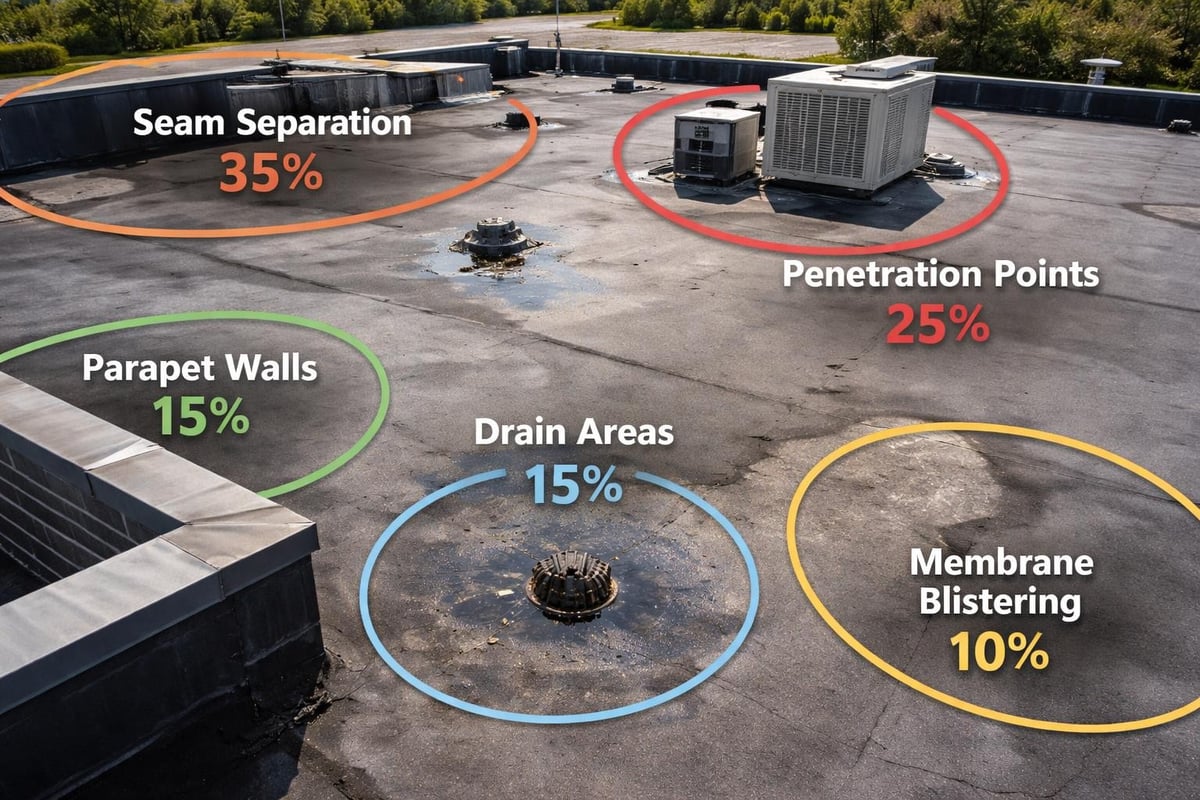
Flashing around roof penetrations, edges, and transitions represents the most common leak source on flat roofs. These metal or membrane components create watertight seals where the roof meets walls, vents, or equipment.
| Flashing Location | Failure Causes | Repair Approach |
|---|---|---|
| Parapet walls | Separation from thermal movement | Re-secure and seal, possible replacement |
| Roof drains | Clogging, improper slope | Clean, reseal, adjust positioning |
| HVAC units | Equipment vibration, UV damage | Replace gaskets, reseal penetrations |
| Vent pipes | Cracked boots, loose connections | Boot replacement, membrane patching |
Quality flashing repair means more than applying sealant. Proper installation requires understanding how different materials expand and contract, ensuring adequate overlap, and using compatible products that won't degrade each other.
When Coating Makes Sense
Roof coatings offer a middle ground between ongoing repairs and full replacement. These liquid-applied products create a seamless membrane over existing roofing, extending life and improving performance.
Coating benefits:
- Reflects UV radiation, reducing cooling costs
- Seals small cracks and prevents further deterioration
- Adds waterproofing without tear-off costs
- Can extend roof life by 5-10 years when applied correctly
Coatings aren't appropriate for every situation. Severely damaged roofs with saturated insulation or widespread structural issues need more than a coating can provide. The underlying roof must be in reasonable condition, properly dried, and suitable for coating adhesion.
Coating Application Requirements
Successful coating application requires specific conditions and thorough preparation. Humidity, temperature, and surface moisture all affect how coatings cure and perform.
Surface preparation includes cleaning debris, removing loose material, making necessary repairs, and ensuring complete dryness. Many coating failures result from rushed prep work rather than product deficiencies.
Application thickness matters. Too thin provides inadequate protection; too thick can crack or peel. Most manufacturers specify mil thickness (typically 20-40 mils for roof coatings) and coverage rates per gallon.
DIY vs. Professional Flat Roof Repair
Small repairs within a homeowner's skill level include cleaning drains, removing debris, and applying emergency patches during active leaks. Anything beyond that typically requires professional expertise and equipment.
Reasons to call a professional:
- Determining actual damage extent (visible problems often indicate hidden issues)
- Proper material selection and compatibility
- Warranty considerations (DIY repairs often void manufacturer warranties)
- Safety concerns (flat roofs still present fall hazards)
- Specialized equipment needs (hot air welders, commercial-grade adhesives)
Professional roof repair services start with thorough assessment to understand what's failing and why. This prevents treating symptoms while missing underlying causes that lead to recurring problems.
Understanding Repair Costs
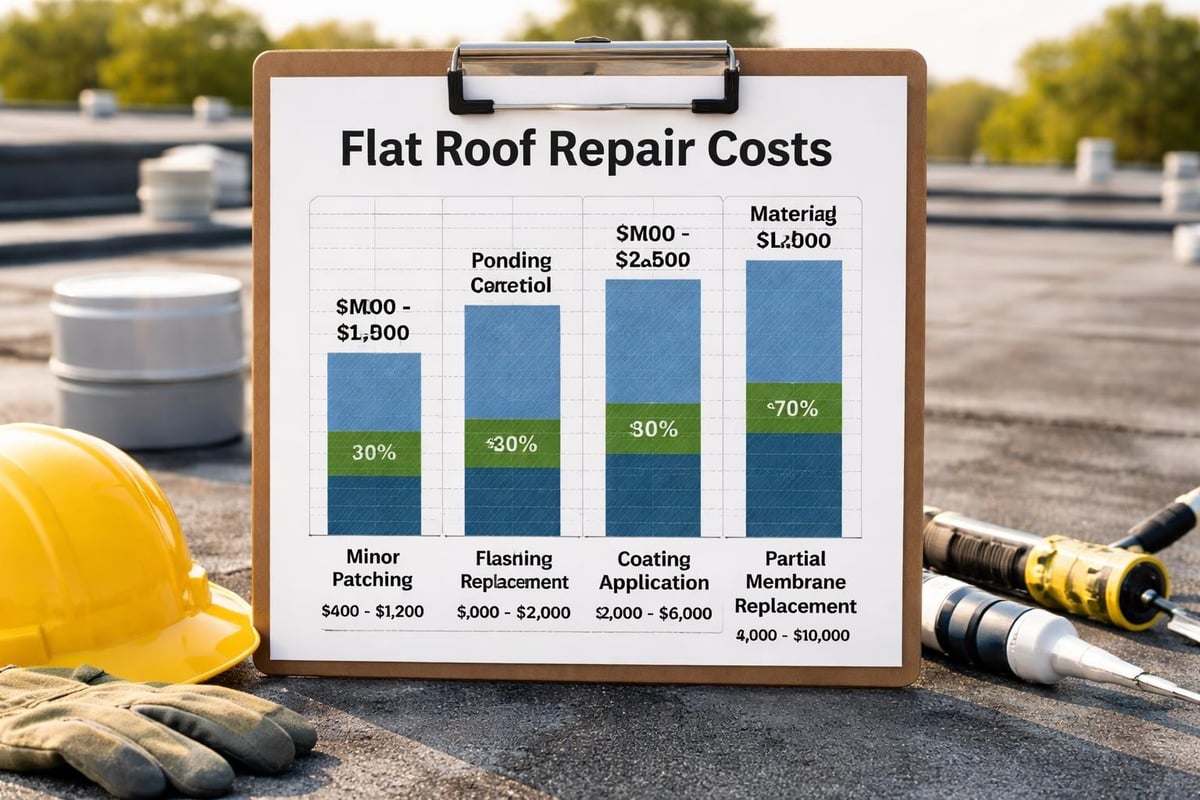
Flat roof repair costs vary significantly based on problem scope, access difficulty, and materials involved. A simple patch might run $150-$400, while extensive flashing replacement could reach $2,000-$5,000.
Cost factors include:
- Damage location (penetrations cost more than open membrane areas)
- Material type (PVC repairs typically cost more than EPDM)
- Accessibility (equipment hoisting adds expense)
- Underlying damage (wet insulation or deck damage increases costs substantially)
Getting multiple estimates helps, but lowest price doesn't always represent best value. Understanding what's included and what warranty covers the work matters more than the bottom-line number alone.
Preventive Maintenance to Reduce Repairs
Regular maintenance significantly reduces major flat roof repair needs. A systematic approach catches small issues before they escalate.
Quarterly maintenance checklist:
- Clear all drains and scuppers of debris
- Remove leaves, branches, and accumulated dirt
- Check for standing water 48 hours after rain
- Inspect flashing around all penetrations
- Look for membrane damage, blisters, or cracks
- Verify proper edge seal and termination
Seasonal considerations matter in Eastern North Carolina. Spring inspections catch winter damage before summer heat arrives. Fall maintenance prepares the roof for winter moisture and occasional ice. Post-hurricane inspections identify storm damage immediately rather than discovering it months later when leaks appear.
Documentation and Records
Maintaining repair and maintenance records proves valuable for several reasons. It establishes a maintenance history that supports insurance claims, helps track recurring problem areas, and provides data for timing replacement decisions.
Photograph your roof seasonally. Visual documentation shows deterioration progression and helps contractors understand the roof's history without guessing.
Material Selection for Repairs
Matching existing materials seems obvious, but sometimes upgrading makes more sense than identical replacement. A roof with repeated EPDM seam failures might benefit from TPO patches that heat-weld rather than relying on adhesive bonds.
Material compatibility considerations:
- Not all adhesives work with all membranes
- Some coatings react negatively with certain roof types
- Mixing materials can create warranty issues
- Local climate affects which materials perform best
Your roofing contractor should explain material choices and why they recommend specific products for your situation. Generic answers like "this is what we use" aren't sufficient. You deserve to understand how products match your roof's specific needs and conditions.
Long-Term Planning
Every repair decision should consider the roof's remaining lifespan. Investing $5,000 in repairs for a roof with 10-15 years of life remaining makes sense. The same investment on a roof that's already 20 years old and showing widespread deterioration might not.
A detailed roof report provides the information needed for these decisions. It documents current condition, identifies specific problems, estimates remaining useful life, and helps you plan repair versus replacement timing based on actual evidence rather than assumptions.
Regional Considerations for Eastern North Carolina
Coastal weather patterns create specific challenges for flat roofs. Salt air accelerates metal corrosion, affecting fasteners and flashing. High humidity extends moisture exposure. Hurricane season brings wind-driven rain that tests every seam and penetration.
Climate-specific concerns:
- Fastener corrosion requiring earlier replacement than inland areas
- Algae and mold growth in humid conditions
- Wind uplift at roof edges and corners
- Standing water from intense rainfall events
Material selection should account for these factors. Stainless steel fasteners cost more upfront but resist corrosion far better than standard galvanized versions. Enhanced edge securement prevents wind damage during tropical storms.
Insurance and Storm Damage
Many flat roof repairs stem from storm damage covered by homeowners insurance. Understanding what insurance covers and how to document damage makes the claims process smoother.
Wind damage to flashing, hail impact creating punctures, and tree damage all typically qualify for coverage. General wear and tear, poor maintenance, and age-related deterioration usually don't. The line between storm damage and pre-existing conditions often requires professional assessment.
Flat roof repair ranges from simple patches to extensive restoration, with the right approach depending on damage type, roof age, and long-term plans. Regular inspections and prompt attention to small issues prevent most major problems. Whether you're dealing with a minor leak or planning larger repairs, understanding what's involved helps you make decisions based on your home's actual needs rather than assumptions. NC Roofs provides honest assessments and clear repair recommendations across Eastern North Carolina, helping homeowners understand their options before any work begins. Reach out for a thorough roof evaluation that gives you the information needed to move forward confidently.