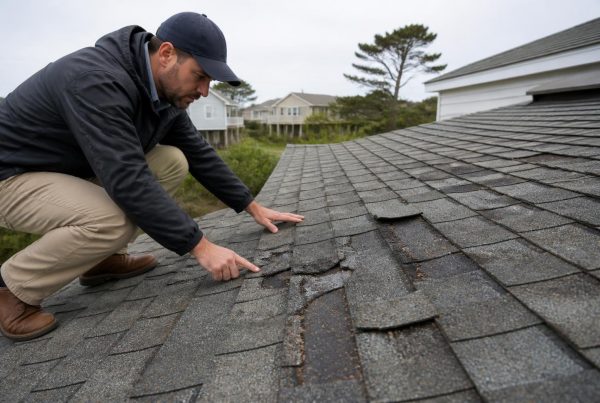
Finding the right roofing company can feel overwhelming, especially when your roof is leaking or storm damage has left you scrambling for answers. The good news is that most roofing companies want to do right by homeowners, but knowing how to separate quality contractors from those who cut corners makes all the difference. This guide walks you through what matters when choosing someone to work on your roof, what questions to ask, and how to avoid the most common pitfalls that trip up homeowners across Eastern North Carolina and beyond.
What Makes Roofing Companies Different From Each Other
Not all roofing companies operate the same way. Some focus on quick repairs while others specialize in full replacements. Some work primarily with insurance claims, and others handle mostly direct-pay projects. Understanding these differences helps you find a contractor whose strengths match your needs.
Size matters, but not always how you'd expect. Large regional firms often have more resources and faster response times, but smaller local companies typically offer more personalized service and flexibility. According to research on roofing industry concentration, the U.S. roofing market remains highly fragmented, with many small to mid-sized firms competing alongside larger operators.
Business Models and Specializations
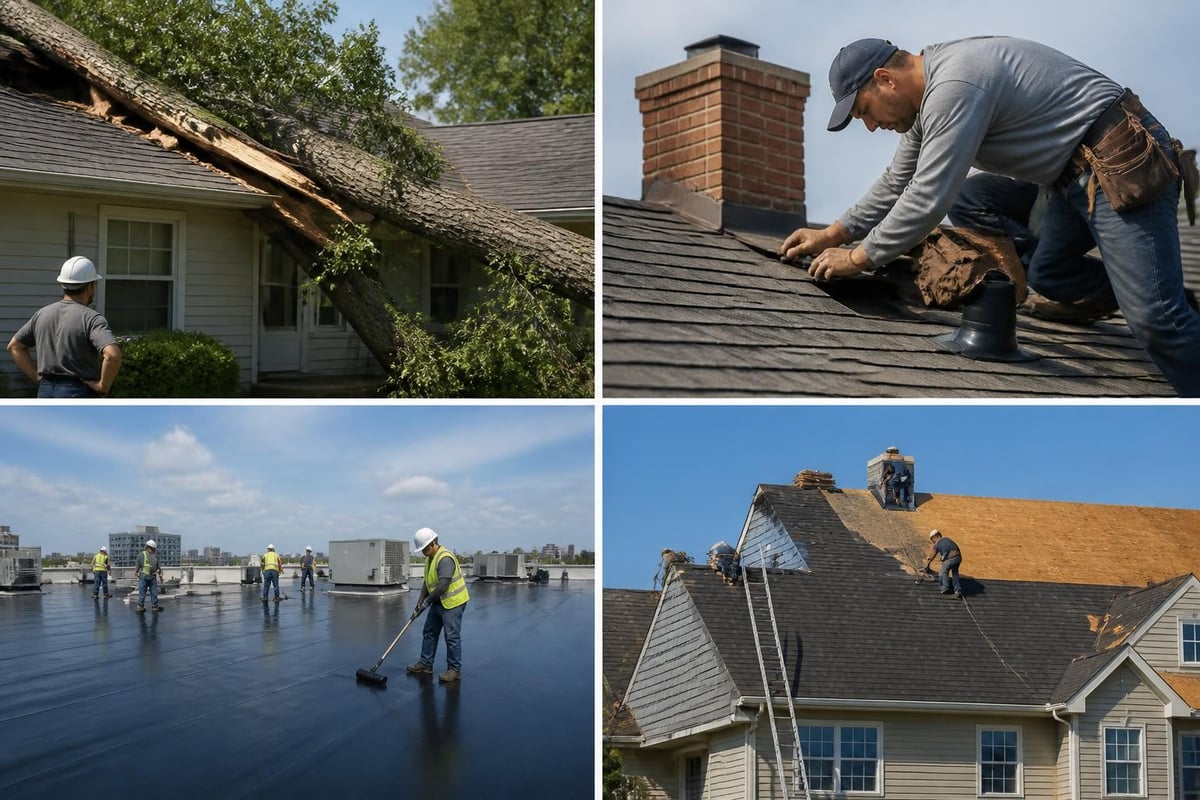
Different roofing companies structure their services around different priorities:
- Storm chasers follow weather patterns and focus on insurance work
- Residential specialists handle primarily single-family homes
- Commercial contractors work on flat roofs and larger buildings
- Repair-focused companies prioritize fixes over full replacements
- Replacement specialists handle primarily complete roof installations
Your project type should guide which kind of company you contact. A small leak doesn't require a commercial specialist, and a 10,000-square-foot warehouse needs more than a residential-only crew.
Credentials That Actually Matter
Licensing, insurance, and certifications sound like paperwork formalities until something goes wrong. Then they become the difference between a resolved issue and a legal nightmare.
Every legitimate roofing company carries general liability insurance and workers' compensation coverage. General liability protects your property if something gets damaged during the job. Workers' compensation covers injuries to crew members so you're not liable if someone gets hurt on your roof.
Required Licenses in North Carolina
North Carolina requires roofing companies to hold a state license for projects exceeding $30,000. For smaller jobs, local business licenses apply. Always verify:
| Credential Type | Why It Matters | How to Verify |
|---|---|---|
| State License | Legal operation for larger projects | NC Licensing Board website |
| General Liability | Property damage protection | Request certificate of insurance |
| Workers' Comp | Injury coverage for crew | Request current policy proof |
| Manufacturer Certifications | Warranty eligibility and training | Check with shingle manufacturer |
Manufacturer certifications from companies like GAF, Owens Corning, or CertainTeed indicate that roofing companies have met specific training standards and can offer enhanced warranties.
Questions to Ask Before You Hire
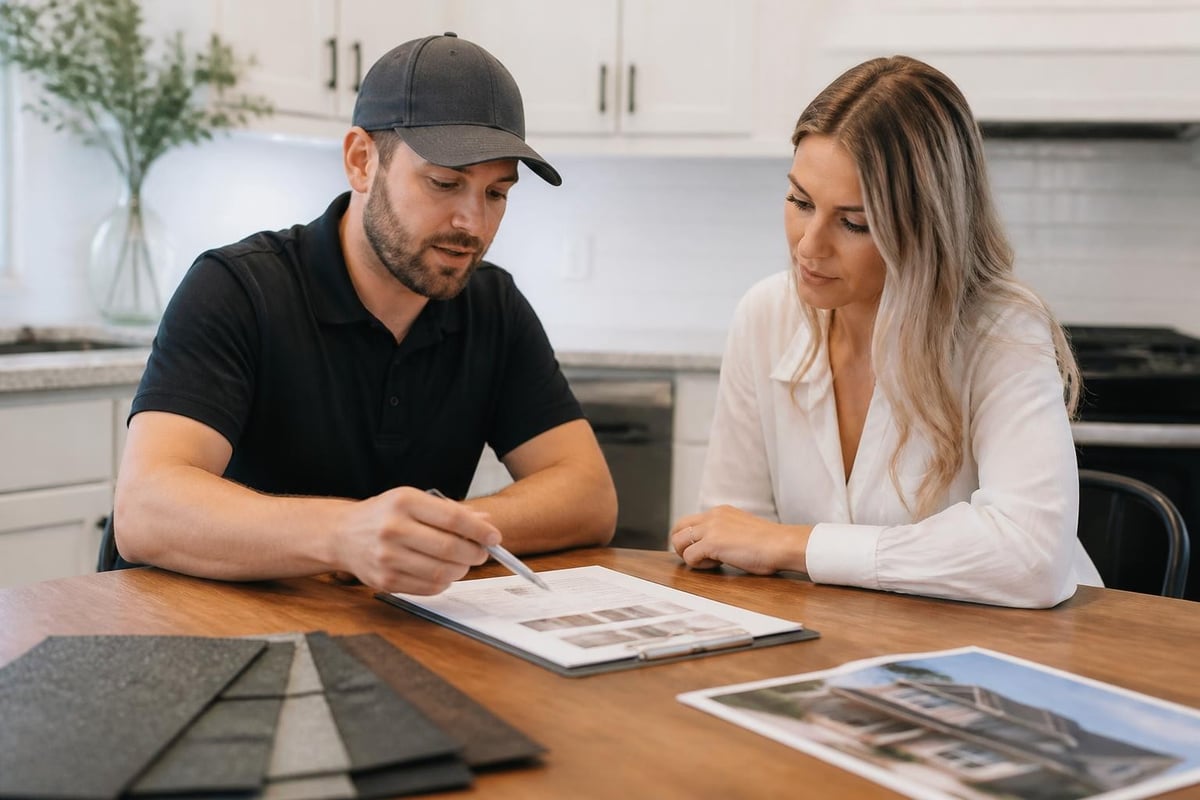
The initial conversation with roofing companies reveals a lot about how they operate. Good contractors answer questions clearly and don't dodge details about process, timeline, or cost.
Start with these basics:
- How long have you been in business? Experience matters, but don't discount newer companies with solid credentials.
- Can you provide local references? Recent projects in your area show active work and accessible examples.
- What does your warranty cover? Understand both workmanship guarantees and material warranties.
- Who will be on site each day? Know whether you'll work with the owner, a project manager, or rotating crews.
- How do you handle unexpected issues? Rot, decking damage, and other surprises happen during roof work.
Get specific about the estimate process. Some roofing companies charge for inspections while others offer free assessments. Neither approach is inherently better, but you should know upfront. If you're dealing with storm damage or need documentation for insurance, a detailed roof report often makes sense even if there's a fee involved.
Understanding the Estimate
A proper estimate from roofing companies should include:
- Total square footage being replaced or repaired
- Specific materials by brand and product line
- Labor costs broken out separately from materials
- Timeline with start and completion dates
- Payment schedule tied to project milestones
- Cleanup and disposal details
Vague estimates with lump-sum pricing make it hard to understand what you're actually paying for. Detailed breakdowns let you compare quotes accurately and spot where roofing companies differ in their approach.
Red Flags That Should Worry You
Some warning signs are obvious. Others are subtle but just as concerning. Knowing what to watch for protects you from contractors who operate outside industry standards or prioritize speed over quality.
Pressure to sign immediately ranks as the biggest red flag. Legitimate roofing companies understand that roof replacement represents a major investment. They give you time to review estimates, check references, and make an informed decision. Storm chasers who knock on doors right after hail or wind events often push for immediate contracts before homeowners can think clearly.
Common Warning Signs
Watch out for these issues when vetting roofing companies:
- Requests for full payment upfront
- No physical business address or local phone number
- Unwillingness to provide proof of insurance
- Lack of written contract or vague agreements
- Extremely low bids that seem too good to be true
- High-pressure sales tactics or limited-time offers
- Poor online reviews or no verifiable track record
According to residential roofing industry statistics, homeowners increasingly research contractors online before making contact. Use that to your advantage by checking reviews, verifying credentials, and looking for patterns in how roofing companies respond to both positive and negative feedback.
The Difference Between Repair and Replacement Recommendations
How roofing companies approach the repair-versus-replacement decision tells you a lot about their priorities. Some contractors default to full replacement regardless of actual roof condition. Others will patch problems indefinitely even when replacement makes more financial sense.
Honest assessment looks at roof age, overall condition, and cost-effectiveness. A 12-year-old roof with a small leak from a loose flashing probably needs repair, not replacement. A 22-year-old roof with curling shingles, granule loss, and multiple leak points likely needs full replacement even if only one area is actively leaking right now.
When Repair Makes Sense
Quality roofing companies recommend repair when:
- The roof is less than 15 years old with localized damage
- Storm damage affects a specific section while the rest remains sound
- Missing shingles or flashing issues can be corrected without broader work
- The cost of repair stays well below 30% of replacement cost
- No underlying decking damage exists
For homeowners in coastal North Carolina dealing with roof repair decisions after storms, getting a clear assessment of what actually needs fixing versus what can wait prevents unnecessary spending while still protecting the home.
When Replacement Makes More Sense
Full replacement becomes the better choice when:
- The roof has reached or exceeded its expected lifespan
- Multiple areas show wear or damage
- Repairs would cost 40% or more of replacement cost
- Granule loss indicates the shingles are wearing out
- You're planning to sell within a few years
| Factor | Favor Repair | Favor Replacement |
|---|---|---|
| Age | Under 15 years | Over 18 years |
| Damage extent | Localized to one area | Multiple sections affected |
| Cost ratio | Under 30% of replacement | Over 40% of replacement |
| Overall condition | Sound with isolated issues | General wear throughout |
Material Options and What They Mean
Roofing companies work with various materials, each with different lifespans, costs, and performance characteristics. Understanding your options helps you evaluate whether a contractor's recommendations match your needs and budget.
Asphalt shingles dominate residential roofing in North Carolina because they balance cost, performance, and wind resistance well. According to popular roofing material guides, architectural shingles now outsell traditional three-tab shingles due to better wind ratings and longer warranties.
Common Residential Materials
- Architectural Shingles: 25-30 year lifespan, good wind resistance, varied colors
- Three-Tab Shingles: 20-25 year lifespan, lower cost, simpler appearance
- Metal Roofing: 40-70 year lifespan, excellent durability, higher upfront cost
- Synthetic Slate: 50+ year lifespan, lighter than real slate, premium pricing
The best roofing companies explain material differences without pushing you toward the most expensive option. They should discuss how coastal conditions affect different materials and what performs best in your specific location.
How to Compare Quotes Effectively
Getting multiple estimates makes sense, but simply choosing the lowest price often backfires. Comparing roofing companies requires looking at what's actually included in each quote and understanding why prices differ.
Start by making sure you're comparing apples to apples. If one company quotes architectural shingles and another quotes three-tab, the price difference reflects material quality, not contractor pricing. If one includes complete decking inspection and replacement of damaged boards while another assumes decking is fine, you're not looking at equivalent scopes of work.
What to Compare Beyond Price
- Material specifications – Exact brand, product line, and warranty level
- Scope of work – What's included versus what costs extra
- Timeline – Start date, duration, and weather delay policies
- Workmanship warranty – Length and what it covers
- Payment terms – Deposit amount, progress payments, and final payment timing
Most reputable roofing companies in North Carolina ask for deposits in the 10-25% range, with the bulk of payment due upon completion. Be wary of contractors requesting 50% or more upfront.
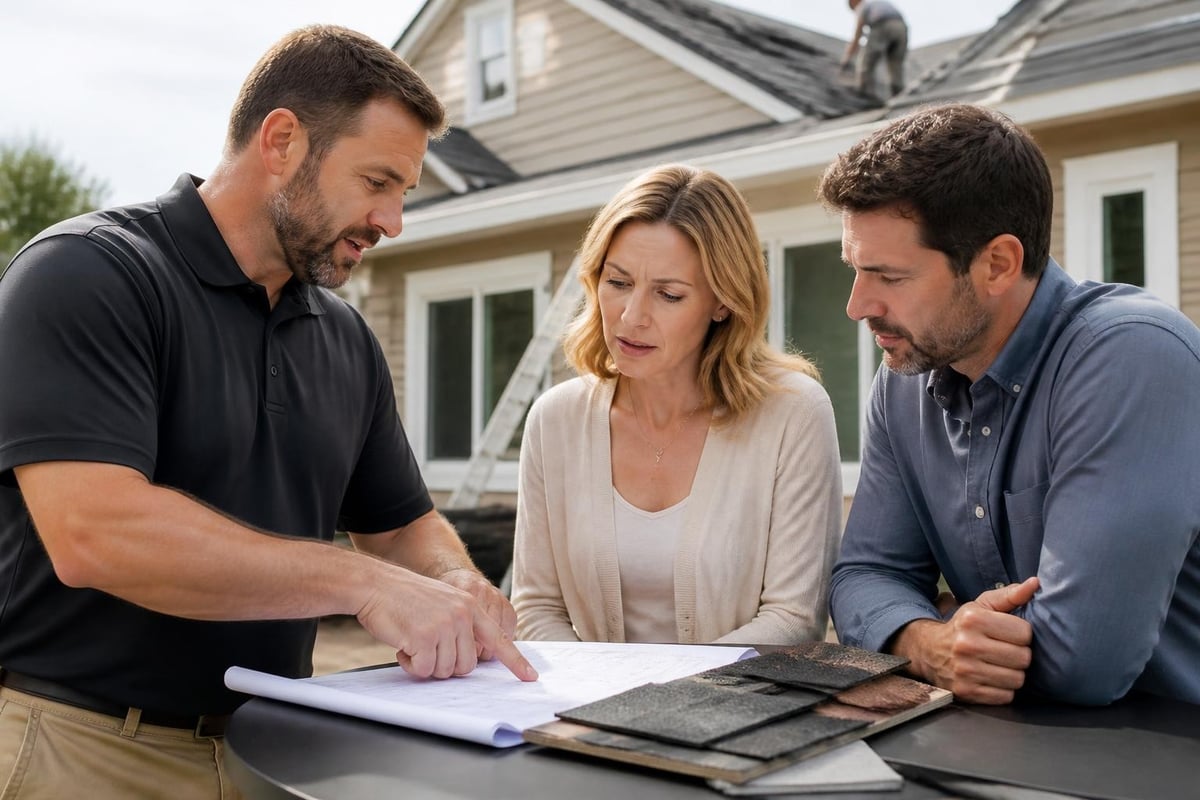
Communication and Project Management
How roofing companies handle communication during the project often matters more than homeowners expect. Clear updates, accessible points of contact, and proactive problem-solving separate smooth projects from frustrating ones.
Ask how you'll receive updates. Some contractors assign a project manager who checks in daily. Others expect you to contact the office with questions. Neither approach is wrong, but knowing what to expect prevents frustration.
Daily Operations Questions
- What time does the crew arrive and leave?
- Where will materials be stored?
- How is job site cleanup handled?
- What happens if weather delays the project?
- Who do I contact if issues arise during work?
Quality roofing companies protect your landscaping, clean up thoroughly each day, and communicate promptly about any changes to schedule or scope. They also explain what happens if they discover unexpected problems like rotten decking once shingles come off.
Insurance Work and Storm Damage
Roofing companies that work with insurance claims regularly understand the documentation and process requirements better than those who rarely handle insurance jobs. If you're filing a claim for storm damage, this experience matters.
Insurance companies require specific documentation. Photos, measurements, and detailed descriptions of damage all factor into claim approval and payout amounts. Contractors experienced with insurance work know what adjusters need to see and how to present findings clearly.
The Insurance Process
When working with insurance:
- File your claim before getting repair estimates
- Meet with the adjuster to review damage
- Get estimates from roofing companies after the adjuster's assessment
- Compare the adjuster's scope with contractor findings
- Address discrepancies through supplemental claims if needed
Some roofing companies offer to "eat" your deductible or claim they can work within any insurance payout. Both practices raise ethical concerns and can violate insurance contracts. Legitimate contractors work within the system honestly rather than cutting corners.
Local Versus National Companies
Both local roofing companies and national franchises have advantages. The right choice depends on your priorities and project specifics.
Local companies typically know regional building codes, climate challenges, and permit requirements better. They're also easier to reach after the project for warranty work or questions. National franchises often have more resources for large projects and established quality control systems.
Advantages of Local Contractors
- Familiarity with coastal North Carolina climate and challenges
- Easier to verify reputation through local references
- Available for follow-up and warranty work
- Investment in community relationships
- Understanding of local permitting processes
Advantages of National Franchises
- Consistent training and quality standards
- Broader material purchasing power
- More crews for faster project completion
- Corporate backing for warranty claims
- Standardized processes and documentation
Homeowners near Hampstead, Topsail, or Wilmington often find that local roofing companies understand salt air corrosion, hurricane preparation, and coastal wind patterns better than national operations without regional presence.
Timing Your Roofing Project
When you schedule work affects both availability and pricing. Roofing companies stay busiest during specific seasons, and understanding these patterns helps you plan better.
Spring and fall represent peak seasons for roofing work across North Carolina. Mild temperatures make installation easier, and homeowners often tackle projects before summer heat or winter weather arrives. According to current roofing industry statistics, seasonal demand fluctuations significantly impact contractor availability and pricing.
Best Times to Schedule
| Season | Availability | Pricing | Installation Conditions |
|---|---|---|---|
| Spring | Limited | Higher | Good weather, optimal installation |
| Summer | Moderate | Moderate | Hot conditions, faster curing |
| Fall | Limited | Higher | Ideal temperatures, pre-winter rush |
| Winter | Good | Lower | Weather delays possible, slower curing |
Emergency repairs don't follow seasonal schedules, but planned replacements benefit from booking during slower periods when roofing companies have more flexibility and may offer better pricing.
What Happens After Installation
The relationship with roofing companies shouldn't end when the last shingle goes down. Understanding warranty coverage, maintenance needs, and when to call for service protects your investment long-term.
Most workmanship warranties run 2-10 years depending on the contractor. Material warranties from manufacturers extend 20-50 years but often include restrictions on transferability and prorated coverage. Read both carefully and keep documentation organized.
Maintenance That Extends Roof Life
Regular upkeep helps roofs reach their full lifespan:
- Annual inspections to catch small issues early
- Gutter cleaning to prevent water backup
- Trimming overhanging branches that scrape shingles
- Checking flashing around chimneys and vents
- Replacing damaged or missing shingles promptly
Some roofing companies offer maintenance programs with scheduled inspections and priority service for repairs. These make sense if you want someone familiar with your roof's history handling any issues that arise.
Making Your Final Decision
After gathering estimates, checking references, and comparing roofing companies, trust both the data and your gut feeling about who you want working on your home.
Choose based on the complete package rather than any single factor. The lowest bid from a company with poor communication and no local presence rarely ends well. The highest bid from a contractor who explained everything clearly and provided detailed references might represent the best value.
Consider these final factors:
- How thoroughly did they inspect before estimating?
- Did they explain options without pushing specific choices?
- Were they responsive to your questions and concerns?
- Do their references describe experiences similar to what you expect?
- Does their timeline align with your needs?
Good roofing companies make the process straightforward, answer questions honestly, and deliver what they promise. They understand that your roof protects everything else you own and treat the work accordingly.
Choosing roofing companies comes down to finding contractors who prioritize honest assessment and quality work over quick sales. If you're in Eastern North Carolina and need help understanding what's happening with your roof, NC Roofs provides clear explanations and straightforward recommendations focused on what makes sense for your home and budget.