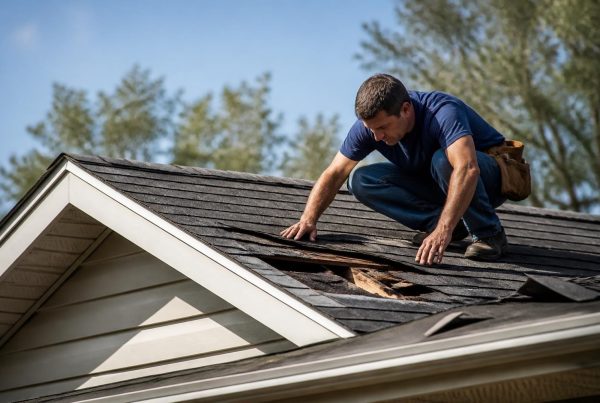
A built roof might sound like something only commercial buildings need, but understanding this roofing system helps homeowners make better decisions about their own roofs. While most residential properties along the North Carolina coast use asphalt shingles or metal panels, built-up roofing (BUR) systems appear on some flat or low-slope residential sections, garages, and additions. Knowing how these multi-layered systems work, what they cost, and when they make sense gives you clearer perspective on roofing options and maintenance needs.
What Makes a Built Roof Different
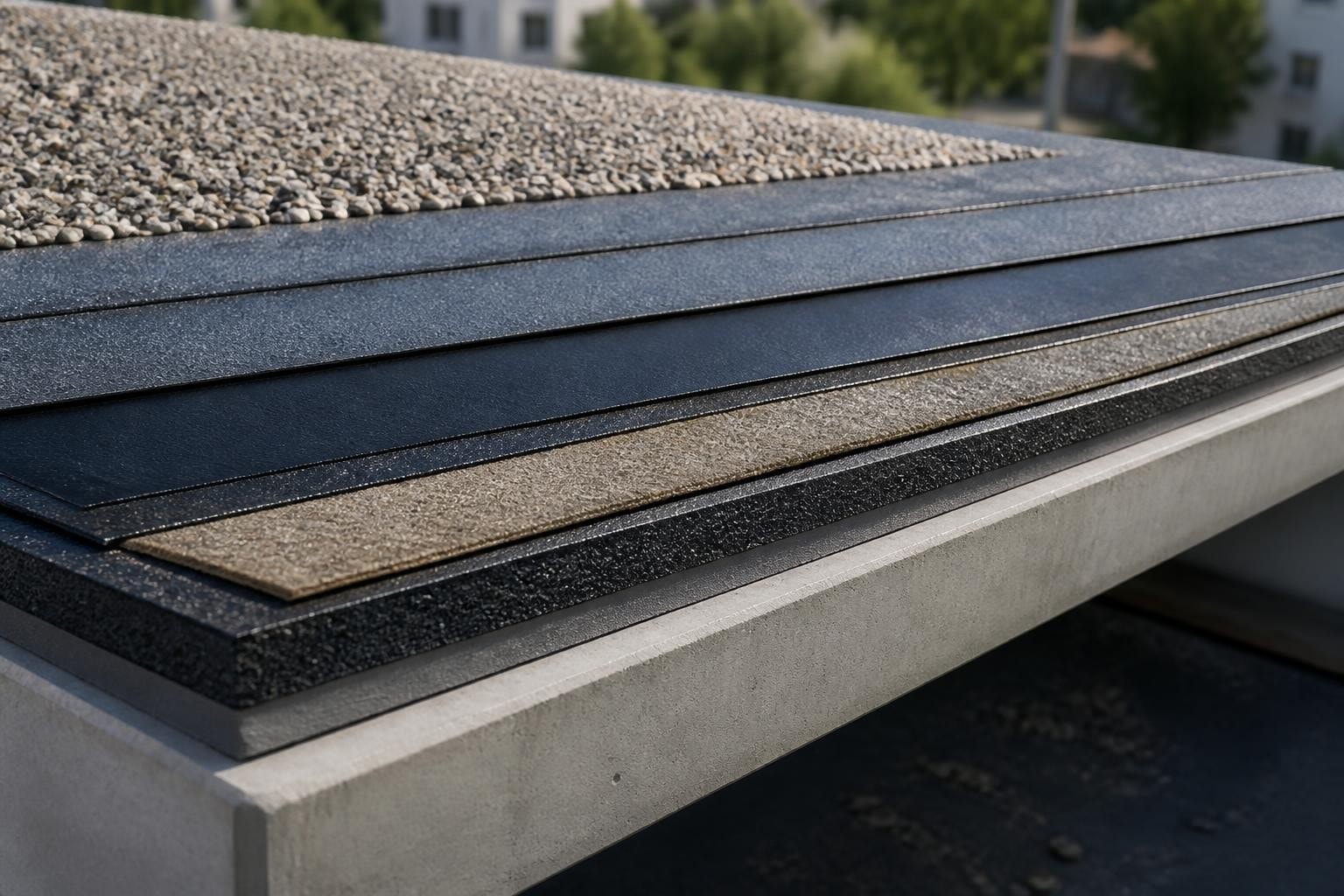
A built roof uses multiple layers of materials to create a waterproof barrier. Unlike single-ply systems or shingles, this approach stacks alternating layers of bitumen (asphalt or coal tar) and reinforcing fabrics to build thickness and redundancy.
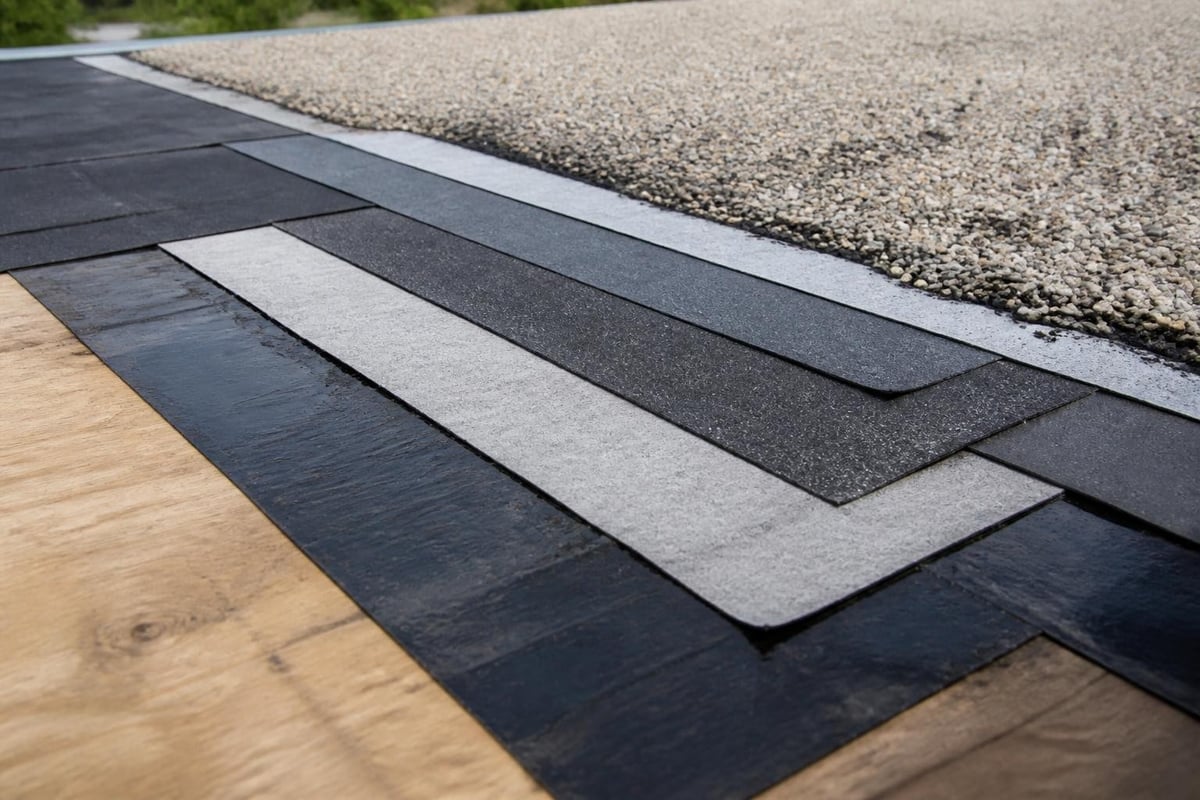
The basic construction starts with a base sheet attached to the roof deck. Then installers apply hot or cold bitumen, followed by reinforcing felts or fabrics. This process repeats, creating three, four, or sometimes five plies. Each layer adds protection and durability.
Key components include:
- Base sheet or vapor barrier
- Bitumen (asphalt, modified bitumen, or coal tar)
- Reinforcing felts (fiberglass or organic)
- Surfacing layer (gravel, mineral cap sheet, or coating)
The surfacing protects the lower layers from UV damage and weather exposure. Gravel remains the most common choice because it reflects heat, resists fire, and protects the bitumen underneath. Some systems use a mineral-surfaced cap sheet instead, which creates a smoother appearance.
This layered construction method has been used for over a century, making it one of the oldest reliable roofing systems still in use today.
Where You Find Built Roof Systems
Most built roof installations appear on flat or low-slope surfaces where water drainage happens differently than steep residential roofs. Commercial buildings, apartment complexes, and industrial facilities use these systems extensively.
In residential settings, you might encounter a built roof on:
- Flat garage roofs
- Home additions with low-slope designs
- Enclosed porches or sunrooms
- Mid-century modern homes with flat roof sections
Eastern North Carolina's coastal communities see these systems occasionally, particularly on older commercial buildings in Wilmington or mixed-use properties in Surf City. The flat commercial strips along Highway 17 often feature built-up roofing because of its proven durability and cost-effectiveness on large, low-slope surfaces.
Installation Process and Timeline
Installing a built roof requires specialized equipment and training. The process differs significantly from nailing down shingles or rolling out single-ply membrane.
Step-by-Step Installation
- Surface preparation – The roof deck must be clean, dry, and structurally sound. Any damaged decking gets replaced first.
- Base sheet application – Installers mechanically fasten or adhere the base sheet to create the first waterproof layer.
- Bitumen heating – For hot-applied systems, bitumen gets heated to 400-500°F in specialized kettles.
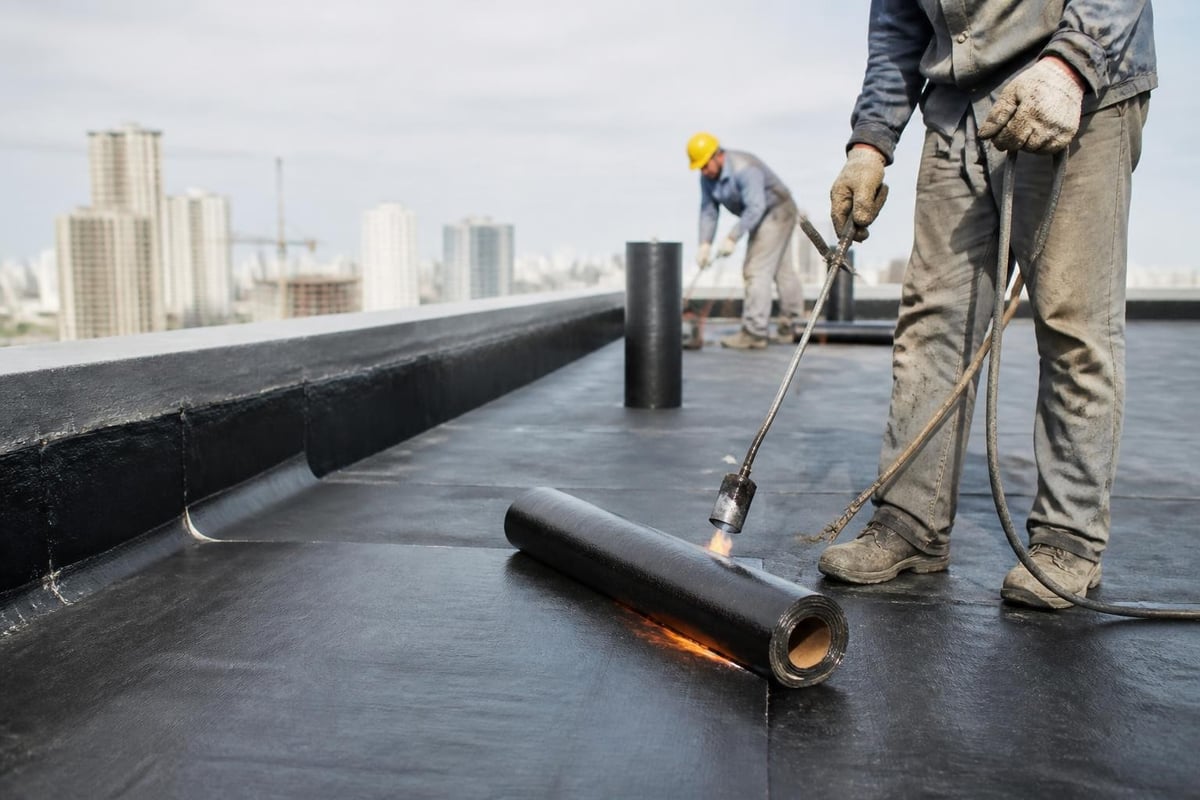
- Ply application – Workers mop hot bitumen onto the base, then roll reinforcing felt into it. This repeats for each ply.
- Surfacing – The final layer receives either embedded gravel, a granulated cap sheet, or protective coating.
Cold-applied systems skip the heating step, using adhesives instead. These take longer to cure but eliminate fire risk during installation.
| Installation Method | Advantages | Considerations |
|---|---|---|
| Hot-applied bitumen | Strong adhesion, immediate waterproofing | Fire risk, equipment intensive |
| Cold-applied adhesive | Safer application, no heating equipment | Longer cure time, temperature sensitive |
| Torch-applied modified | Moderate heat, controlled application | Still requires open flame |
Weather plays a major role in scheduling. Built roof installation needs dry conditions and moderate temperatures. Rain, high humidity, or temperatures below 40°F compromise adhesion and curing.
A typical 2,000 square foot flat roof takes 3-5 days for a complete built-up system. Larger commercial projects can span weeks depending on complexity and weather delays.
Material Choices and Their Impact
The reinforcing materials used between bitumen layers significantly affect performance and longevity.
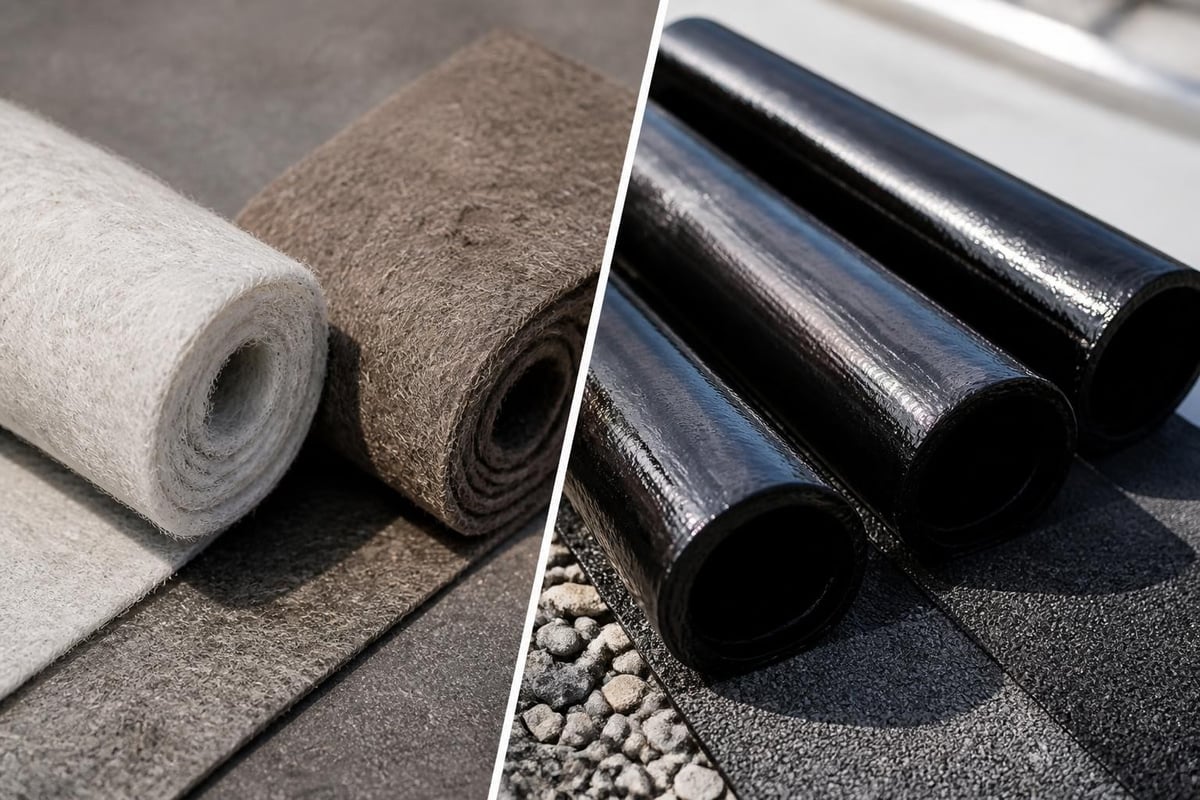
Fiberglass felts resist moisture absorption, won't rot, and provide excellent tensile strength. They cost less than organic felts and work well in most climates, including humid coastal regions.
Organic felts use cellulose fibers saturated with bitumen. They're more flexible and conform better to irregular surfaces but can deteriorate faster in wet environments. Along the coast, fiberglass typically makes more sense.
The bitumen type matters too. Asphalt remains the standard choice – it's economical, readily available, and performs well in most conditions. Coal tar offers superior waterproofing and chemical resistance but costs more and requires specialized handling. Modified bitumen adds polymers to improve flexibility and temperature performance.
Performance in Coastal Environments
Eastern North Carolina's climate tests roofing systems with high humidity, salt air, intense sun, and periodic hurricanes. A built roof handles some of these challenges better than others.
Strengths in coastal conditions:
- Multiple layers create redundancy – one puncture doesn't cause immediate leaks
- Gravel surfacing resists wind uplift when properly installed
- Heavy weight (5-7 pounds per square foot) adds wind resistance
- No exposed fasteners means fewer leak points during storms
Challenges to consider:
- Standing water accelerates deterioration on perfectly flat sections
- Salt air can affect bitumen over time without proper surfacing
- Heat buildup under dark surfaces increases cooling costs
- Maintenance access requires walking on gravel, which can shift
The key to longevity in coastal areas comes down to proper drainage design and regular maintenance. Even a built roof with excellent materials will fail prematurely if water ponds for extended periods.
Maintenance Requirements
Unlike shingle roofs where you can spot problems from the ground, built roof maintenance requires getting up close. The gravel surface hides issues until they become serious.
Essential maintenance tasks include:
- Bi-annual inspections – Spring and fall checks catch small problems early
- Drainage clearing – Removing debris from drains and scuppers prevents ponding
- Gravel redistribution – Wind and foot traffic create bare spots that need coverage
- Seam monitoring – Checking for separation at flashing and ply intersections
- Surface coating – Reapplying protective coatings every 3-5 years extends life
Homeowners with built roof sections should document conditions regularly. Photos help track changes over time and prove maintenance history for insurance purposes. If you're uncertain about your roof's condition, getting a professional Roof Report provides documented findings and clear recommendations before problems escalate.
Professional maintenance practices for commercial roofs apply equally to residential built roof sections, emphasizing preventive care over reactive repairs.
Cost Analysis and Value
Built roof pricing varies considerably based on system complexity, materials chosen, and local labor rates.
| System Type | Material Cost/Sq Ft | Installation Cost/Sq Ft | Total Cost/Sq Ft |
|---|---|---|---|
| 3-ply with gravel | $2.50-$3.50 | $2.00-$3.00 | $4.50-$6.50 |
| 4-ply with gravel | $3.00-$4.00 | $2.50-$3.50 | $5.50-$7.50 |
| 5-ply with coating | $3.50-$4.50 | $3.00-$4.00 | $6.50-$8.50 |
These figures represent typical ranges in Eastern North Carolina for residential or small commercial projects. Large commercial installations often see lower per-square-foot costs due to economies of scale.
Compared to other flat roofing options, built-up systems fall in the middle price range. Single-ply TPO or EPDM might cost $4-$6 per square foot installed, while modified bitumen runs $5-$8. Premium options like PVC membrane can exceed $10 per square foot.
Long-Term Value Factors
Initial cost tells only part of the story. A built roof typically lasts 15-30 years depending on climate, maintenance, and installation quality. That's comparable to good asphalt shingles but less than metal or slate.
Value considerations:
- Lower maintenance costs than some single-ply systems
- Repairable – damaged sections can be patched without full replacement
- Energy efficiency improves with reflective surfacing
- Proven track record reduces uncertainty
- Local contractor availability affects both installation and repair costs
In coastal North Carolina, finding contractors experienced with built-up systems can be challenging since residential demand favors shingles and metal. This sometimes increases costs or limits options for repairs.
Common Problems and Solutions
Even well-installed built roof systems develop issues over time. Recognizing problems early prevents expensive damage.
Blistering and Bubbling
Trapped moisture or air between plies creates blisters that appear as raised bumps under the surface. These happen when:
- Moisture was present during installation
- Inadequate ventilation allows vapor buildup
- Poor adhesion between layers lets air pockets form
Small blisters might not leak immediately but compromise the system's integrity. Large or numerous blisters usually require professional repair, cutting out affected areas and patching with new plies.
Ponding Water
Water that remains more than 48 hours after rain indicates drainage problems. Ponding accelerates deterioration, growing algae and breaking down bitumen.
Solutions include:
- Adding drains or scuppers in low spots
- Installing tapered insulation to create positive slope
- Applying protective coatings to ponding-prone areas
- In severe cases, restructuring the roof deck
Coastal humidity makes ponding particularly problematic since moisture never fully evaporates between rain events.
Surfacing Loss
Gravel displacement exposes underlying plies to UV damage. Wind, foot traffic, and poor initial distribution cause bare spots.
Regular redistribution maintains protection, but extensive loss might require adding new gravel or switching to a cap sheet system during the next major maintenance cycle.
Flashing Failures
Where the built roof meets walls, curbs, or penetrations, flashing creates the waterproof transition. These areas fail when:
- Metal flashing corrodes in salt air
- Bitumen separates from vertical surfaces
- Movement cracks rigid connections
- Sealants deteriorate from UV exposure
Proper flashing details use multiple plies extended up vertical surfaces, mechanically fastened metal, and flexible transition materials. Coastal installations benefit from stainless steel or heavily coated metals that resist corrosion.
Repair vs. Replacement Decisions
Like any roofing system, built roofs eventually need more than maintenance. Deciding between repair and replacement depends on several factors.
Repair makes sense when:
- Damage covers less than 25% of the total area
- The underlying structure remains sound
- The system is less than 15 years old
- Regular maintenance has been performed
- Budget constraints limit options
Replacement becomes necessary when:
- Multiple areas show deterioration
- The roof exceeds its expected lifespan
- Repeated leaks indicate systemic failure
- The deck requires structural work
- Energy efficiency upgrades justify the investment
For residential built roof sections in Eastern North Carolina, understanding repair options helps homeowners make cost-effective decisions. Sometimes patching a small area extends the roof's life by five years at a fraction of replacement cost.
The systematic approach to roof maintenance professionals use on commercial buildings applies equally to residential situations, emphasizing documentation and planned interventions over emergency responses.
Alternatives to Traditional Built Roof Systems
Modern roofing technology offers alternatives that might better suit certain situations or preferences.
Modified bitumen systems use similar materials but in factory-manufactured sheets rather than field-built layers. Installation goes faster, quality control improves, and labor costs decrease. These hybrid systems provide built roof benefits with simplified installation.
Single-ply membranes like TPO, EPDM, or PVC create waterproofing with one thick layer instead of multiple thin ones. They're lighter, install faster, and some offer better energy efficiency. However, they lack the redundancy that makes built-up systems forgiving of minor damage.
Spray polyurethane foam (SPF) creates a seamless, insulating waterproof layer. It conforms to any shape, adds R-value, and weighs very little. The tradeoff comes in specialized application requirements and ongoing coating maintenance.
Metal roofing systems work on low slopes when properly detailed. Standing seam panels shed water effectively, last decades, and resist wind damage. They cost more initially but often provide better long-term value in coastal environments.
| System Type | Lifespan | Initial Cost | Maintenance Level | Coastal Suitability |
|---|---|---|---|---|
| Built-up roof | 15-30 years | Moderate | Moderate-High | Good with maintenance |
| Modified bitumen | 15-25 years | Moderate | Moderate | Good |
| Single-ply membrane | 15-30 years | Low-Moderate | Low | Excellent |
| Metal panels | 30-50+ years | High | Low | Excellent |
| SPF | 20-30 years | Moderate-High | Moderate | Good with proper coating |
Choosing between these options depends on budget, building design, maintenance capacity, and long-term plans for the property.
Design Considerations for Homeowners
If you're building an addition or replacing an existing flat roof section, understanding design choices helps create a better result.
Slope and Drainage
Perfectly flat roofs don't exist in practice – they need at least 1/4 inch per foot slope for drainage. More slope (1/2 inch per foot) provides faster water removal and reduces ponding risk.
Drainage paths should be obvious and redundant. Every low point needs a drain or scupper with backup overflow protection. Coastal areas prone to heavy rainfall benefit from oversized drains that handle peak flow.
Insulation Placement
Where you put insulation affects both building performance and roof longevity. Three approaches exist:
Conventional design places insulation below the roof deck between joists. This costs less but creates a cold deck where condensation can form.
Protected membrane puts insulation above the waterproofing. The roof membrane stays at stable temperature, extending its life. This approach works well in heating climates.
Inverted design layers insulation over the built roof system, protected by ballast or pavers. It protects the membrane but requires stronger structural support.
Eastern North Carolina's mild winters and hot summers often favor conventional or protected membrane approaches that minimize heat gain.
Access and Maintenance Planning
Built roof sections need safe access for maintenance. Roof hatches, permanent ladders, or easy exterior access make regular inspections practical. Designing maintenance walkways prevents gravel displacement and simplifies inspection routines.
Consider how you'll reach drains, penetrations, and flashing details. If accessing your roof requires ladder setup and careful navigation, you're less likely to perform needed maintenance.
When a Built Roof Makes Sense
Not every flat roof needs built-up construction, but certain situations favor this approach.
Best applications include:
- Large commercial flat roofs where cost efficiency matters
- Buildings requiring superior fire resistance
- Situations where local contractor expertise exists
- Roofs with minimal penetrations and simple geometry
- Properties with planned regular maintenance programs
Less ideal situations:
- Small residential sections where single-ply simplicity makes more sense
- Steeply sloped applications
- Locations without experienced built-up installers
- Buildings where weight poses structural concerns
- Properties unlikely to receive proper maintenance
A built roof isn't better or worse than alternatives – it's different, with particular strengths that match specific needs. Understanding those strengths helps you recognize when it's the right choice.
For most Eastern North Carolina homeowners dealing with flat roof sections on garages, porches, or additions, the decision often comes down to finding experienced contractors and committing to maintenance schedules. The detailed materials and installation guide provided by roofing professionals helps clarify what proper installation looks like.
Environmental Impact and Sustainability
Roofing choices affect more than just the building they cover. Material production, installation energy use, and end-of-life disposal all carry environmental consequences.
Built roof systems use petroleum-based materials extensively. Bitumen comes from oil refining, and the energy required to heat application materials adds carbon emissions. However, longevity matters too – a 25-year built roof that's properly maintained might have lower lifetime impact than three generations of cheaper systems requiring earlier replacement.
Environmental considerations:
- Reflective surfacing reduces cooling energy and urban heat island effects
- Some bitumen contains recycled materials
- Tear-off and disposal create significant waste during replacement
- Local sourcing reduces transportation impacts
- Proper maintenance extends life, reducing material consumption
Cool roof coatings and light-colored gravel improve energy performance significantly. In coastal North Carolina's hot summers, reflecting rather than absorbing solar heat can cut cooling costs by 10-15%.
Recycling options for built roof materials remain limited. Most tear-off goes to landfills, though some communities have programs that process asphalt roofing waste into paving materials.
A built roof might not be what most homeowners picture when they think about roofing, but understanding this multi-layered system helps you make better decisions about flat or low-slope sections on your property. Whether you're evaluating an existing built-up roof, planning new construction, or comparing options for replacement, the key comes down to matching the system to your specific situation and committing to proper maintenance. If you're in Hampstead, Topsail, Surf City, Wilmington, or surrounding coastal communities and need honest guidance about your roof's condition or your best options moving forward, NC Roofs provides clear explanations and recommendations focused on what actually makes sense for your home.