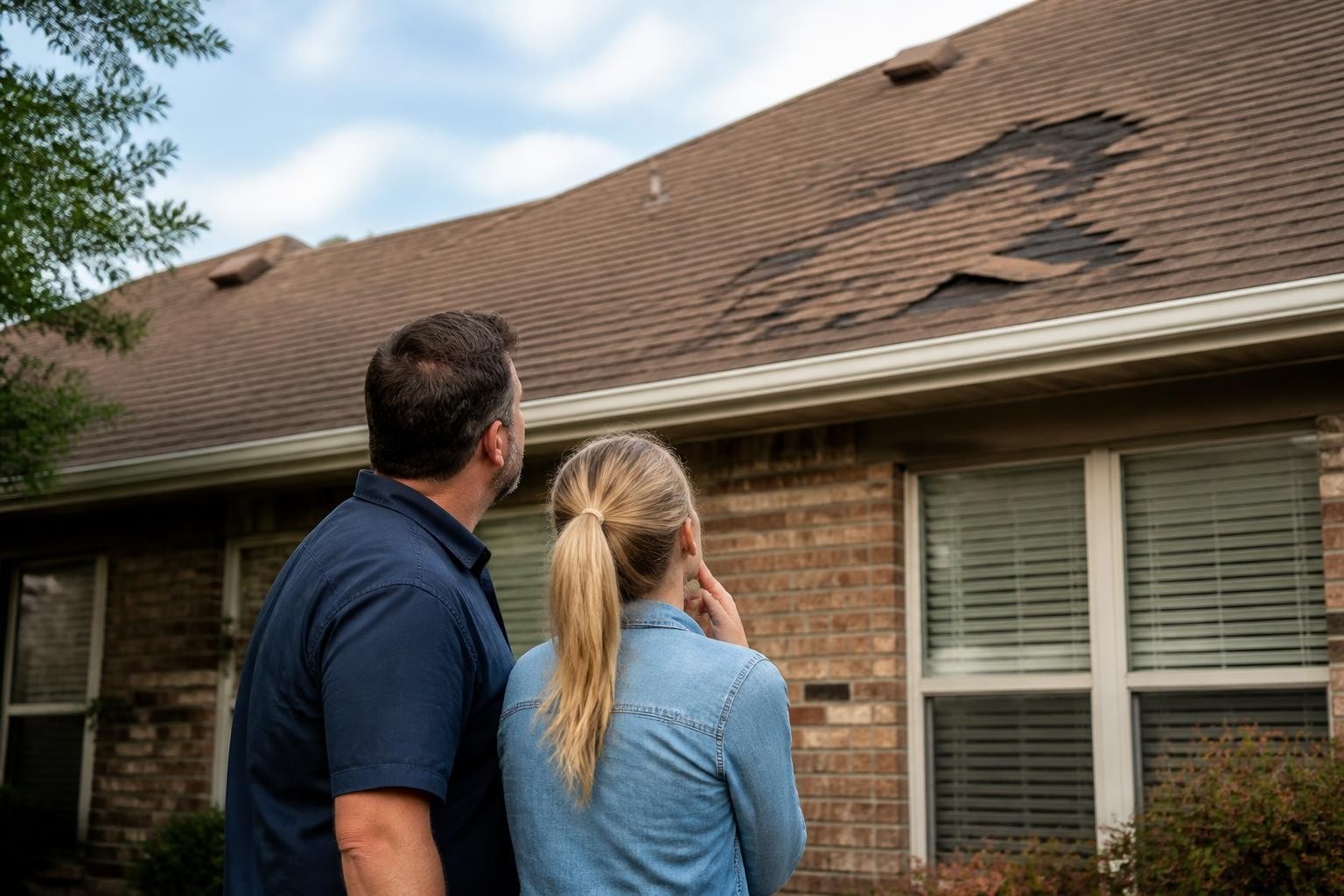
When you notice water stains on your ceiling, missing shingles after a storm, or daylight peeking through your attic, the question hits fast: should I repair or replace my roof? It's one of the biggest decisions homeowners face, especially in coastal communities where wind, salt air, and seasonal storms test roofs constantly. The right answer depends on factors like your roof's age, the extent of damage, repair costs versus replacement costs, and how long you plan to stay in your home. Understanding what you're actually dealing with makes the choice clearer and helps you avoid spending money where you don't need to.
Roof Age and Remaining Lifespan
Your roof's age is the starting point for any repair-or-replace decision. Most asphalt shingle roofs last 20 to 25 years, though coastal conditions and weather exposure can shorten that timeline.
If your roof is under 10 years old, repairs almost always make sense unless you're facing catastrophic damage. At this stage, your roof has significant life left, and isolated problems like a small leak or a few damaged shingles don't justify a full replacement.
Between 10 and 15 years, you're in the middle zone. Repairs still work for minor issues, but if you're seeing multiple problem areas or repeated failures, replacement might be the smarter long-term investment. According to Home Depot’s comparison guide, this is when homeowners should start weighing repair frequency against remaining roof life.
Past 15 years, especially approaching 20, every repair decision needs careful consideration. You might fix a leak today only to face another issue six months later. At this point, the question shifts from "Can I repair this?" to "How much longer will this roof realistically last?"
| Roof Age | Best Approach | Reasoning |
|---|---|---|
| 0-10 years | Repair | Plenty of lifespan remaining |
| 10-15 years | Evaluate case by case | Depends on damage extent and frequency |
| 15-20 years | Lean toward replacement | Limited remaining life |
| 20+ years | Replace | Near or past expected lifespan |
Extent and Location of Damage
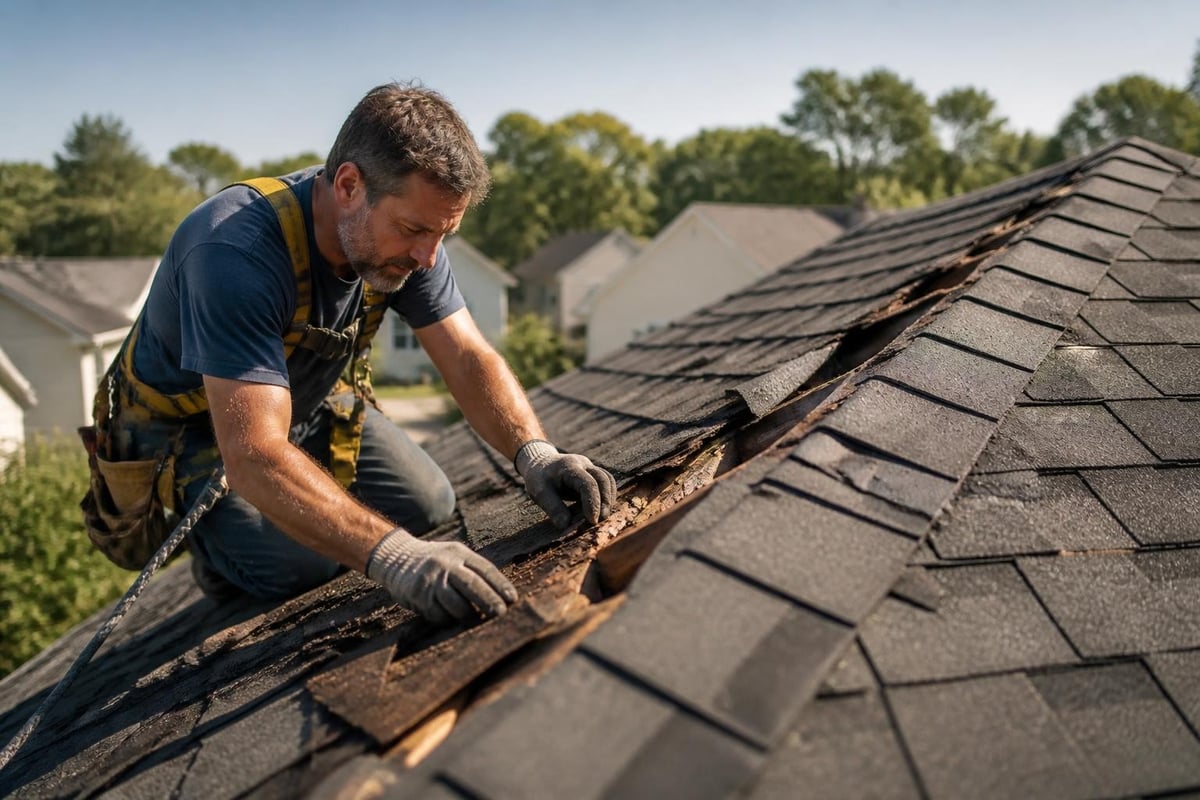
Where the damage sits on your roof matters as much as what the damage looks like. Isolated problems in one section suggest repair, while widespread issues across multiple areas point toward replacement.
Localized Damage
When storm damage or wear affects a specific area-maybe one slope, a section around a chimney, or the side facing prevailing winds-repair typically makes sense. You're addressing the actual problem without tearing off sections that still function fine.
Common repairable damage includes:
- Missing or cracked shingles in one area
- Flashing failures around vents or chimneys
- Small leaks from a single penetration point
- Localized wind damage after a storm
- Isolated hail impact zones
The key is that the rest of your roof shows normal wear for its age. If the damaged section is the exception rather than the rule, should I repair or replace my roof usually has a clear answer: repair.
Widespread Deterioration
Multiple problem areas change the math entirely. When you're patching leaks in three different spots, replacing shingles on multiple slopes, and seeing granule loss across the entire roof, you're fighting a losing battle.
Signs pointing to replacement:
- Curling or cupping shingles across most of the roof
- Significant granule loss in multiple areas
- Sagging sections or visible structural concerns
- Multiple active leaks in different locations
- Extensive moss or algae growth indicating moisture retention
Modernize’s detailed comparison notes that widespread deterioration often means the roof system as a whole has reached the end of its effective life, even if some sections look okay.
Cost Analysis: The 25% Rule
One of the most practical guidelines in the roofing industry is the 25% rule, which helps cut through the should-I-repair-or-replace-my-roof confusion with straightforward math.
The rule works like this: If your repair costs exceed 25% of what a full replacement would cost, replacement usually makes more financial sense. This accounts for the reality that you'll get a completely new roof with a warranty instead of patching an aging system.
For example, if replacement costs $12,000, any repair approaching $3,000 deserves serious consideration as a replacement trigger. You're spending a quarter of replacement cost for a fix that doesn't reset your roof's age or condition.
Calculating Your Break-Even Point
- Get a replacement estimate for your specific roof
- Calculate 25% of that total
- Compare to your repair quote honestly
- Factor in your roof's age (older roofs tip toward replacement)
- Consider future repairs you might face soon
In coastal North Carolina, where salt air and storms accelerate wear, this calculation becomes even more important. A repair that might last 10 years inland could fail in 5 years near the coast.
| Scenario | Replacement Cost | 25% Threshold | Decision Point |
|---|---|---|---|
| Small leak | $12,000 | $3,000 | Repair at $800 makes sense |
| Multiple leaks | $12,000 | $3,000 | Repair at $2,400 questionable |
| Widespread damage | $12,000 | $3,000 | Repair at $3,200 suggests replace |
Storm Damage and Insurance Considerations
Storm damage creates unique decision factors that regular wear and tear doesn't. The speed and severity of wind or hail damage often affects larger areas, and insurance coverage changes the financial equation entirely.
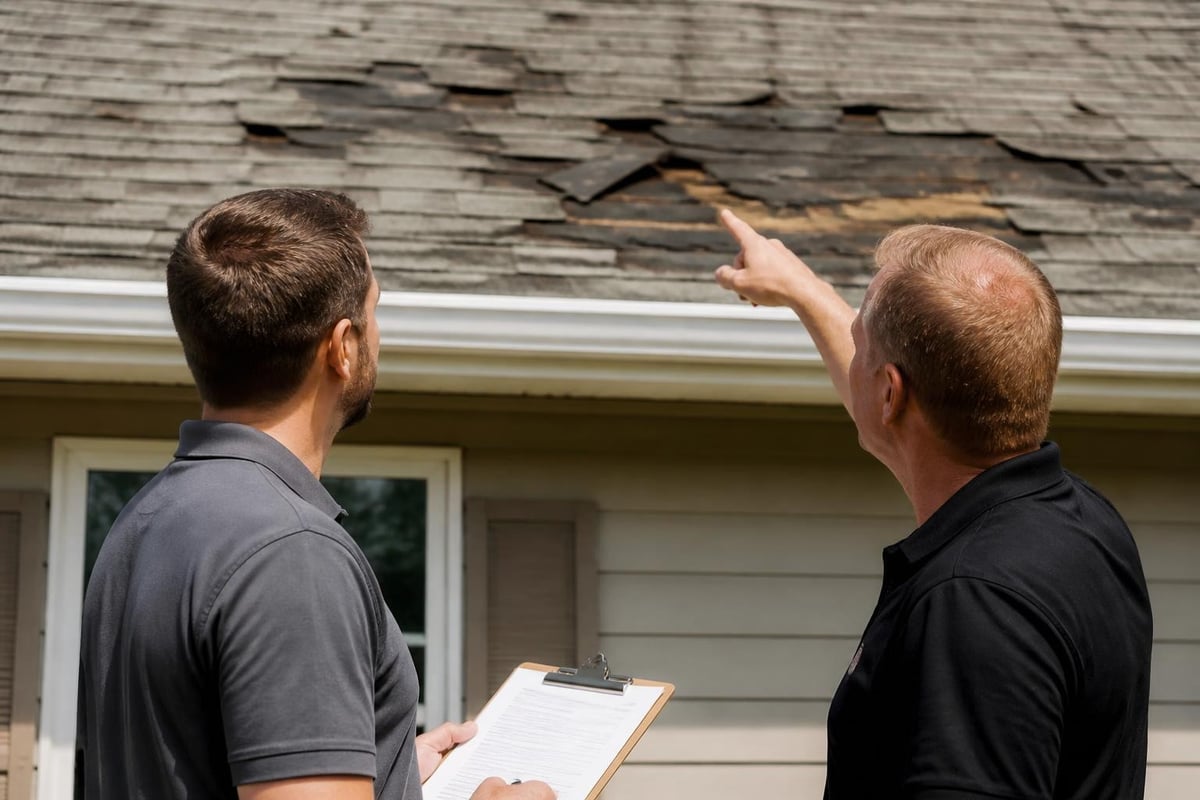
After significant weather events, your first step should be documenting the damage before repairs. Take photos, note the date, and get a professional assessment. Many homeowners in Topsail, Surf City, and Holly Ridge have learned that thorough documentation makes insurance claims smoother.
Wind damage patterns often show missing shingles in distinct areas where uplift occurred. If you lost 15 shingles on your windward slope but the rest of the roof looks fine, that's repairable damage. If you lost shingles across three slopes and your ridge cap is compromised, you're likely looking at replacement territory.
Hail damage can be deceptive because it might not leak immediately. Bruised shingles lose granules and fail prematurely, turning what looks like cosmetic damage into functional problems within months. Roof Repair Authority’s guide emphasizes that insurance adjusters specifically look for widespread hail impact when determining repair versus replacement.
Working With Insurance
Your insurance company has specific criteria for approving replacement over repair. Generally, if damage affects more than a certain percentage of your roof (often 25-30%), they'll approve replacement. This aligns with the cost effectiveness of repair versus starting fresh.
Key insurance considerations:
- Age of roof affects payout (depreciation matters)
- Type of damage (sudden events vs. gradual wear)
- Policy coverage (actual cash value vs. replacement cost)
- Documentation quality impacts claim approval
When facing storm damage, getting a professional roof repair assessment helps you understand both the extent of damage and whether insurance will likely cover replacement.
Material Type and Replacement Complexity
The roofing material on your home influences both repair difficulty and replacement timing. Asphalt shingles dominate residential roofing, but metal, tile, and other materials have different repair-replace considerations.
Asphalt Shingles
The most common material offers straightforward repair options when damage is limited. Individual shingles can be replaced, sections can be patched, and matching materials are usually available even for discontinued styles.
However, color matching becomes harder as roofs age. UV exposure fades shingles, and a repair section with new materials often looks noticeably different. This doesn't affect performance but matters for curb appeal.
Architectural vs. Three-Tab Shingles
Architectural shingles hide repairs better due to their dimensional design. Three-tab shingles show seams more obviously, making extensive repairs more visible. Neither is harder to repair from a technical standpoint, but the aesthetic outcome differs.
Other Materials
- Metal roofing: Panel replacement is possible but matching patina is difficult
- Tile: Individual tiles break easily but replacement is straightforward if you have matching tiles
- Slate: Extremely durable but specialized repairs cost more
- Wood shake: Rot spreads, making isolated repairs temporary solutions
According to Roofing Hound’s analysis, material type affects decision-making less than damage extent and roof age for most homeowners.
Energy Efficiency and Home Value
Beyond immediate repair-or-replace decisions, considering broader home improvement goals helps clarify which direction makes sense. Replacement offers opportunities that repairs don't.
Energy efficiency improvements come standard with replacement. Modern shingles reflect more heat, ventilation systems get upgraded, and insulation problems get addressed during installation. If you're dealing with high cooling costs or comfort issues, replacement tackles multiple problems at once.
Home value considerations depend on your timeline. Planning to sell within two years? A new roof provides immediate return on investment and removes a buyer negotiation point. All Weather Roofing Systems notes that homes with new roofs sell faster and command better prices.
Staying long-term? The calculation shifts toward cost effectiveness. A repair that buys you five more years might be smarter than replacing a 12-year-old roof that could last another eight years with proper maintenance.
Return on Investment
Roof replacement typically recovers 60-70% of cost at resale, making it one of the better home improvement investments. Repairs don't add value, they maintain it. Neither is wrong, they serve different purposes.
Signs You Can Probably Repair
Certain situations clearly favor repair over replacement, making the should-I-repair-or-replace-my-roof question easier to answer. These signs indicate your roof still has serviceable life and the damage doesn't justify starting over.
Clear repair indicators:
- Roof is under 15 years old
- Damage is limited to one area
- Underlayment and decking are sound
- No signs of structural sagging
- Previous repairs have held up well
- Attic shows no water stains beyond leak area
Missing shingles after a storm represent the classic repair scenario. The wind caught an edge, lifted a section, and tore off shingles in one spot. The rest of your roof weathered the same storm fine. This tells you the overall system works, you just need to address the damaged section.
Weather Shield Roofers’ cost breakdown reinforces that localized damage with an otherwise healthy roof almost always favors repair from both practical and financial perspectives.
Signs You Should Replace
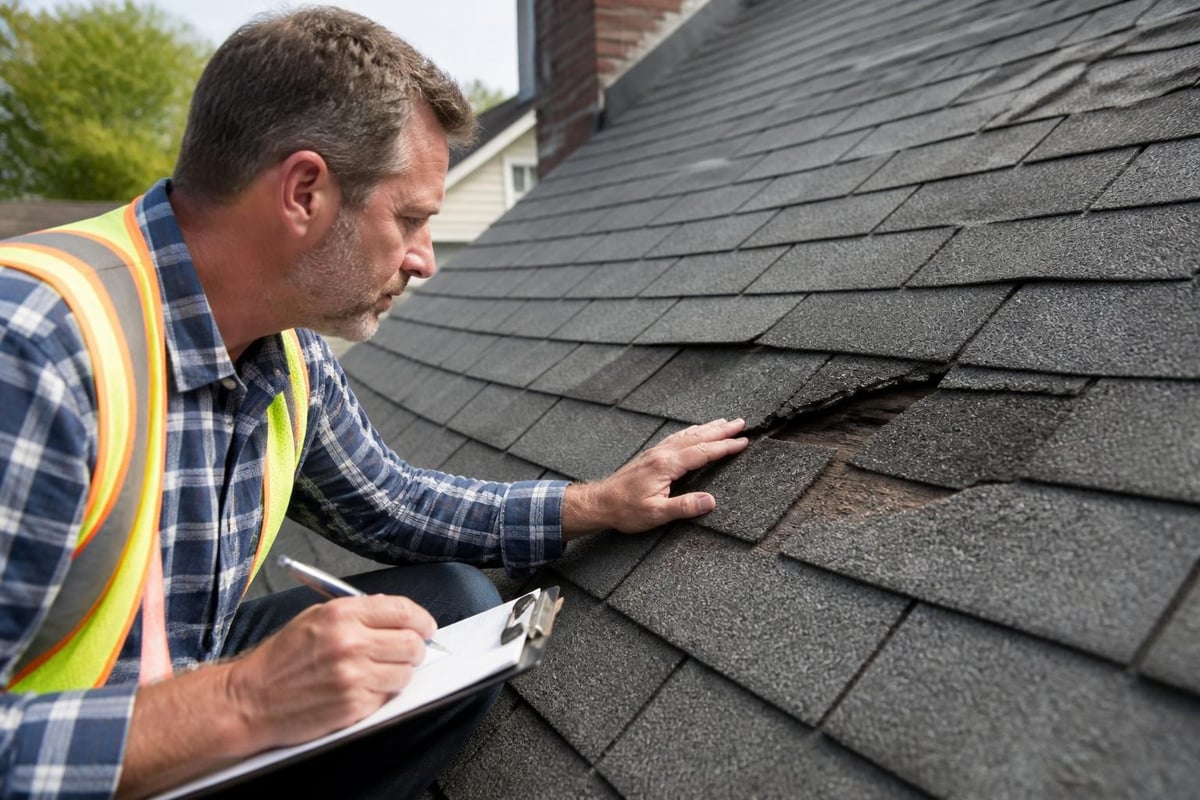
Other situations make replacement the obvious choice, even if emotionally you'd prefer the lower upfront cost of repair. Recognizing these signs saves money long-term by avoiding repeated repairs on a failing system.
Clear replacement indicators:
- Roof is 20+ years old
- Multiple areas showing different types of failure
- Interior water damage in several rooms
- Visible sagging or structural concerns
- Widespread granule loss (looks like bare patches)
- Daylight visible through roof boards
- Energy bills climbing due to poor insulation
When neighbors who built around the same time are replacing roofs, pay attention. Subdivisions built together often experience similar roof aging, and your roof likely faces the same timeline.
The appearance of widespread problems across your roof means the materials have reached the end of useful life. DIY Projects’ financial guide explains that fighting this with repairs becomes expensive quickly, as one fix leads to another in a cascade of failures.
Getting Accurate Assessments
The should-I-repair-or-replace-my-roof decision requires accurate information about what's actually wrong. Not every contractor has the same incentive to give honest recommendations.
What to Look For in Assessments
Thorough inspection should include attic examination, not just a ladder look at shingles. Interior signs tell as much about roof condition as exterior appearance.
Clear documentation with photos and specific problem areas helps you understand the scope. Vague statements like "your roof is bad" don't help decision-making. You need specifics about where damage exists and why it matters.
Multiple opinions make sense for major decisions. Get two or three estimates, but make sure you're asking the same questions and comparing similar scopes.
Written recommendations explaining why repair or replacement makes sense show the contractor's reasoning. This transparency helps you evaluate whether recommendations align with your situation or their preferred job size.
Red Flags to Watch For
- Pressure to decide immediately
- Recommendations that don't match roof age
- Refusal to consider repair when roof is relatively new
- No explanation of why problems developed
- Estimates that vary wildly without explanation
Special Coastal Considerations
Homeowners in Wilmington, Hampstead, and surrounding coastal areas face roofing challenges that inland properties don't encounter. Salt air, higher winds, and more intense storms affect both roof lifespan and repair decisions.
Salt air corrosion accelerates metal component failure. Flashing, vents, and fasteners deteriorate faster near the coast, sometimes requiring replacement even when shingles look acceptable.
Wind exposure from tropical systems and nor'easters tests roof attachment more frequently. A roof that would last 25 years in Raleigh might show edge lifting and wind damage at 18 years in Surf City.
Moisture and humidity create ideal conditions for algae, moss, and organic growth. While mostly cosmetic, these issues indicate areas retaining moisture, which accelerates shingle deterioration.
These factors mean coastal homeowners should evaluate replacement slightly earlier than inland guidelines suggest. A 17-year-old roof showing moderate wear in a coastal area might warrant replacement where the same roof would get repairs inland.
For more roofing guidance specific to Eastern North Carolina, NC Roofs provides resources tailored to coastal conditions and common local challenges.
Warranty Implications
Existing roof warranties affect repair-versus-replacement decisions more than most homeowners realize. Making the wrong choice can void coverage you're counting on.
Material warranties from shingle manufacturers typically transfer to new owners but require proper installation and specific repair approaches. Mixing materials or improper repair techniques can void coverage.
Workmanship warranties from your original installer usually require them to handle repairs during the coverage period. Going elsewhere might make sense for cost or service reasons, but know you're giving up warranty protection.
New warranties with replacement reset your coverage clock completely. Full replacement gives you fresh material and workmanship warranties, valuable peace of mind especially if you plan to stay in your home long-term.
Before committing to repairs, check whether your existing warranties cover the damage and what requirements they impose on how repairs happen.
Making Your Decision
Bringing all these factors together, should I repair or replace my roof comes down to a few key questions you can answer for yourself.
Decision framework:
- How old is your roof? Under 15 years suggests repair, over 20 suggests replacement
- Where is the damage? One area suggests repair, multiple areas suggest replacement
- What's the cost ratio? Under 25% of replacement cost suggests repair
- How long are you staying? Short-term ownership might favor repair, long-term might favor replacement
- What's your risk tolerance? Repair means potential future issues, replacement means peace of mind
None of these questions exist in isolation. A 16-year-old roof with damage in one spot might repair fine, but if you're planning to stay 10+ years, replacement might make more sense even though repair would work.
The honest answer considers all factors together rather than focusing on just one, which is why talking through your specific situation with a knowledgeable contractor helps. They should explain the reasoning behind their recommendation, not just hand you a price.
When to Get Emergency Repairs Before Deciding
Sometimes you need immediate action before making the full repair-or-replace decision. Active leaks causing interior damage can't wait for estimates and consideration.
Emergency temporary repairs stop ongoing damage while you evaluate permanent solutions. Tarps, temporary patches, and quick fixes prevent a roofing problem from becoming a structural or mold problem.
This doesn't lock you into repair as your final solution. It buys time to properly assess the full scope, get multiple opinions, check insurance coverage, and make an informed decision without water pouring into your living room.
After storms, temporary repairs become especially important. JRH Construction’s decision guide emphasizes that protecting your home takes priority over perfect long-term planning.
Once emergency measures are in place, you can methodically work through the should-I-repair-or-replace-my-roof decision with all the information you need.
Understanding the Timeline
Whether you choose repair or replacement, understanding realistic timelines helps you plan appropriately and avoid rushed decisions that cost more money.
Repair timelines typically run 1-3 days for most residential projects, depending on scope and weather. Simple shingle replacement might finish in a day, while more complex flashing repairs or multiple problem areas take longer.
Replacement timelines usually span 2-5 days for average-sized homes, again weather-dependent. Larger homes, complex designs, or material availability can extend this.
Seasonal considerations matter in North Carolina. Summer heat makes roof work challenging, while fall provides ideal installation conditions before winter weather arrives. Hurricane season creates obvious concerns for starting projects that might not finish before a storm.
According to Rainy Roofers’ guidance, planning ahead rather than waiting for crisis helps you secure better pricing and scheduling, especially during busy seasons when contractors book months out.
Financing and Payment Considerations
Cost matters obviously, but how you pay for repairs versus replacement creates different financial impacts worth considering as part of your decision.
Repairs usually cost enough that homeowners pay from savings or put on a credit card. The amounts often range from a few hundred to a few thousand dollars, significant but manageable for most budgets.
Replacement typically requires financing unless you have substantial savings available. Home equity loans, personal loans, or contractor financing programs spread the cost over time, making replacement accessible even when you don't have $15,000 sitting in checking.
The monthly payment difference between financing replacement versus paying for repairs (and likely future repairs) sometimes favors replacement when you run the actual numbers over several years.
Deciding whether to repair or replace your roof depends on your specific situation, from roof age and damage extent to how long you plan to stay and what your budget allows. The right answer balances immediate costs against long-term value while honestly assessing what your roof actually needs. If you're trying to make this decision for your coastal North Carolina home, NC Roofs offers straightforward assessments and clear recommendations based on what actually makes sense for your roof, not the biggest invoice. We serve Hampstead, Topsail, Surf City, Holly Ridge, Wilmington, and surrounding areas with honest guidance and fair pricing.