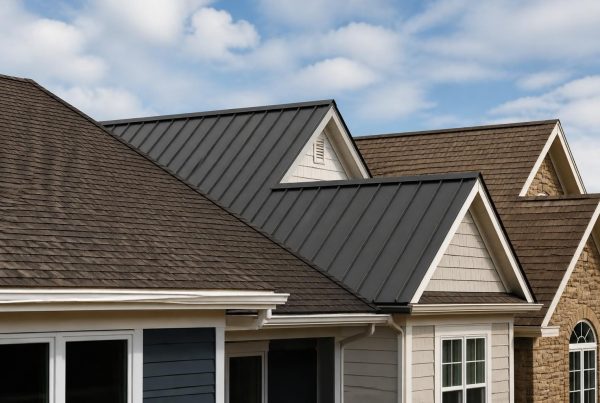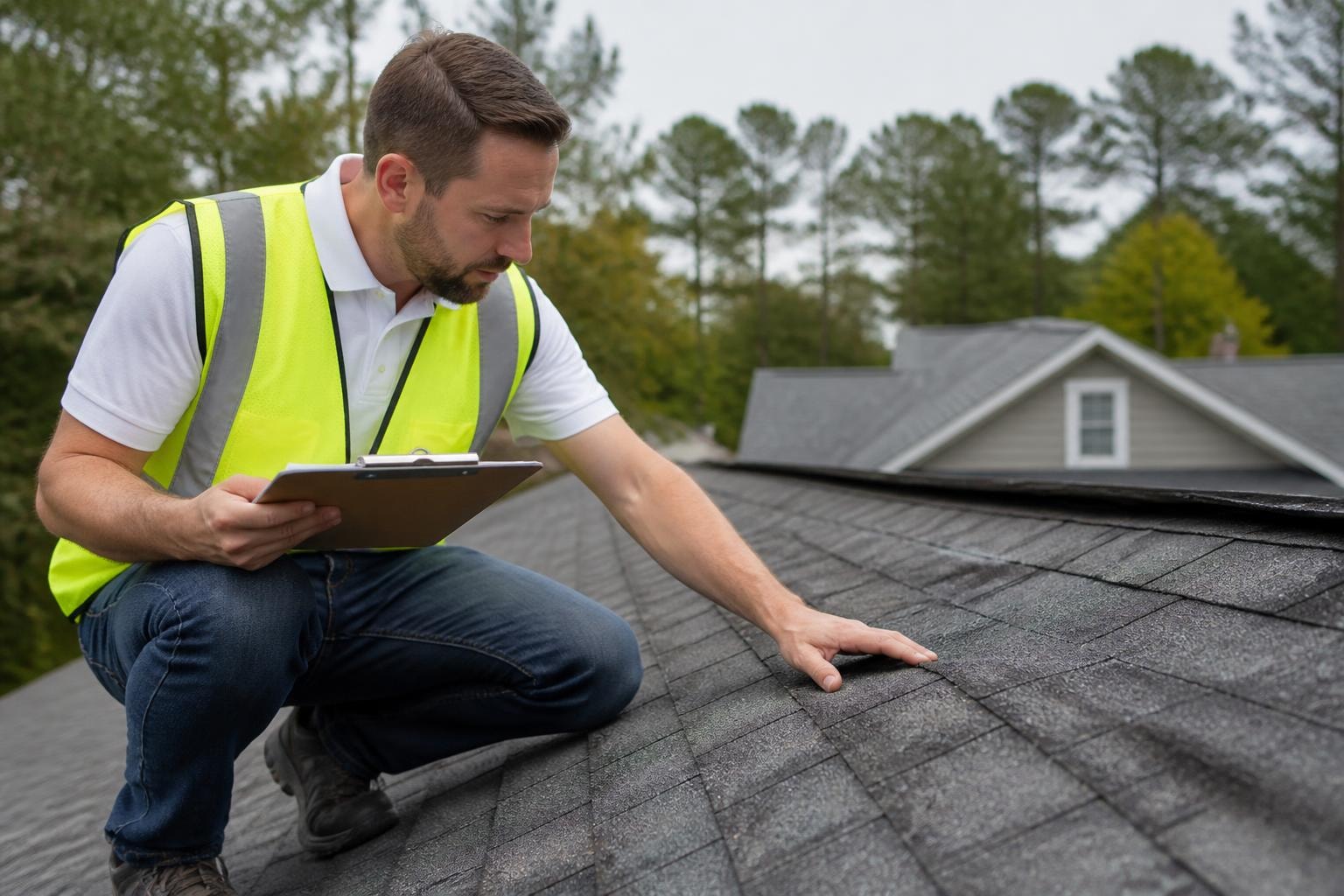
Coastal North Carolina homes face regular wind events that can quietly compromise a roof without creating obvious leaks or visible damage from the ground. A proper wind damage roof Wilmington NC inspection helps homeowners understand what actually happened to their roof after a storm, what needs repair, and whether insurance should be involved. This type of inspection is different from a routine roof check because it focuses specifically on wind-related issues, documents conditions for potential claims, and separates cosmetic wear from structural concerns that need immediate attention.
Understanding Wind Damage in Coastal North Carolina
Wind affects roofs differently depending on storm intensity, roof age, and installation quality. Wilmington sits in a zone where tropical systems, nor'easters, and summer thunderstorms all bring sustained winds that test roofing materials year after year.
Common wind damage patterns include:
- Lifted or creased shingles along roof edges and ridges
- Missing shingle tabs or entire shingles
- Exposed nail heads where sealant strips failed
- Granule loss concentrated in high-wind zones
- Flashing separation around chimneys and vents
The coastal environment makes these issues more urgent because saltwater exposure accelerates deterioration once protective layers are compromised. A shingle that lifts during a storm might reseal in dry conditions, but the damage remains and worsens with each subsequent weather event.
Why Standard Roof Checks Miss Wind Damage
Homeowners often walk around their property after a storm and see no shingles in the yard, assuming everything is fine. Most wind damage happens at the attachment points and sealant strips, neither of which are visible from the ground or even from a ladder at the roof edge.
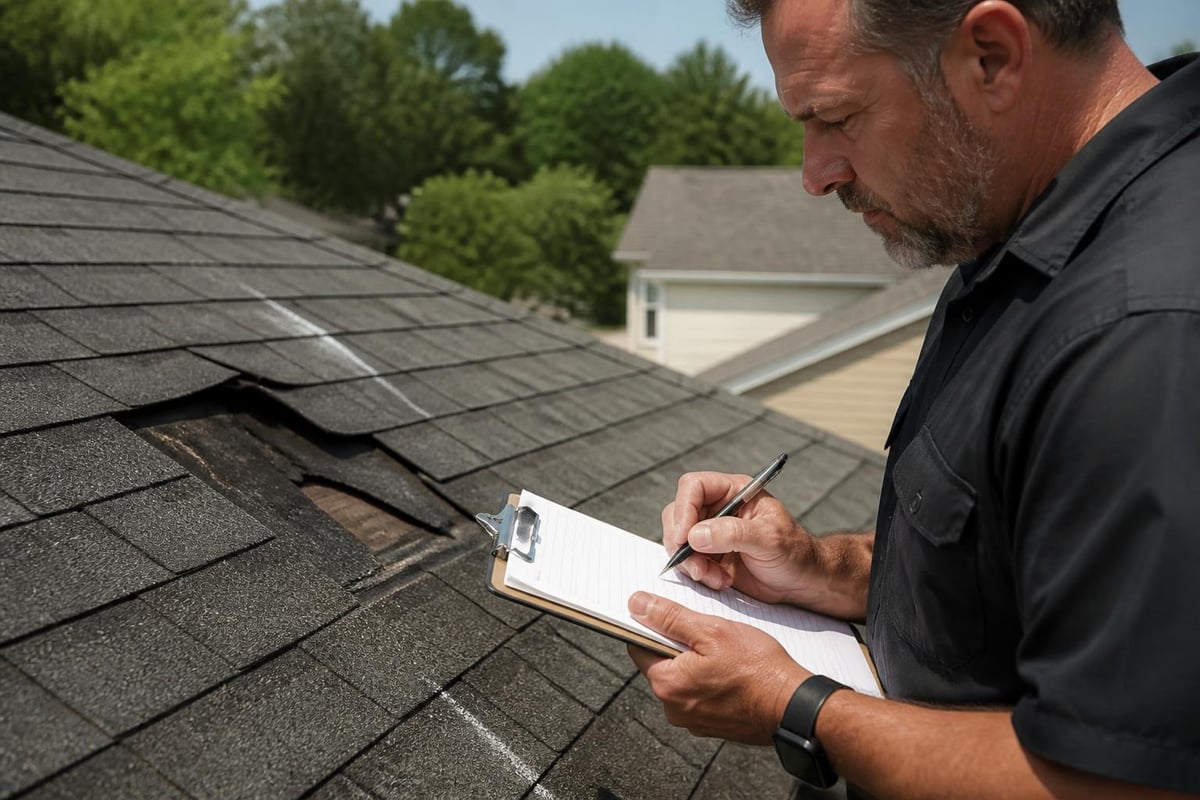
A wind damage roof Wilmington NC inspection involves getting on the roof surface to examine individual shingles, check adhesion, and document subtle lifting that will lead to leaks during the next heavy rain. This level of detail matters for insurance documentation and for understanding whether repairs can wait or need immediate scheduling.
What Happens During a Wind Damage Inspection
A proper inspection follows a systematic approach that covers the entire roof system, not just the shingles. The goal is to identify all wind-related damage, determine what caused it, and provide clear documentation.
Initial Visual Assessment
The inspector starts from the ground, looking for obvious signs like missing shingles, damaged vents, or displaced ridge caps. This quick survey helps prioritize which roof sections need the closest examination and identifies any immediate safety concerns.
From this ground-level view, inspectors note:
- Debris accumulation in valleys or against chimneys
- Sagging or uneven rooflines
- Visible flashing damage
- Gutter or soffit issues that indicate uplift
Detailed Roof Surface Examination
Once on the roof, the inspector walks the entire surface, checking each section methodically. They're looking for damage that develops from wind patterns specific to your home's orientation and surrounding trees or structures.
| Inspection Area | What's Checked | Why It Matters |
|---|---|---|
| Roof edges | Shingle adhesion, starter strip integrity | Wind forces are strongest at perimeter |
| Ridge caps | Fastener exposure, cap alignment | High point catches maximum wind speed |
| Valleys | Material separation, debris damage | Water concentration increases leak risk |
| Penetrations | Flashing condition, sealant integrity | Common entry points after wind events |
| Field shingles | Tab lifting, creasing, granule loss | Shows overall wind impact pattern |
The examination includes lifting shingle edges to check underlayment condition and verify that damage goes beyond surface appearance. This matters because insurance adjusters will do the same thing, and documentation needs to match their findings.
Documentation and Reporting
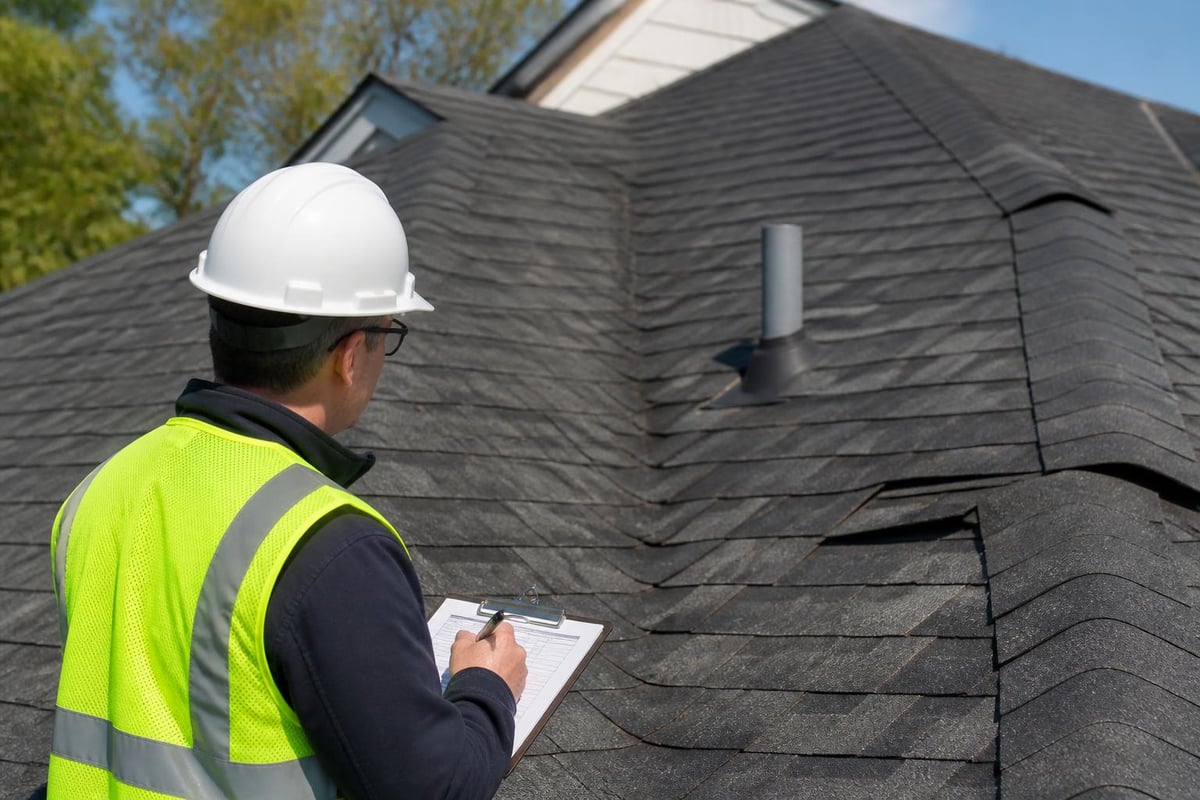
Every wind damage roof Wilmington NC inspection should produce written documentation with photos that clearly show the damage and its extent. This report becomes essential if you file an insurance claim, as it provides the evidence adjusters need to approve repairs.
Quality reports include:
- Date of inspection and date of storm event
- Specific locations of all damage with measurements
- Close-up photos showing lifted shingles, creases, or missing materials
- Overview photos showing damage distribution
- Assessment of whether damage is wind-related versus age-related wear
Timing Your Inspection After a Storm
Wind damage inspections work best when scheduled strategically. Too soon, and you might miss damage that develops as materials settle. Too late, and you risk additional weather events complicating the damage timeline for insurance purposes.
The ideal window is three to seven days after a significant wind event. This gives shingles time to show permanent lifting or creasing while keeping the inspection close enough to the storm that cause and effect remain clear.
For homeowners in Wilmington and surrounding coastal areas, this timing also accounts for the fact that storm seasons bring multiple events. Getting an inspection done promptly after the first significant storm of the season establishes a baseline and starts the insurance clock if needed.
Weather Conditions for Accurate Inspection
Inspectors need dry conditions to safely access roofs and accurately assess damage. Wet shingles can appear to seal properly even when underlying adhesion has failed, and walking on wet surfaces risks additional damage.
Best inspection conditions:
- Dry roof surface (at least 24 hours after rain)
- Temperatures above 50°F for accurate sealant assessment
- Clear skies for quality photo documentation
- Light winds for safety during roof access
If you need roof repair following an inspection, understanding the full scope of damage helps contractors provide accurate estimates and complete all necessary work in a single visit rather than addressing problems piecemeal as they develop into leaks.
Insurance Considerations for Wind Damage Claims
Wind damage inspections often lead to insurance claims, and understanding how this process works helps homeowners get the coverage they've been paying for without unnecessary complications.
What Insurance Companies Look For
Adjusters verify that damage resulted from a specific covered event rather than gradual deterioration. They examine the same areas your inspector checked but with an eye toward claim approval criteria.
Insurance companies distinguish between:
- Sudden wind damage – covered under most policies
- Wear and tear – not covered, considered maintenance
- Pre-existing conditions – excluded from current claims
- Cosmetic versus functional damage – coverage varies by policy
A wind damage roof Wilmington NC inspection report that clearly documents storm-related damage and separates it from aging helps adjusters approve legitimate claims faster. Photos showing clean breaks, recent creasing, or pattern damage that matches the storm's wind direction all strengthen your case.
Claim Filing Timeline
Most insurance policies require prompt reporting of damage, typically within one year but sometimes as short as 60 days depending on your carrier. Scheduling an inspection within a week of a storm gives you time to file properly while memories and weather records are fresh.
The typical timeline looks like this:
- Storm occurs – note date, approximate wind speeds if known
- Schedule inspection – within 3-7 days
- Receive documentation – 1-3 days after inspection
- Contact insurance – immediately after receiving report
- Adjuster inspection – usually within 1-2 weeks of filing
- Approval and repairs – timeline varies by carrier and damage extent
Common Wind Damage Patterns in Wilmington
The Wilmington area sees specific types of wind damage based on regional storm characteristics and construction practices common to coastal North Carolina.
Edge Lifting and Corner Damage
Wind creates uplift pressure along roof edges and at corners where two roof planes meet. This is where you'll often find the first signs of damage after moderate wind events in the 40-60 mph range.
Shingles along rakes (the sloped edges) and eaves (the horizontal bottom edges) experience the strongest forces because wind flows over and around the roof rather than just hitting it directly. Proper installation uses starter strips and extra adhesive in these zones, but even well-installed roofs can show damage here first as they age.
Ridge Cap Failure
The ridge is the highest point on your roof and catches the full force of wind from any direction. Ridge caps – the special shingles that cover this peak – are designed to flex and move slightly, but sustained winds or particularly strong gusts can break fasteners or tear the caps entirely.
Signs of ridge damage include:
- Visible nail heads where caps have lifted
- Missing sections of ridge cap
- Caps that appear crooked or misaligned
- Dark streaks showing exposed underlayment
Ridge damage often leads to leaks quickly because water running down both roof planes meets at this point and finds any opening.
Valley Concentration Issues
Valleys already handle twice the water volume of flat roof sections. When wind drives debris into valleys or lifts valley metal, these areas become immediate leak risks.
Wind damage in valleys is particularly concerning because repairs often require more extensive work than simple shingle replacement. Valley metal, underlayment, and the surrounding shingles might all need attention to properly seal the area.
Choosing an Inspector in the Wilmington Area
Not all roof inspections provide the detail needed for insurance claims or accurate repair planning. Choosing the right inspector affects both the quality of information you receive and how smoothly any subsequent repairs or claims proceed.
Qualifications That Matter
Look for inspectors who work regularly with insurance companies and understand local building codes specific to coastal construction. Experience with wind damage to shingles in Eastern North Carolina matters because damage patterns vary by region and climate.
Key qualifications include:
- Licensed contractors familiar with North Carolina building codes
- Experience with insurance documentation requirements
- Knowledge of multiple roofing systems (not just asphalt shingles)
- Access to proper safety equipment for steep or high roofs
- Willingness to provide detailed written reports with photos
Questions to Ask Before Scheduling
Understanding what's included in an inspection helps you compare options and avoid surprises. Some inspectors charge for the initial assessment, while others provide free inspections if you use their company for repairs.
Ask about:
- Inspection scope – just shingles or full roof system?
- Report format – verbal summary or written documentation?
- Photo documentation – included or additional cost?
- Timeline – when will you receive findings?
- Insurance experience – do they work with adjusters regularly?
Reading Your Inspection Report
A good wind damage roof Wilmington NC inspection report gives you clear information about what's wrong, what it will take to fix it, and whether the damage requires immediate action or can wait for better weather or budget planning.
Understanding Damage Severity Ratings
Most reports categorize damage to help homeowners prioritize repairs. These categories aren't standardized across the industry, but they generally follow similar logic.
| Severity Level | Description | Typical Timeline |
|---|---|---|
| Immediate | Active leaks or imminent failure | Within days |
| Urgent | No current leak but damage will worsen quickly | Within weeks |
| Moderate | Damage present but stable for now | Within months |
| Minor | Cosmetic or very early-stage issues | Next routine maintenance |
Your specific situation might call for faster action than these general timelines suggest. A "moderate" rating on a 20-year-old roof might warrant quicker repairs than the same rating on a five-year-old roof with years of life remaining.
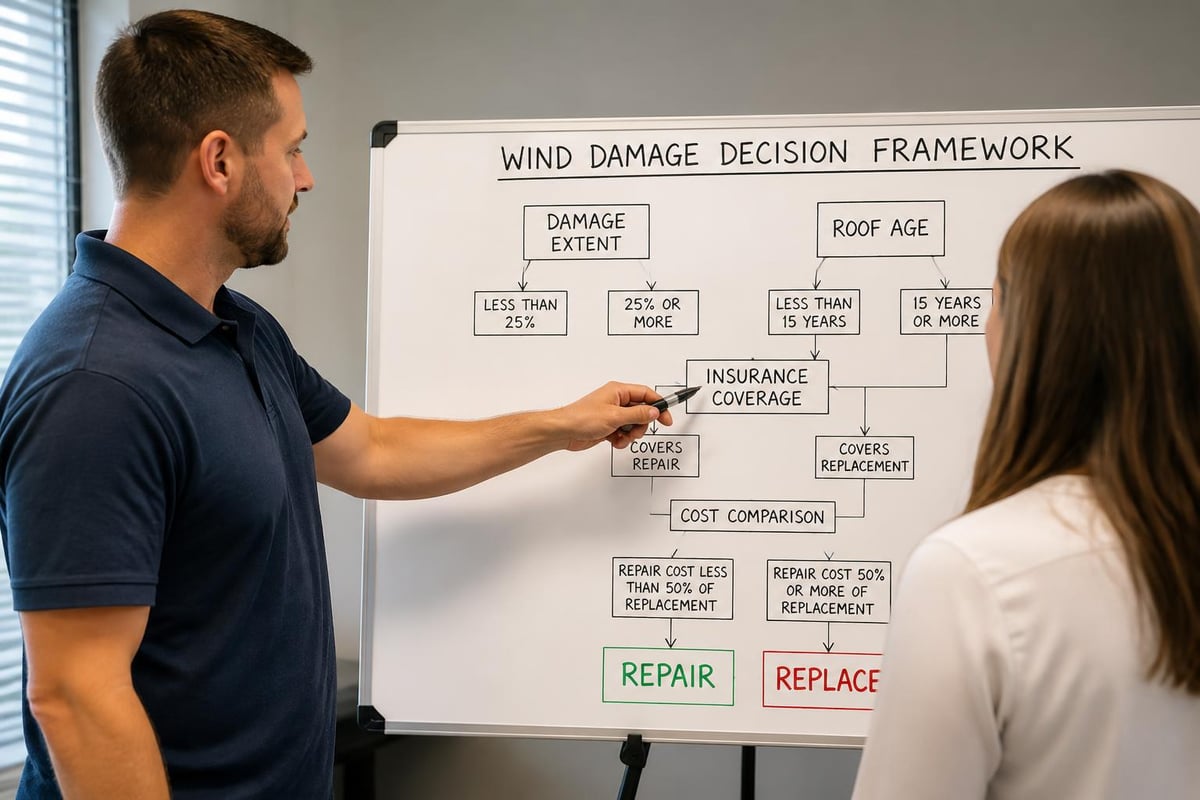
Repair Versus Replacement Recommendations
Honest inspectors tell you when repairs make sense and when replacement is the better investment. This recommendation should be based on roof age, damage extent, and cost comparison, not sales targets.
Generally, repairs make sense when:
- Damage affects less than 30% of the roof surface
- The roof is less than halfway through its expected lifespan
- Matching shingles are available
- Surrounding materials are in good condition
Replacement becomes more practical when damage is widespread, the roof is already near the end of its useful life, or repair costs approach 40-50% of replacement cost.
For situations involving flat roof repair needs alongside shingle damage, the inspection should address both systems separately since they have different vulnerabilities and repair approaches.
Preparing for the Inspection
Homeowners can take simple steps before an inspector arrives to make the process more efficient and ensure nothing gets missed.
Documenting What You've Noticed
Write down anything you observed during or after the storm, even if it seems minor. This information helps inspectors focus on specific areas and provides context for their findings.
Useful information includes:
- Date and approximate time of the storm
- Any unusual sounds (banging, scraping) during high winds
- Visible damage you spotted from the ground
- New leaks or water stains inside
- Debris you found in the yard (shingles, flashing pieces)
Take photos of anything visible from the ground, especially if there's a delay between the storm and the inspection. Conditions change quickly, and having your own documentation creates a more complete record.
Clearing Access and Safety Concerns
Make sure inspectors can safely reach your roof and move around your property. This might seem obvious, but simple preparations save time and ensure a thorough inspection.
Clear the area around your home:
- Move vehicles from the driveway where ladders will be placed
- Secure pets indoors during the inspection
- Trim any low branches blocking roof access points
- Mention any roof features inspectors should know about (skylights, solar panels, previous repairs)
- Point out any indoor areas where you've noticed leaks or stains
Post-Inspection Next Steps
Getting an inspection report is just the beginning. What you do next determines whether wind damage gets properly addressed or turns into bigger problems down the road.
Review Timeline for Repairs
If damage is confirmed, discuss timing with your contractor before filing insurance claims or scheduling work. Rush jobs during peak storm season often cost more and may involve longer wait times for materials and crew availability.
Typical repair scheduling:
- Emergency tarping or temporary fixes – same day to 48 hours
- Minor repairs (a few shingles) – within 1-2 weeks
- Moderate repairs (multiple sections) – 2-4 weeks
- Major repairs or partial replacement – 4-8 weeks
Weather plays a role in scheduling too. Some repairs require specific temperature ranges for proper sealant adhesion, so winter storm damage might need temporary fixes until spring temperatures arrive.
Getting Multiple Opinions When Needed
If your inspection reveals major damage or if the repair recommendation doesn't match what you expected based on the roof's age, getting a second opinion makes sense. Different contractors might have different approaches to the same problem.
A second inspection is particularly valuable when:
- The first report recommends full replacement on a newer roof
- Damage estimates vary significantly from your insurance adjuster's assessment
- You're unsure whether recommended work addresses the actual problem
- The inspector also provides repair services and you want an independent assessment
Wind damage roof Wilmington NC inspections give you clear information about storm impacts and what your roof needs to stay protective and weathertight. Whether you're dealing with lifted shingles after a tropical system or checking for damage following severe thunderstorms, understanding what an inspection covers and how to use the results helps you make confident decisions about repairs and insurance claims. NC Roofs provides detailed inspections and honest repair recommendations across Hampstead, Wilmington, and surrounding coastal communities, helping homeowners understand what's actually wrong before any work begins.