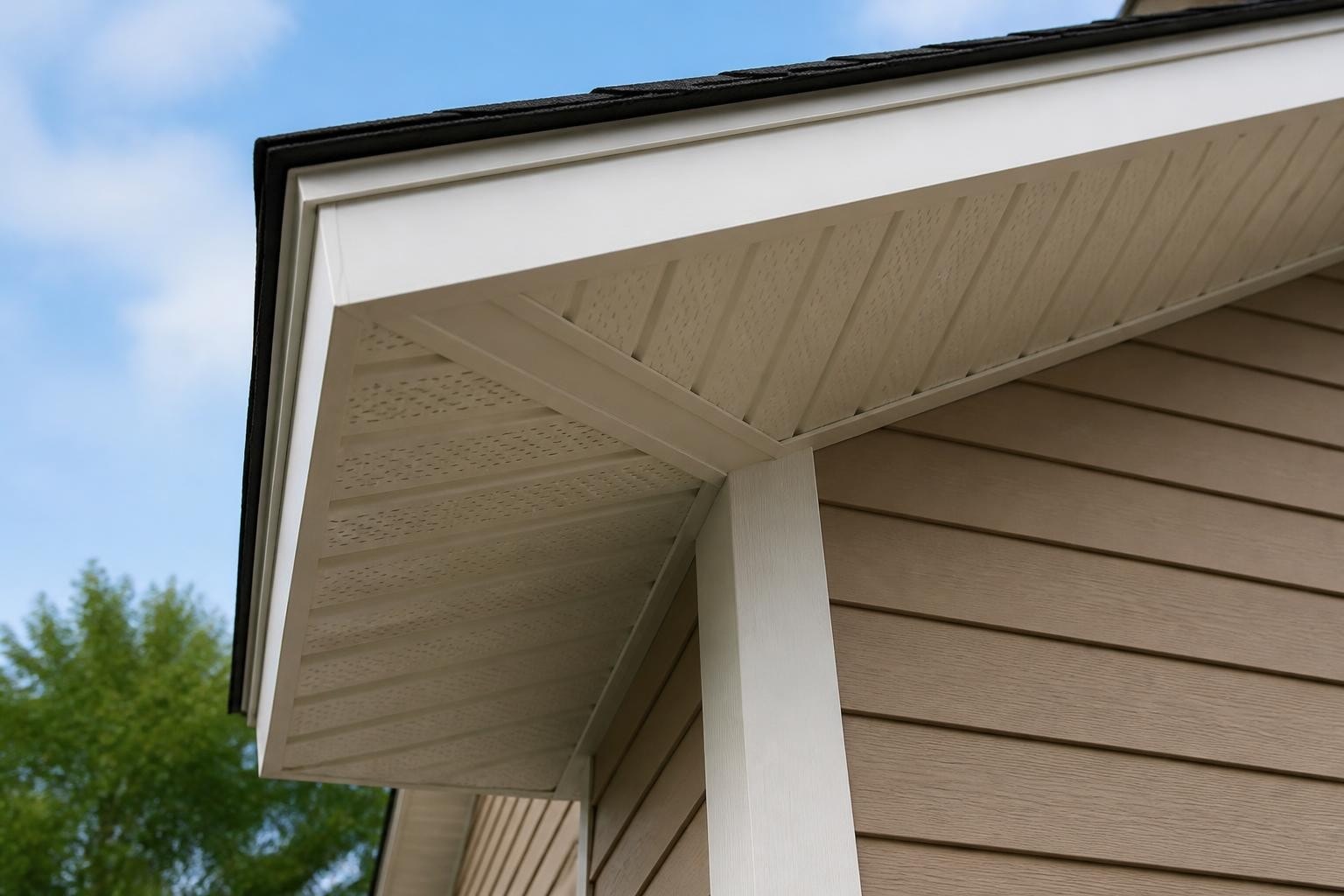
When you look up at your roofline from the street, you probably notice the shingles and gutters first. But underneath that overhang, there's a horizontal panel that plays a surprisingly important role in keeping your home protected. That's your roofing soffit. Most homeowners don't think much about this component until something goes wrong, but understanding what it does and how to maintain it can save you from bigger repair bills down the road. In coastal North Carolina, where wind, salt air, and humidity put extra stress on every part of your roof system, keeping your soffit in good condition matters more than you might think.
What Roofing Soffit Actually Does
Your roofing soffit covers the underside of your roof's overhang, creating a finished look while serving several practical functions. It bridges the gap between your exterior wall and the roofline, protecting the exposed rafters and roof decking from weather exposure.
Without soffit panels in place, rain would constantly hit those wooden structural components. Over time, moisture leads to rot, mold growth, and deterioration that weakens your entire roof system. The soffit acts as a barrier, keeping that area dry and intact.
Beyond weather protection, soffit serves these key purposes:
- Prevents birds, squirrels, and insects from nesting in your roof structure
- Provides critical ventilation for your attic space when properly vented
- Improves curb appeal by creating clean, finished rooflines
- Reduces the risk of ice damming in colder months by promoting air circulation
Proper ventilation through soffits and vents helps regulate attic temperature and moisture levels. In summer, hot air rises and escapes through ridge vents while cooler air enters through vented soffit panels. This constant airflow keeps your attic from turning into an oven, which reduces cooling costs and extends shingle life.
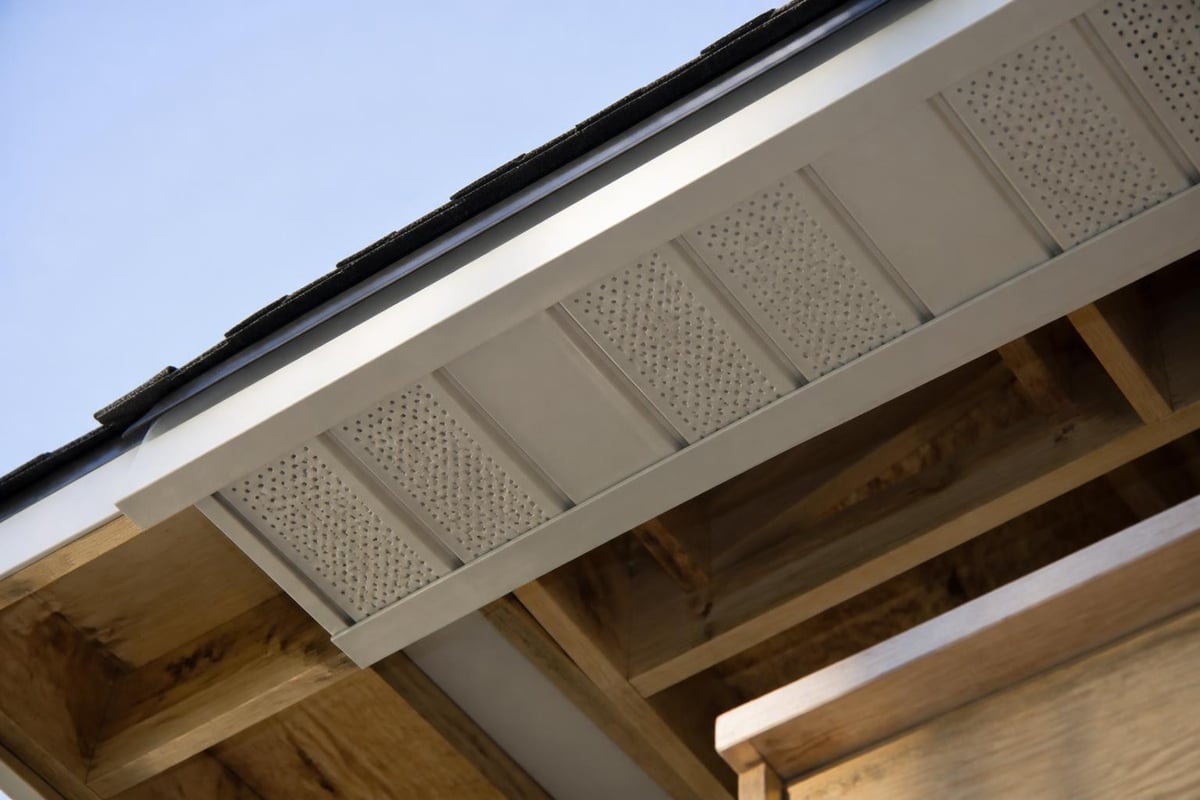
The Difference Between Soffit and Fascia
Many homeowners confuse soffit with fascia, but they're distinct components that work together. The fascia is the vertical board that runs along the roofline edge, where your gutters attach. The roofing soffit is horizontal, positioned underneath the roof overhang.
Think of it this way: if you're standing outside looking up, the fascia faces you directly while the soffit faces down toward the ground. Both need attention during roof maintenance, but they wear differently and require different repair approaches.
According to detailed guides on roof fascia and soffit, the fascia takes the brunt of wind-driven rain and direct sun exposure. The soffit deals more with trapped moisture, poor ventilation, and animal intrusion attempts.
Common Roofing Soffit Materials
The material you choose for your roofing soffit affects both durability and maintenance requirements. Each option comes with tradeoffs in cost, lifespan, and climate suitability.
| Material | Lifespan | Maintenance | Best For |
|---|---|---|---|
| Vinyl | 20-30 years | Very low | Budget-conscious projects |
| Aluminum | 30-40 years | Low | Coastal areas with salt exposure |
| Wood | 15-25 years | High | Traditional or historic homes |
| Fiber Cement | 30-50 years | Moderate | Long-term durability |
Vinyl soffit remains the most popular choice for residential applications. It costs less than most alternatives, resists moisture well, and comes in vented and solid panel options. The downside is it can crack in extreme cold and may fade over time in direct sunlight.
Aluminum soffit handles coastal conditions better than vinyl. Salt air doesn't corrode it, and it won't rot or warp from humidity. For homes in Wilmington, Surf City, or other beach communities, aluminum makes sense despite the higher upfront cost.
Wood soffit offers a classic look but demands regular painting or staining. In humid climates like Eastern North Carolina, wood requires vigilant maintenance to prevent rot. If your home has wood soffit now, inspect it at least twice a year for signs of moisture damage.
Fiber cement combines durability with reasonable costs. It won't rot, handles moisture well, and lasts longer than vinyl. Installation takes more time, which can increase labor costs, but the extended lifespan often justifies the investment.
Vented vs. Solid Soffit Panels
Not all roofing soffit panels include ventilation openings. Solid panels create a complete barrier, while vented panels have perforations or slots that allow air to flow into the attic space.
Most building codes require adequate attic ventilation, and vented soffit serves as the primary intake point for that system. Ridge vents or roof vents at the peak allow hot air to escape while cooler air enters through the soffit vents below.
The general recommendation is a 50/50 mix of intake and exhaust ventilation. If your attic has 12 square feet of ridge vent exhaust, you need roughly 12 square feet of soffit intake ventilation to maintain proper airflow. Some installers use fully vented soffit panels across the entire overhang, while others alternate vented and solid panels.
Signs Your Roofing Soffit Needs Attention
Soffit damage often goes unnoticed until it creates visible problems inside your home. Regular exterior inspections help catch issues before they escalate into expensive repairs.
Watch for these warning signs:
- Peeling paint or visible stains suggest moisture is penetrating the soffit material
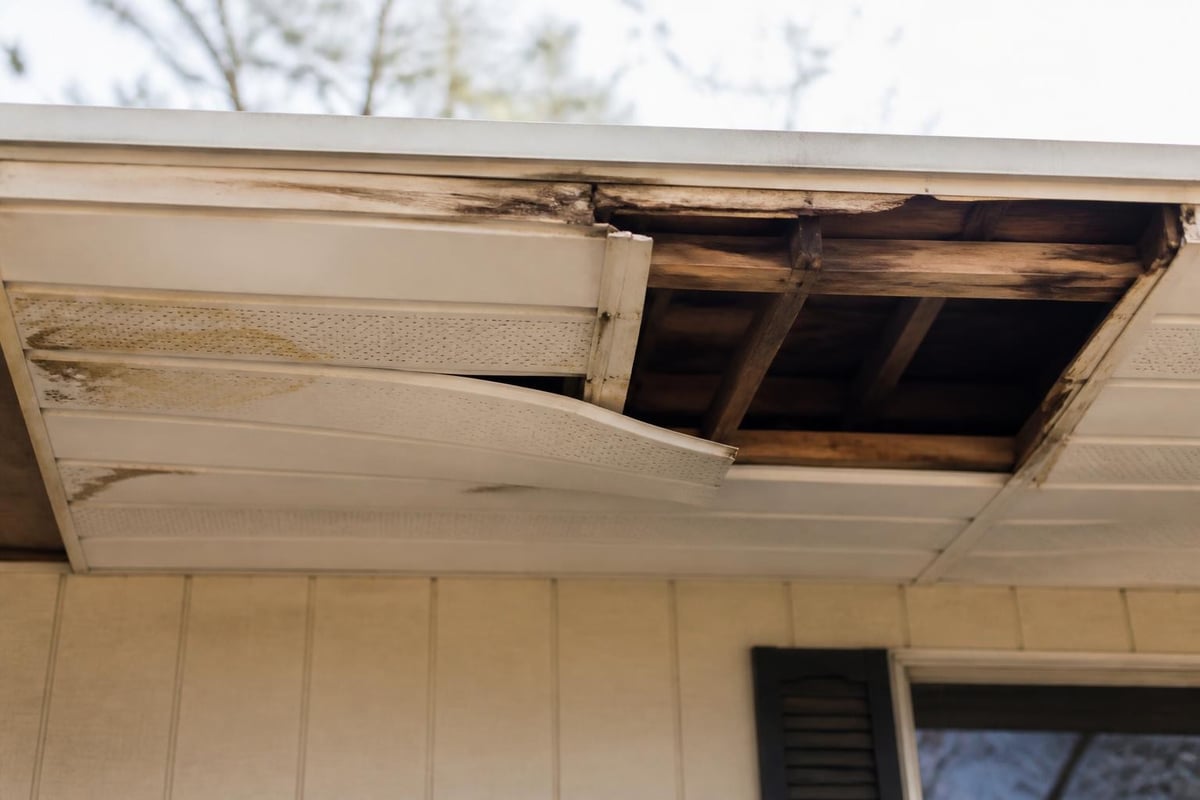
- Sagging or warped panels indicate water damage or failing fasteners
- Gaps between panels and the wall create entry points for pests and water
- Mold or mildew growth on the soffit surface points to ventilation problems
- Visible holes or cracks compromise protection and invite animal intrusion
After storms, walk around your home and look up at the soffits. High winds can tear panels loose or drive water into gaps between sections. Hail rarely damages soffit directly, but falling tree branches can punch holes or crack panels.
If you spot animal activity near your roofline-scratching sounds in the attic, visible nesting materials, or droppings on the ground-check your soffit for entry points. Squirrels and raccoons can tear through damaged vinyl or wood to access your attic space.
What Happens When Soffit Fails
Ignoring damaged roofing soffit leads to cascading problems throughout your roof system. Once water penetrates behind the panels, it reaches the fascia board and roof decking. Wood rot spreads quickly in humid environments, especially along the coast.
Blocked or damaged soffit vents disrupt attic airflow. Without proper intake ventilation, your attic overheats in summer and traps moisture in winter. That excess heat degrades shingles from underneath, shortening their lifespan by years. Trapped moisture creates ideal conditions for mold growth on roof decking and insulation.
At NC Roofs, we often find that what started as a small soffit issue turned into major roof decking replacement because the problem went unaddressed for too long. A $300 soffit repair becomes a $2,000 structural fix when moisture damage spreads to the rafters and sheathing.
Maintaining Your Roofing Soffit
Regular maintenance extends soffit lifespan and prevents most common problems. The good news is that soffit care doesn't require specialized tools or professional help in most cases.
Basic soffit maintenance tasks include:
- Cleaning panels twice a year to remove dirt, pollen, and debris
- Checking vents for blockages from insulation, bird nests, or leaves
- Inspecting caulk lines between soffit and fascia for gaps
- Looking for loose or missing panels after severe weather
- Removing any vegetation growing near or touching the soffit
Use a garden hose and soft brush to clean soffit panels. Avoid pressure washers, which can force water behind the panels or damage ventilation screens. For higher soffits, an extension pole with a brush attachment lets you reach without a ladder.
According to information from how soffits work, proper installation matters as much as material quality. Panels need adequate support and proper fastening to handle wind loads and thermal expansion. If you notice multiple loose panels, the original installation may have cut corners on fastener spacing or backing support.
Cleaning and Ventilation Checks
Vented soffit panels accumulate debris inside the perforations over time. From ground level, shine a flashlight at an angle across the vents. If you can't see light coming through most holes, they're likely blocked.
Inside your attic, inspect the soffit areas during daylight. You should see some light filtering through the vents. If large sections appear dark, either the vents are blocked from outside or insulation has been pushed against the soffit from inside.
Make sure your attic insulation doesn't block soffit vents. Many homes have baffles or rafter vents installed to maintain an air channel between the insulation and the roof deck. Without these channels, blown-in insulation can pile up against the soffit and eliminate ventilation entirely. For detailed installation practices, review professional soffit installation guidelines that emphasize maintaining proper clearances.
Repair vs. Replacement Decisions
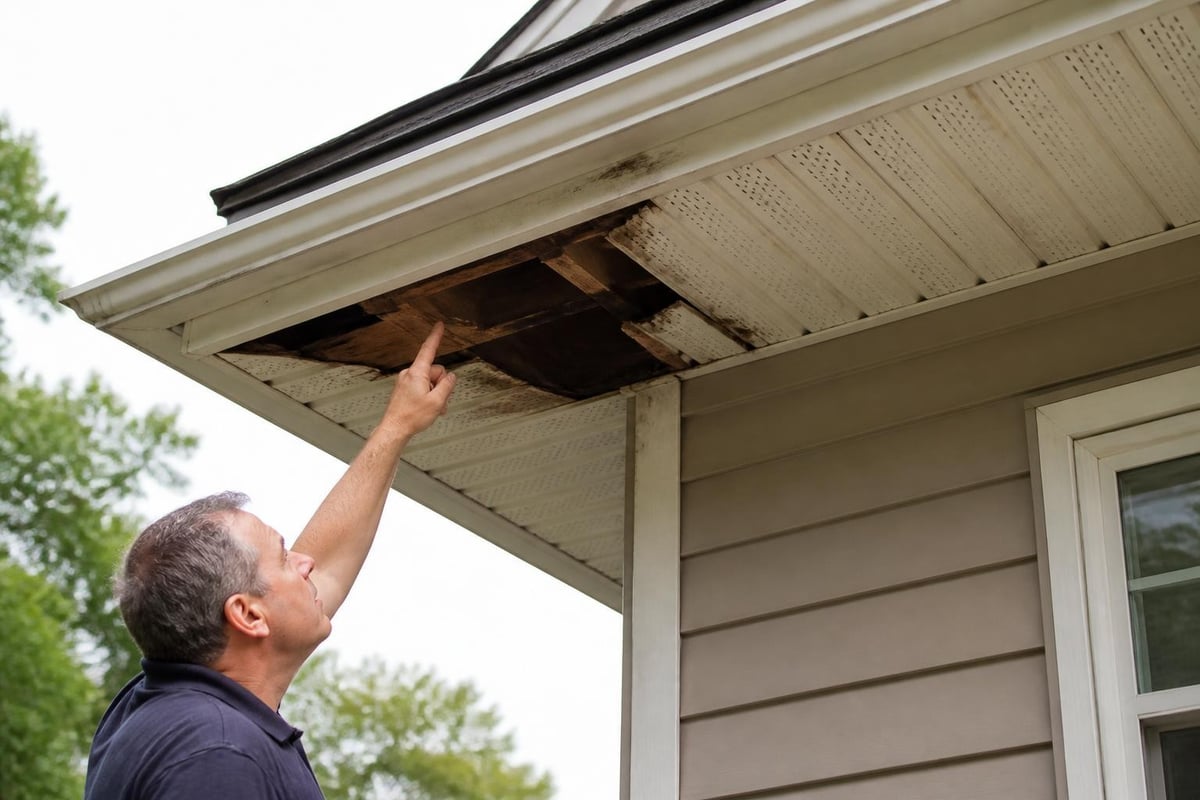
Not every soffit problem requires complete replacement. Individual damaged panels can often be replaced without touching the rest of your soffit system. The challenge is matching the existing material, especially if your current soffit has aged or faded.
Replace individual panels when:
- Damage is limited to one or two sections
- The rest of the soffit is in good condition
- You can find matching replacement material
- The underlying structure shows no rot or damage
Consider full replacement when:
- Multiple sections show damage or deterioration
- The material is outdated or no longer available
- Ventilation is inadequate for current building codes
- You're already replacing fascia or gutters
Vinyl and aluminum panels are relatively easy to replace section by section. Wood soffit often requires more extensive work because individual boards may be painted or stained as continuous surfaces. Fiber cement replacement typically involves larger sections due to panel sizes and cutting requirements.
Working with Coastal Conditions
Homes near the North Carolina coast face accelerated soffit wear from salt exposure and higher humidity. Metal components corrode faster, paint deteriorates more quickly, and moisture damage happens sooner than in inland areas.
If you live in Topsail, Holly Ridge, or other coastal communities, inspect your roofing soffit more frequently than the standard twice-yearly recommendation. After major storms or extended periods of high winds, check for salt accumulation on panels and rinse with fresh water to slow corrosion.
Aluminum or vinyl soffit performs better in these conditions than wood. If you're building new or replacing damaged soffit, choose materials designed for marine environments. Some manufacturers offer enhanced UV protection and salt-resistant finishes specifically for coastal applications.
Installation Considerations
Professional soffit installation ensures proper ventilation, weather protection, and structural support. While some homeowners tackle soffit as a DIY project, working at roofline heights requires appropriate safety equipment and construction experience.
The installation process typically follows these steps:
- Remove existing soffit panels and inspect underlying structure
- Repair any damaged fascia boards or rafter tails before installing new soffit
- Install backing support using F-channel or J-channel along the wall and fascia
- Measure and cut soffit panels to fit the specific overhang dimensions
- Insert and secure panels with appropriate fasteners and spacing
- Seal joints and transitions to prevent water infiltration
According to APA wood panel soffit applications, proper fastener selection and spacing prevents panel failure during high winds. Coastal areas require corrosion-resistant fasteners and may need additional attachment points compared to inland installations.
Coordinating Soffit with Other Roof Work
If you're planning roof repair or gutter replacement, that's often the ideal time to address soffit issues. Scaffolding or lift equipment is already in place, making soffit access easier and more affordable than a separate project.
Many roofing companies include soffit inspection as part of their roof assessment process. When evaluating storm damage or general roof condition, a thorough inspection should cover fascia, soffit, and ventilation components along with the shingles and decking.
Before scheduling soffit work, ask your contractor about the complete scope. Will they check the fascia boards for rot? Do they plan to verify attic ventilation levels after installation? Understanding what's included helps you avoid surprise charges and ensures the work addresses underlying problems, not just visible symptoms.
Cost Factors and Planning
Roofing soffit costs vary based on material choice, project scope, and access difficulty. A simple panel replacement on a single-story home costs far less than complete soffit and fascia replacement on a two-story house with complex rooflines.
Budget factors to consider:
- Material selection (vinyl runs $1-3 per linear foot, aluminum $2-4, wood $3-6, fiber cement $4-8)
- Labor costs (influenced by height, roof pitch, and access challenges)
- Structural repairs (fascia board replacement, rafter tail repair)
- Ventilation upgrades (adding baffles, increasing vent area)
- Paint or finish (for wood or fiber cement options)
Most contractors price soffit work by the linear foot of coverage, including both materials and labor. For a typical ranch-style home with 150 linear feet of soffit, expect material costs between $150-600 plus installation labor of $500-1200 depending on complexity.
If your existing soffit shows minor damage but adequate ventilation, targeted repairs make more financial sense than full replacement. However, if you're dealing with rot, inadequate venting, or material failure across most of the house, replacement delivers better long-term value than patching multiple problem areas.
Understanding the definition and purpose of soffits helps homeowners recognize why this component deserves attention during routine maintenance and renovation projects. While it may not seem as critical as the roof surface itself, soffit failure creates conditions that shorten the entire roof system's lifespan.
When to Call a Professional
Some soffit maintenance tasks are straightforward DIY projects, while others require professional expertise. Cleaning panels, clearing minor debris from vents, and tightening a few loose fasteners fall within most homeowners' capabilities.
Hire a professional when:
- Damage involves multiple panels or sections
- You find rot in fascia boards or rafter tails
- Work requires scaffolding or significant ladder use
- Ventilation calculations and code compliance are uncertain
- Structural repairs extend beyond cosmetic panel replacement
A qualified contractor should assess the entire soffit system, not just the visible damage. They'll check attic ventilation levels, inspect fascia condition, and look for signs that water has compromised the roof structure. That comprehensive approach catches problems before they escalate and ensures repairs address root causes.
For homes in Eastern North Carolina, choose contractors familiar with coastal building requirements and material performance in humid, salt-air environments. Local experience matters when selecting appropriate materials and installation methods that hold up to regional weather patterns.
Your roofing soffit protects critical structural components, enables proper ventilation, and keeps your home looking finished from every angle. Regular inspections and prompt repairs prevent small issues from becoming expensive roof system failures. If you've noticed damaged soffit panels, missing vents, or signs of moisture around your roofline, NC Roofs provides honest assessments and clear recommendations for coastal North Carolina homeowners. We'll help you understand what needs attention and what can wait, so you can make informed decisions about your home.