A new roof is one of the most significant investments you'll make as a homeowner, and the cost can feel overwhelming when you're facing storm damage, persistent leaks, or an aging roof that needs replacement. Understanding your financing options makes the decision easier and helps you protect your home without draining your savings all at once. A roofing payment plan allows you to spread the cost over time, making necessary repairs or replacement work manageable within your monthly budget.
Understanding Roofing Payment Plans
A roofing payment plan is essentially a financing arrangement that lets you pay for roofing work in installments rather than one lump sum upfront. These plans come in different forms, from zero-interest promotional periods to traditional loans with fixed monthly payments. The goal is to make roof work accessible when you need it, not just when you have thousands of dollars sitting in your account.
Most roofing companies partner with financing providers who specialize in home improvement loans. These lenders understand that roof work is often urgent and that homeowners need quick approval and flexible terms.
Types of Financing Available
The financing landscape includes several distinct options, each with different requirements and benefits:
- Promotional financing with deferred interest (typically 6-24 months interest-free)
- Fixed-rate personal loans through third-party lenders
- Home equity loans or lines of credit
- Credit cards with rewards or promotional rates
- Contractor payment plans offered directly by roofing companies
Promotional financing appeals to homeowners who can pay off the balance before the promotional period ends. If you make minimum payments and carry a balance past the deadline, deferred interest often applies retroactively to the original purchase amount.
Personal loans provide predictable monthly payments with fixed interest rates, making budgeting straightforward. You know exactly what you'll pay each month and when the loan will be paid off.

How Roofing Financing Works
The application process for a roofing payment plan typically happens in stages. First, you get an estimate for your roofing work. This estimate becomes the basis for your financing amount. Some homeowners finance the full project cost, while others put down a deposit and finance the remainder.
Once you know the project cost, you can apply for financing. Many lenders offer instant or same-day decisions, especially for personal loans under $50,000. The approval depends on your credit score, income, debt-to-income ratio, and sometimes your home's equity.
The Application Process
- Get a detailed roofing estimate from your contractor
- Review financing options provided by the contractor or research independent lenders
- Submit an application with income verification and credit authorization
- Receive approval decision (often within hours)
- Review terms carefully before accepting the loan
- Sign contracts and schedule your roofing work
Most financing for roofing work is unsecured, meaning you don't put up collateral. This makes approval faster but typically results in higher interest rates than secured loans. Home equity products are secured by your property, which usually means lower rates but longer approval times and closing costs.
Interest Rates and Terms to Expect
Interest rates on roofing payment plans vary widely based on your creditworthiness and the type of financing you choose. In 2026, homeowners with excellent credit (720+) might qualify for rates between 6% and 12% on personal loans. Those with fair credit (640-719) often see rates between 12% and 24%, while lower credit scores can push rates higher.
| Credit Range | Typical APR | Monthly Payment (on $10,000, 5 years) |
|---|---|---|
| 720+ | 6%-12% | $193-$222 |
| 640-719 | 12%-24% | $222-$284 |
| Below 640 | 24%-36% | $284-$355 |
These figures illustrate how credit scores directly impact affordability. A $10,000 roof repair could cost you anywhere from $193 to $355 per month depending on your creditworthiness and loan term.
Loan terms generally range from 12 months to 10 years. Shorter terms mean higher monthly payments but less total interest paid. Longer terms reduce monthly payments but increase the total cost significantly.
Hidden Costs to Watch For
When evaluating a roofing payment plan, look beyond the monthly payment:
- Origination fees (typically 1-6% of loan amount)
- Prepayment penalties (some lenders charge fees for early payoff)
- Late payment fees (usually $25-$50 per occurrence)
- Deferred interest on promotional plans if not paid in full
A loan with a lower interest rate but a 5% origination fee might cost more than a slightly higher rate with no fees. Always calculate the total amount you'll repay over the life of the loan.
Qualifying for Roofing Financing
Lenders evaluate several factors when deciding whether to approve your application and what interest rate to offer. Understanding these factors helps you present the strongest application possible.
Credit score is the primary consideration. Most roofing financing requires a minimum score of 580-620, though better rates require scores above 680. If your credit needs work, you might still qualify but should expect higher rates or require a co-signer.
Income verification proves you can afford monthly payments. Lenders typically want to see pay stubs, tax returns, or bank statements. Self-employed homeowners may need additional documentation.
Debt-to-income ratio compares your monthly debt payments to your gross monthly income. Most lenders prefer this ratio to stay below 43%, though some accept up to 50% for well-qualified borrowers.
Improving Your Approval Odds
If you're concerned about qualifying or want better terms, consider these steps before applying:
- Check your credit report for errors and dispute any inaccuracies
- Pay down existing debt to improve your debt-to-income ratio
- Avoid new credit applications in the weeks before applying
- Document steady income with recent pay stubs or tax returns
- Consider a co-signer with stronger credit if needed
Some homeowners improve their terms by waiting a few months to boost credit scores or save for a larger down payment. This isn't always practical when you're dealing with storm damage or active leaks, but when timing allows, it can save thousands in interest.
Choosing the Right Payment Plan
The best roofing payment plan depends on your financial situation, the urgency of your roof work, and how quickly you can realistically pay off the balance. There's no universal best option, just the right fit for your circumstances.
For urgent repairs after storm damage, quick approval matters most. Personal loans through roofing company partners often provide same-day decisions and fast funding, letting you start work within days.
For planned replacements, you have time to shop around. Compare rates from multiple lenders, check your home equity options, and consider saving for a larger down payment to reduce the financed amount.
When Zero-Interest Makes Sense
Promotional financing with 12-24 months of zero interest sounds attractive, and it can be if you meet specific conditions. This option works best when:
- You can afford to pay off the entire balance before the promotional period ends
- You have a stable income with room in your budget for larger monthly payments
- You understand the deferred interest terms completely
- You're disciplined about making payments on schedule
If there's any doubt about paying the full balance in time, a fixed-rate loan provides more predictability and avoids the risk of retroactive interest charges.
Working With Your Roofing Contractor
Most established roofing companies have relationships with financing providers and can facilitate the application process. This convenience saves you time, but you're not obligated to use contractor-recommended financing. You can secure your own loan from a bank, credit union, or online lender if you find better terms.
When discussing financing with your contractor, ask about:
- Which lenders they work with and whether they receive referral fees
- Typical approval rates for their customers
- Whether estimates can be adjusted if your approved amount is lower than expected
- Payment schedules and when they require different installments
For homeowners in coastal North Carolina dealing with storm damage, getting a Roof Report first helps you understand exactly what needs attention and provides documentation that strengthens insurance claims or financing applications. You'll have clear numbers and specific issues identified before you commit to any payment plan.

Alternatives to Traditional Financing
Not every homeowner wants to take out a loan for roofing work, and several alternatives exist depending on your situation and the project's urgency.
Insurance claims cover storm damage, hail impact, and wind-related issues when your policy includes these perils and the damage exceeds your deductible. Filing a claim means you typically pay only the deductible, though this can still be $1,000-$2,500 or more.
Emergency savings remain the most cost-effective option when available. No interest, no applications, no monthly payments. If you have adequate savings and the expense won't leave you vulnerable to other emergencies, paying upfront saves money.
Family loans can provide flexible terms and low or zero interest, though mixing family and finances requires clear agreements. Put terms in writing to avoid misunderstandings.
Payment Plans Directly With Contractors
Some roofing companies offer their own payment plans without third-party lenders. These arrangements vary widely but often involve:
- A deposit before work begins (typically 10-30%)
- Scheduled payments tied to project milestones
- Final payment upon completion and inspection
- Short terms (usually 3-6 months)
These contractor-direct plans usually don't charge interest but require faster repayment than traditional loans. They work well for smaller projects or when you expect income (tax refund, bonus, insurance settlement) within a few months.
What to Do Before Applying
Preparation improves your financing outcome and helps you avoid common pitfalls. Before you submit any roofing payment plan application, take these steps:
Calculate what you can truly afford. Use online loan calculators to see monthly payments at different interest rates and terms. Be honest about your budget. A roof payment shouldn't strain your finances to the point where one unexpected expense creates crisis.
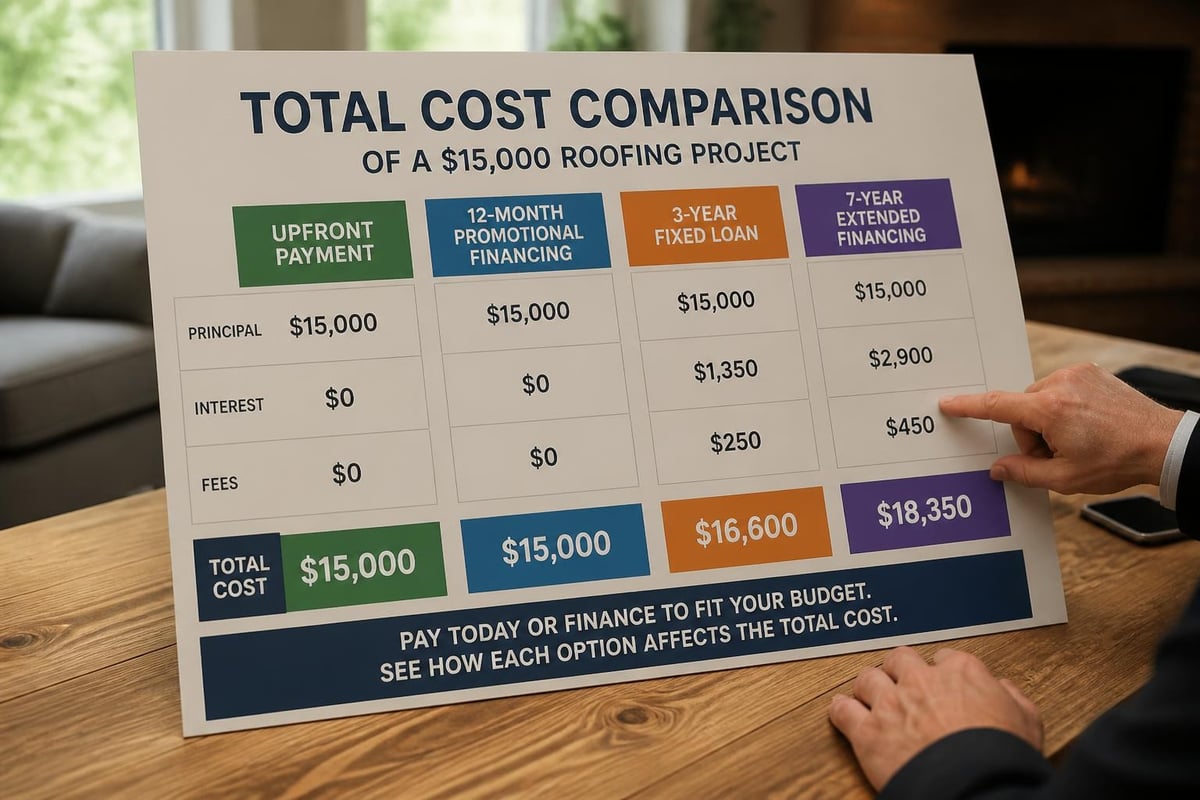
Get multiple estimates on the roofing work itself. Financing $15,000 instead of $18,000 means three years of smaller payments or paying off the loan months earlier.
Understand the total project cost including permits, disposal fees, and potential additional repairs discovered during work. Finance enough to cover the complete project, not just the base estimate.
Read loan terms completely before signing. Know your interest rate, payment due dates, payoff timeline, and any fees or penalties. Ask questions about anything unclear.
Red Flags in Financing Offers
Watch for warning signs that indicate unfavorable terms or potential problems:
- Pressure to decide immediately without time to review documents
- Unwillingness to explain interest calculations or total repayment amounts
- Promotional financing without clear explanation of deferred interest terms
- Requirements to purchase unnecessary add-ons or services
- Rates significantly higher than your credit score suggests you should receive
Reputable lenders and contractors want informed customers who understand their commitments. Hesitation to provide clear information suggests you should look elsewhere.
Managing Your Roofing Loan
Once you've secured financing and completed your roofing project, managing the loan responsibly protects your credit and keeps costs under control.
Set up automatic payments to avoid late fees and ensure you never miss a due date. Most lenders offer a small interest rate discount (typically 0.25%) for enrolling in autopay.
Pay more than the minimum when possible. Even an extra $50 per month reduces your principal faster, cuts total interest paid, and shortens your repayment timeline.
Track your payoff progress by reviewing statements monthly. Seeing the balance decrease reinforces positive financial habits and keeps you motivated.
When Financial Circumstances Change
Life happens. Job losses, medical emergencies, and unexpected expenses can make your roofing payment plan difficult to maintain. If you're struggling with payments:
- Contact your lender immediately before missing payments
- Ask about hardship programs that might temporarily reduce payments
- Explore refinancing options if interest rates have dropped
- Consider payment extensions that push back due dates
- Avoid defaulting as this damages credit and can lead to collections
Most lenders prefer working with borrowers who communicate proactively rather than discovering problems through missed payments. Your credit score takes less damage from a temporary hardship arrangement than from delinquencies.
Regional Considerations for Coastal Carolina
Homeowners in Eastern North Carolina face unique roofing challenges that affect financing decisions. Salt air accelerates roof deterioration, hurricane season brings regular storm threats, and insurance requirements can be more stringent than inland areas.
Hurricane deductibles on homeowners insurance are often percentage-based (2-5% of dwelling coverage) rather than flat amounts, meaning you might need to finance a larger portion of storm damage repairs than you'd expect. A home insured for $300,000 with a 2% hurricane deductible means you're responsible for $6,000 before insurance coverage begins.
Seasonal timing matters when planning roof work and financing. Hurricane season runs June through November, making spring the ideal time for proactive replacement. Financing early in the year means you're not competing with emergency repairs when storms hit.
Insurance premium discounts for newer roofs or impact-resistant materials might offset some financing costs over time. Ask your insurance agent how a roof replacement affects your annual premiums.
The coastal environment also means roof lifespans tend to run shorter than national averages. A composition shingle roof rated for 25 years might need replacement after 18-20 years in salt air. Factor this into long-term financing decisions so you're not still paying for a roof that needs replacement again.
Understanding roofing payment plans gives you options when your home needs protection but your savings account isn't quite ready for a major expense. The right financing makes quality roof work accessible without compromising your financial stability or settling for substandard repairs. If you're facing roof concerns in Topsail, Surf City, Holly Ridge, Wilmington, or surrounding coastal communities, NC Roofs can walk you through your options with straightforward estimates and honest guidance about what your roof actually needs. We'll help you understand the work, the costs, and the best path forward for your specific situation.